

Supporting someone else
If someone discloses to you that they have experienced gender-based violence*, sexual assault and/or sexual harassment (sexual harm*), it can be difficult to know what to say or do.
Hearing this information may also be distressing for you.
The University offers a range of support to help you navigate the initial disclosure, connect with appropriate services, and make sure you are supported throughout the process.
Important steps for when someone discloses an experience of gender-based violence and/or sexual harm
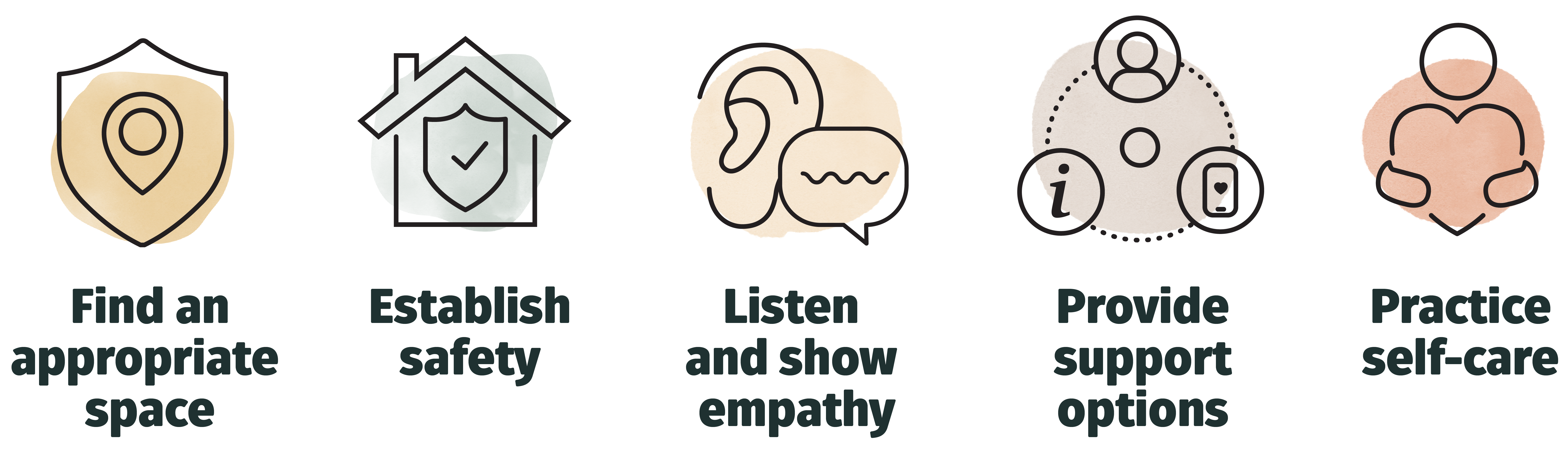
- Find an appropriate space
- Establish safety
- Listen and show empathy
- Provide support options
- Practice self care
Find an appropriate space
Ask the victim-survivor* where they would feel most comfortable talking. Choose a private, quiet space that supports their sense of safety and allows for a private conversation.
Establish safety
Ask the victim-survivor whether they are worried for their immediate safety or they need to access medical support. If there is an immediate danger from the alleged perpetrator or the victim-survivor needs immediate medical attention contact emergency services (Police, Ambulance) on 000 first, then contact Campus Security if you're on campus (02) 49215888.
Listen and show empathy
When someone makes a disclosure about an experience of gender-based violence and/or sexual harm, the first response is often critical in their recovery and decisions about what to do next. Your role is to listen, support them and the decisions they make, and direct them to support services. It is not necessary or advisable to ask details about what happened. This will be done by a trained professional if the victim-survivor chooses to make a disclosure.
- I believe you.
- This is not your fault.
- If you want, I can connect you with support.
Provide support options
At this stage you can offer to support the victim-survivor to consider their options for making a disclosure and support. It is okay if you do not have all the answers, and can direct the victim-survivor to professional support services to provide further information.
Support services available at the University and externally include:
Campus Care
Campus Care can refer the victim-survivor to support services both at and external to the University, as well as provide information about making a disclosure, starting a formal investigation and safety.
Find out more
Counselling
We provide a range of free services, including consultations with a Wellbeing Advisor within a day or two, and face to face and online counselling appointments.
FInd out more
After-Hours Support Line
Victim-survivors can talk to qualified crisis support specialists to help them through a difficult time or connect them with support services outside of business hours. This service can provide immediate short-term support but cannot record an incident or start a formal investigation.
Find out more
Chaplaincy
Chaplains offer compassionate help in all situations and support the spiritual life of the University community – but you do not need to belong to a religious group to see a chaplain. This service can provide support but cannot record an incident or start a formal investigation.
Find out more
External support
They may prefer to seek support outside the University through community organisations. These services can provide confidential support, advice, and care.
Find out more
Making a disclosure on someone's behalf
If a victim-survivor has indicated that they do not want to make a disclosure, or do not want a disclosure made on their behalf, it is important to listen to them and respect their wishes.
If you do not have their consent to make a disclosure, and you are concerned about a student’s wellbeing, you can still seek advice or support from Campus Care, without providing details that could identify the person/people involved in the incident. Campus Care can provide guidance on how to respond, offer information about available support services, and help you understand next steps.
Practice self care
If someone you are close to experiences gender-based violence, sexual assault and/or sexual harassment, this can have a significant impact on you. You may experience vicarious trauma, guilt, anger, or changes in your beliefs about the world.
After you have assisted the person who has experienced the gender-based violence and/or sexual harm, it is important that you have your own strategies and support to make sure that you are ok. If needed you can:
- Contact a University Wellbeing Advisor, who can connect you to the University Counselling service.
- Contact the UON After-Hours Support Line
- Contact 1800RESPECT to debrief or for advice.
- Access mental health services through the Mental Health Line or via referral from your GP.
- Practice strategies to look after your mental wellbeing
Training for students
The University is committed to providing evidence-based training to appropriately respond to a disclosure of gender-based violence and/or sexual harm.
The Respect Matters module, a compulsory course for all students at the University of Newcastle, is designed to empower you and your peers with the skills and knowledge to prevent, identify, and respond to gender-based violence and sexual harm – helping to create a culture of respect, safety and support across campus life.
The University of Newcastle acknowledges the traditional custodians of the lands within our footprint areas: Awabakal, Darkinjung, Biripai, Worimi, Wonnarua, and Eora Nations. We also pay respect to the wisdom of our Elders past and present.