

Supporting someone impacted by gender-based violence and sexual harm
If someone discloses to you that they have experienced gender-based violence*, including sexual assault* or sexual harassment*, your response is important and can have a lasting impact.
Experiences of violence and harm can also affect those providing support.
The information on this page will help you respond in a safe and supportive way, connect people with specialist services, and look after your own wellbeing.
How to respond when someone discloses gender-based violence and sexual harm
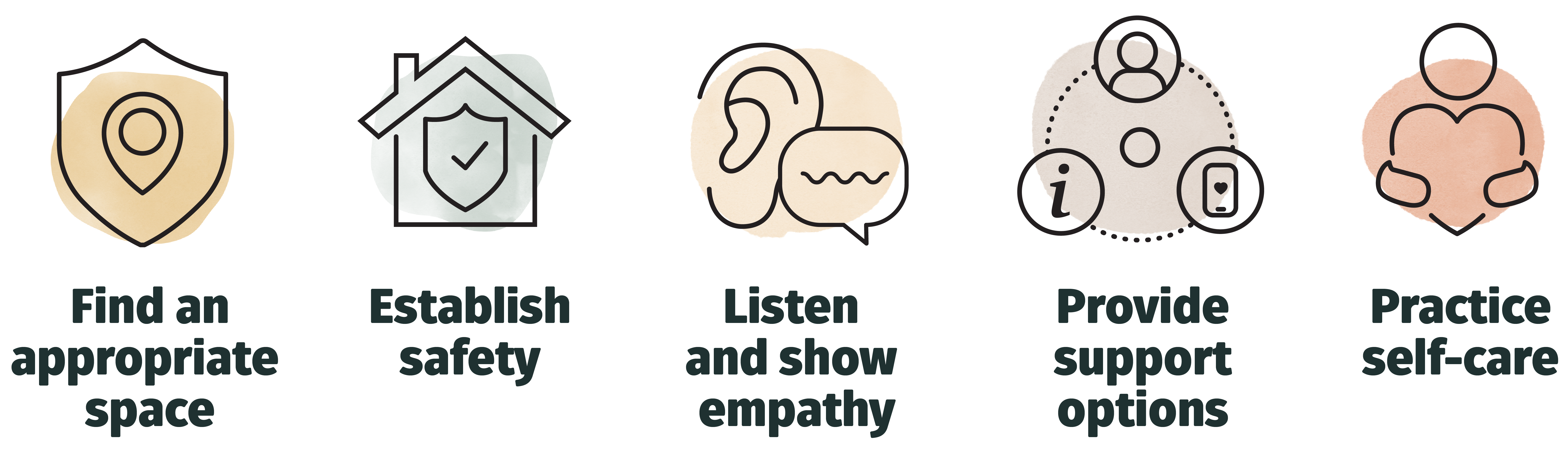
- Find an appropriate space
- Establish safety
- Listen and show empathy
- Provide support options
- Practice self care
Find an appropriate space
Ask the victim-survivor* where they would feel most comfortable talking. A private, quiet space that supports their sense of safety is ideal.
Establish safety
Ask the victim-survivor whether they are worried for their immediate safety or they need to access medical support. If there is an immediate danger from the alleged perpetrator or the victim-survivor needs immediate medical attention contact emergency services (Police, Ambulance) on 000 first, then contact Campus Security if you're on campus (02) 49215888.
Listen and show empathy
When someone makes a disclosure about an experience of gender-based violence and/or sexual harm, the first response is often critical in their recovery and decisions about what to do next. Your role is to listen, support them, and connect them with support services.
- I believe you.
- This is not your fault.
- Support is available, and I can help connect you with it if you would like.
What to avoid when responding to a disclosure
- It is not necessary or advisable to ask details about what happened. If the person chooses to reach out to University or external support services, trained professionals will gather any information required.
- Avoid making promises about confidentiality.
- Avoid asking questions such as ‘What were you doing there?’ or 'Why didn't you leave?' which could be misinterpreted as blaming.
- Avoid telling someone what they should do or pressuring them to make a particular decision.
- Don’t get angry on their behalf, as this can shift the focus away from their needs.
- Don’t touch them to offer comfort, even if well-intentioned. Instead, ask what would help them feel supported.
If you’re a staff member, and you receive a disclosure of gender-based violence or sexual harm, witness an incident, or become aware of an incident occurring, you share responsibility for helping keep staff, students and members of the public safe.
This means that if it occurred on campus, or is connected to the University, you need to contact the following services for guidance:
- Campus Care - for incidents involving students
- Staff Care - for incidents involving staff
This applies even if the victim-survivor has already made, or plans to make, a report to either service.
It's important to be transparent about this process, and explain this to the victim-survivor. Let them know their information can be de-identified if they wish, where appropriate.
This can include removing details such as name, age, gender, residential college, and department.
If you are unsure about reaching out, you can always contact Campus Care or Staff Care for advice on the appropriate next steps.
Provide support options
Provide information about the support services available at the University, including Campus Care for students and Staff Care for staff, and direct them to the staff and student support webpages for further information.
You can offer to help connect them with services, go through the webpages, and/or make a report if they wish to do so.
- 1800RESPECT - Supporting someone experiencing sexual violence.
- 1800RESPECT - Safety Planning.
- ReachOut Australia - 6 tips for supporting a friend who's been sexually assaulted.
What if I'm concerned about someone's wellbeing, but they don't want to make a report?
If you are concerned about another student's wellbeing, support is available.
If they have indicated they do not want to make a report, or do not want a report made on their behalf, it is important to listen to them and respect their wishes.
However, if you are concerned about their wellbeing, you can still seek advice from Campus Care, without providing details that could identify the person/people involved in the incident.
This can include removing details such as name, age, gender, and residential college.
If possible, notify the victim-survivor before reaching out to Campus Care, and let them know what information is being shared.
Campus Care can provide guidance on how to respond, offer information about available support services, and help you understand next steps.
If you are concerned about a victim-survivor's wellbeing, support is available.
As a staff member, if you are aware of gender-based violence, including sexual assault and sexual harassment, occurring on campus or in connection to the University, you need to contact Campus Care or Staff Care for guidance.
If the incident did not occur on campus, or is not connected to the University, but you would like guidance, you can still reach out to these teams, with the permission of the victim-survivor.
Before making contact, let the victim-survivor know what information will be shared and with which team(s).
If it is not possible to notify the victim-survivor, or you do not have their prior permission, do not share their identifying details.
Campus Care and Staff Care can provide guidance on how to respond, offer information about available support services, and help you understand the appropriate next steps.
Practice self care
If someone you are close to experiences gender-based violence, sexual assault and/or sexual harassment, this can have a significant impact on you. You may experience vicarious trauma, guilt, anger, or changes in your beliefs about the world.
After you have assisted the person who has experienced the gender-based violence and/or sexual harm, it is important that you have your own strategies and support to make sure that you are ok.
University support and resources available to students:
- You can contact a University Wellbeing Advisor or Counsellor
- The University's After-Hours Support Line
- Read through Wellbeing resources and practice strategies to look after your mental wellbeing
University support and resources available to staff:
- The Employee Assistance Program (EAP)
- The University Health, Safety and Wellbeing Team
- Our EAP provider, NewPsych, offers a Leader Assist Service that provides our University’s people leaders confidential and personalised support in problem-solving particular challenges with individual employees, teams, or organisational issues.
You may also wish to debrief with a trusted friend or colleague, without sharing the victim-survivor's identifying details to protect their privacy.
External support:
External services are also available to provide support and advice, or you may wish to access mental health services through the Mental Health Line or via referral from your GP.
Additional resources
- If you're supporting someone who does not speak English as their first language, translated resources are available.
- The Staff Supporting Students: Mental Health Toolkit is designed to support staff to manage a range of issues impacting student mental health and wellbeing.
Training for responding to disclosures
The University is committed to providing evidence-based training to appropriately respond to a disclosure of gender-based violence.
The Respect Matters module, a compulsory course for all students and staff at the University of Newcastle, is designed to provide you with the knowledge and skills to support people with lived experience of gender-based violence – helping to create a culture of respect, safety and support across our University community.
Information about additional training opportunities for staff is available on the Health, Safety and Wellbeing SharePoint.
The University of Newcastle acknowledges the traditional custodians of the lands within our footprint areas: Awabakal, Darkinjung, Biripai, Worimi, Wonnarua, and Eora Nations. We also pay respect to the wisdom of our Elders past and present.