
Alternative Housing
The Alternative Housing Research Group (AHRG) is led by researchers at the School of Architecture and Built Environment, from the disciplines of Architecture and Construction Management.
The aim of AHRG is to focus research on alternative ways of: conceiving, designing, procuring, constructing and occupying buildings and land to make housing more affordable, and sustainable.
In doing so there are a number of research areas that the group holds synergies with, these include: caring for Country, affordable housing, sustainable design, land ownership and occupation models, regenerative building approaches and materials, community engagement and consultation, disaster resilience and recovery, prefabricated and modular systems, speculative and radical propositioning, and new building technologies, etc.
The ambition of all Alternative Housing Research Group projects is to shift the dial from business-as-usual and ultimately affect the practices and products of the housing industry, social and affordable housing providers, local councils, state and federal governments housing standards, regulations, frameworks and policies etc. To realise real change for housing now.
Research focus
- Indigenous Housing
- Housing Affordability
- Alternative housing ownership structures and land tenure models
- Bio-based construction and Earth building in housing
- Supporting Self-build and DIY in housing
- Housing resilience and adaptation
- Prefabrication and Modern Methods of Construction in housing
- Modes of community engagement and co-design in housing
- Regenerative design and performance of housing.
Our researchers
Current projects
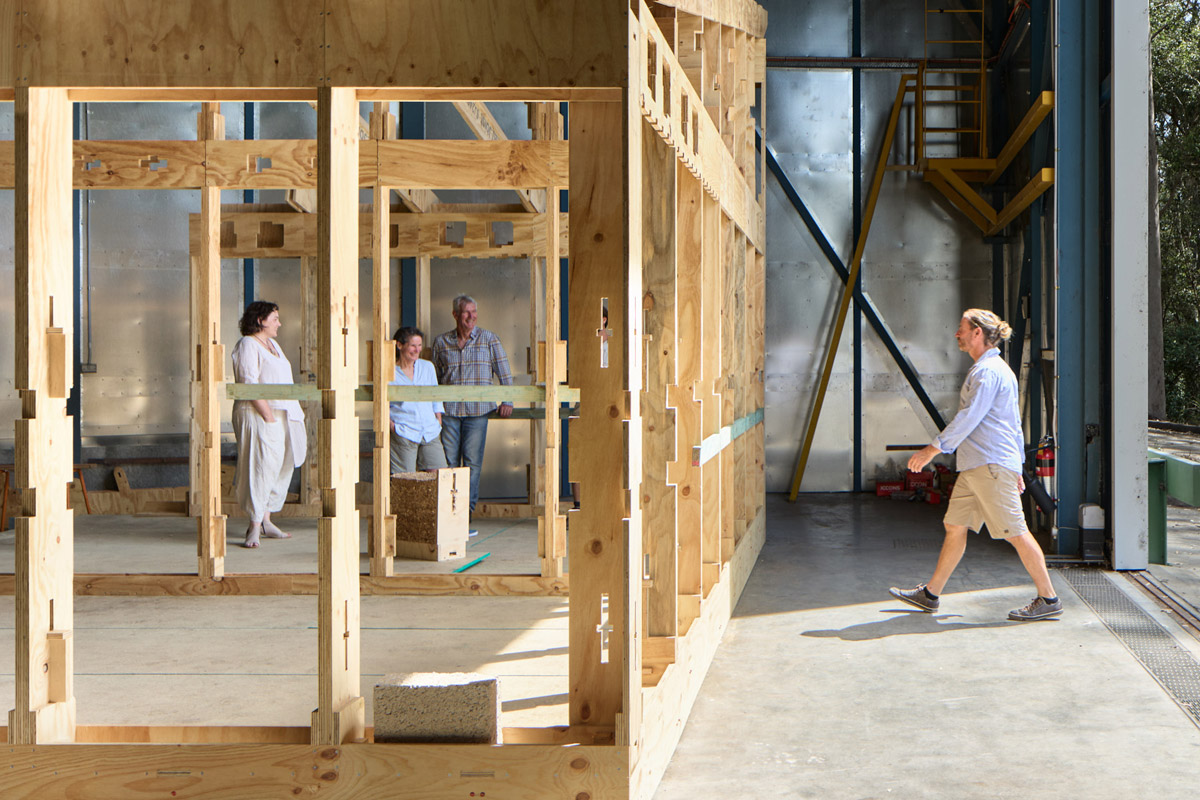
The FAST SLOW house is an R&D project with Industry Partner Mudtec to create a high-performance, prefabricated DIY ecoply kit home, which can be filled with earthen and bio-materials such as hempclay, light straw, un-stablised rammed earth. Making these sustainable materials accessible to more people.
This project encompassed the design and construction documentation for the renovation of the Anthepe Community Building, located within the Anthepe Town Camp in Mparntwe (Alice Springs). It involved a comprehensive collaborative process with the Anthepe community and Tangentyere Council, utilizing a participatory design approach. The project was supported by a $700,000 grant from the National Indigenous Australians Agency (NIAA). Currently, the building is under construction and is scheduled for completion by the end of 2025.
At the intersection of research and pedagogy, architecture students are given design problems that require innovative, inclusive housing solutions supported by research-led design teaching, intersecting with real-world housing projects and client groups. Engaging with themes of sustainability, affordability, and community, students investigate alternative models of housing through it's Master of Architecture research streams - Houses Without Land and Critical Mass Communities - and ;Bachelor of Design (Architecture) studios - Domesticity and Leisure and Patternbook Housing.
Houses Without Land is an ongoing series of speculative design-research projects exploring the notion that the problem of housing affordability cannot be separated from the system of exclusive land ownership and our most pressing task as architects is to redesign our relationship to housing, land and each other. The key goal of the research is to find a de-colonised form of housing for Australia, one which seeks to learn from the reciprocal practices of caring for country long practiced by First Nations people here.
The University of Newcastle acknowledges the traditional custodians of the lands within our footprint areas: Awabakal, Darkinjung, Biripai, Worimi, Wonnarua, and Eora Nations. We also pay respect to the wisdom of our Elders past and present.