

Real-world applications of our research
Where could your degree lead you? The possibilities are endless...
Below are some examples of the real-world applications of research carried out in the School.
Voice-Image-Sensor app to measure food and nutrient intake
The CIT discipline have collaborated on a project with dieticians from the University to develop Voice-Image-Sensor technologies in the form of a smartphone app and wearable sensors to measure individual food and nutrient intake.
The app removes the need to weigh or estimate the amount of food a person eats and the need to manually record those details in a written log. Users can instead take a photo of their food and record a brief voice message. The image and voice data is supplemented with data coming from wrist-worn sensors to indicate whether a person is eating or not.
The technology will be deployed in low- and middle-income settings, particularly in developing countries. The research was funded through the Bill and Melinda Gates Foundation.
Using computer science to help cancer treatment drugs target killer cells
Computer science is an applied field which has as its main motivation to find efficient ways of solving complex problems using computational means. Computer scientists then transform their ideas into algorithms, step-by-step procedures that, given an input of a problem, propose the optimal solution.
These problems come from many areas. One is the area of 'personalised medicine', the idea that a therapy such as chemotherapy for cancer can be tailored to the particular genetic characteristics of a patient and their tumours. This involves investigating both the genetic information of the person's normal cells and the tumours to produce a personalised therapy.
Databases around the world are curating information about the efficacy of chemical compounds that delay the growth of malignant cells. A new area of research has been identified: is it possible to identify the best possible combination of compounds or drugs that work better together for a particular individual? These problems generally involve the use of computer science and specialised algorithms to search for all possible combinations.
There are, however, some common findings across cancer types and the genetic makeups of individuals: the microenvironment on which these cancer cells grow in an individual have some similarities. Could it then be possible to change this microenvironment by regulating some key molecular drivers of the changes observed and reduce the rate of growth?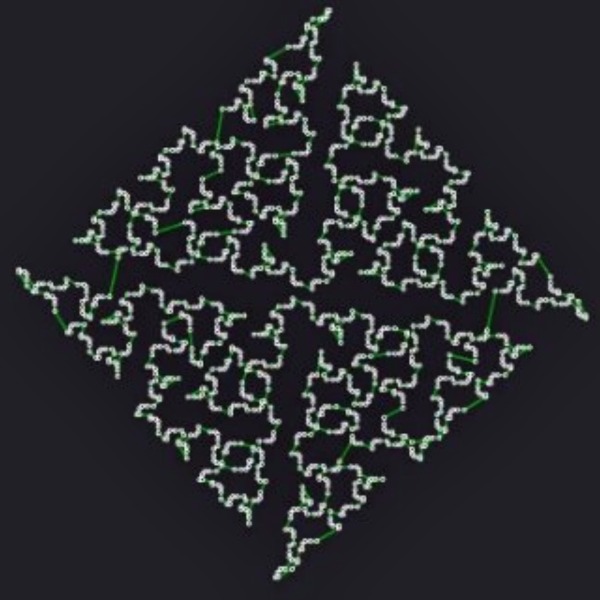
Two of The University of Newcastle’s computer scientists, Professor Pablo Moscato and Dr Nasimul Noman, have recently taken another step to solving this challenge by approaching it as an optimisation problem. Their study was based on treating gliomas, a type of tumour found in the brain and spinal cord. Using mathematical models of cancer growth, they developed and applied computer science algorithms to help determine the combination of drugs to help to reduce the rate of growth by altering the tumour’s microenvironment.
Their results demonstrated that, if the mathematical models of cancer growth are correct, the algorithms they developed can design effective personalised combination therapy to change the microenvironment (but the drugs and compounds required may need to perform several functions at once).
If the possibilities surrounding this real-world health-related application of computer science excite you, you might wish to read more about the work of Professor Pablo Moscato and his colleagues, and you might wish to learn from them directly by studying a Bachelor of Computer Science degree.
School contacts
School Executive Officer
-
Juliane Turner
School Executive Officer
General enquiries
-
School administration enquiries
Phone: 02 4921 5538
CESE-SCIS-Admin@newcastle.edu.au
Connect with us
The University of Newcastle acknowledges the traditional custodians of the lands within our footprint areas: Awabakal, Darkinjung, Biripai, Worimi, Wonnarua, and Eora Nations. We also pay respect to the wisdom of our Elders past and present.