
Climate Action
Environmental Education Collaboration with NGOs
The University of Newcastle collaborates with non-governmental organisations (NGOs) on climate adaptation and biodiversity conservation initiatives. In 2025, researchers and community partners worked on catchment resilience and nature-based restoration in the Cook Islands, alongside Australian partnerships that contribute research and education to environmental protection.
Community-led climate resilience and restoration in the Cook Islands
In 2025, the University collaborated with Muri Environment Care (MEC), a community-based environmental NGO in Rarotonga, and the Cook Islands National Environment Service through Project ENUA (Enhancing Nature’s Unique Areas). University researchers Associate Professor Troy Gaston and Dr Alex Callen conducted catchment fieldwork and shared ecological and restoration expertise with local partners, including MEC and the Kōrero O Te ‘Ōrau Environmental Education Centre.
The collaboration focuses on four Rarotonga catchments and supports community-led catchment management planning. Researchers and local organisations are bringing monitoring data and local knowledge together to inform practical measures that protect waterways, reduce pressures from erosion and runoff, and strengthen the resilience of the island’s freshwater and coastal ecosystems.
This partnership also contributed to the Cook Islands’ first “tiny forest”, established above the Parengaru stream on 22 November 2025. Working with MEC, the National Environment Service, the Groundswell Collective and community volunteers, University participants helped plant 600 native trees and shrubs across a 200-square-metre site. The nature-based restoration initiative is designed to improve stream health, stabilise soils, support biodiversity and provide opportunities for ongoing community education and ecological research.
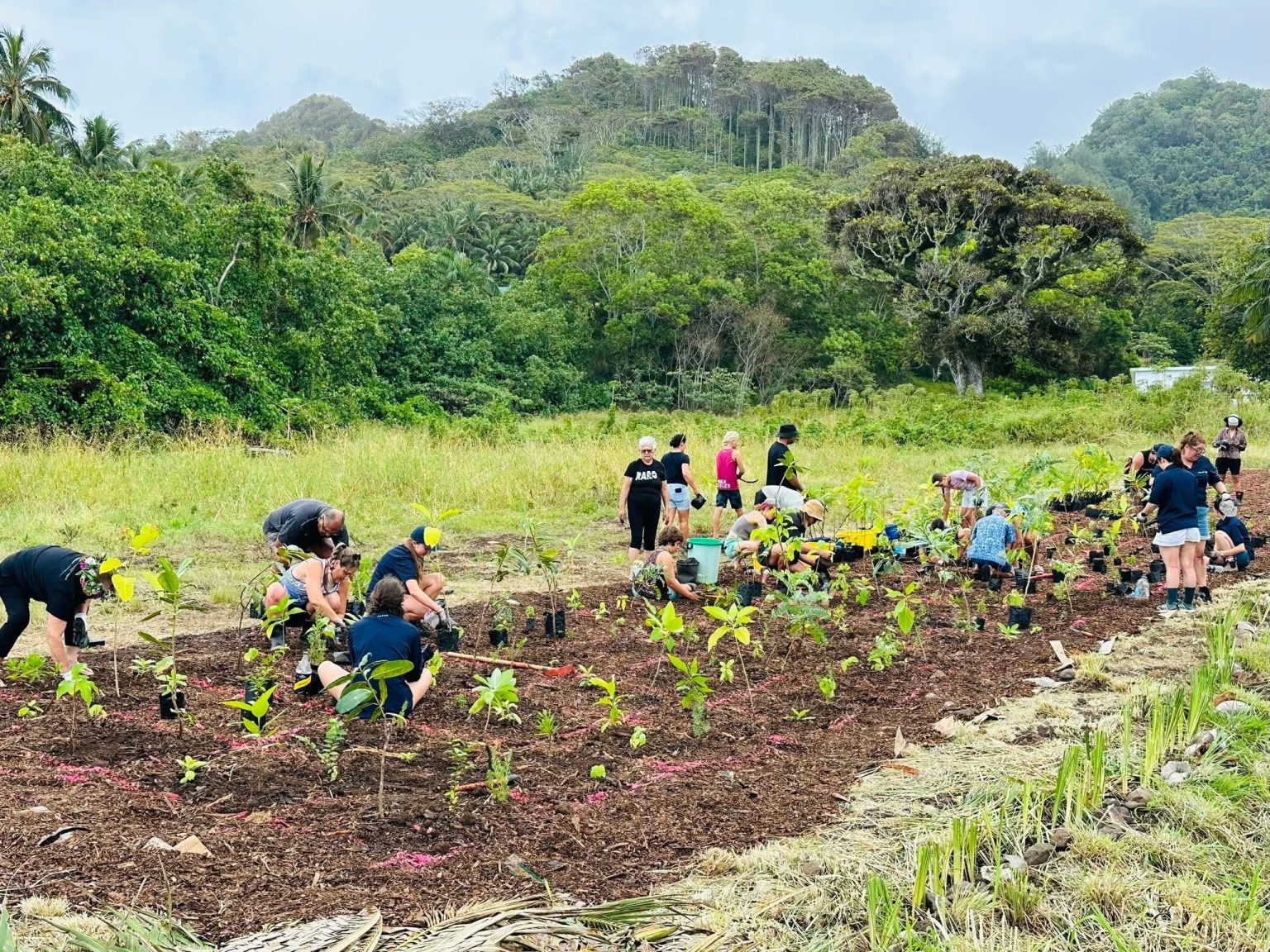
Community volunteers and project partners taking part in native-vegetation restoration in the Cook Islands. Image source
Conservation monitoring and restoration with WWF-Australia
In June 2025, the University reported results from a major koala monitoring study funded by WWF-Australia, an environmental NGO. Led by University wildlife ecologist Dr Ryan Witt, the research combined thermal-drone surveys, spotlight checks and statistical modelling to estimate koala numbers across 67,300 hectares of NSW bushland. The team estimated more than 290 koalas at Sugarloaf State Conservation Area near Newcastle.

A baby koala clings to mother, nestled in the tree tops at Sugarloaf. Credit: Daryn McKenny
The study also compared fire-affected sites with unburnt areas, finding substantially lower koala abundance at sites affected by the 2019–20 bushfires. The findings provide WWF-Australia and conservation managers with evidence to guide habitat protection, fire recovery and future species monitoring. The findings strengthen conservation knowledge needed to protect vulnerable habitats and species following major fire events.
Environmental education with conservation charities
The University has also worked with Deadly Science, an Indigenous STEM charity, and partners at the University of Waikato on Marine Invaders – Saltwater Country. Presented at Watt Space Gallery in November–December 2024, the educational card game and exhibition introduced students and the wider community to marine invasive species, Indigenous perspectives and the protection of Saltwater Country. This earlier collaboration demonstrates how environmental research can be shared through creative, accessible educational activities.

Marine Invaders brings marine-biosecurity science and Indigenous
perspectives into an interactive learning activity.
The University’s Centre for Conservation Science has a wider record of applied conservation research with non-government conservation organisations. Researchers including Professor Matthew Hayward and Associate Professor Darren Southwell work on threatened-species protection, habitat management and conservation strategies, complementing the University’s climate-resilience partnerships.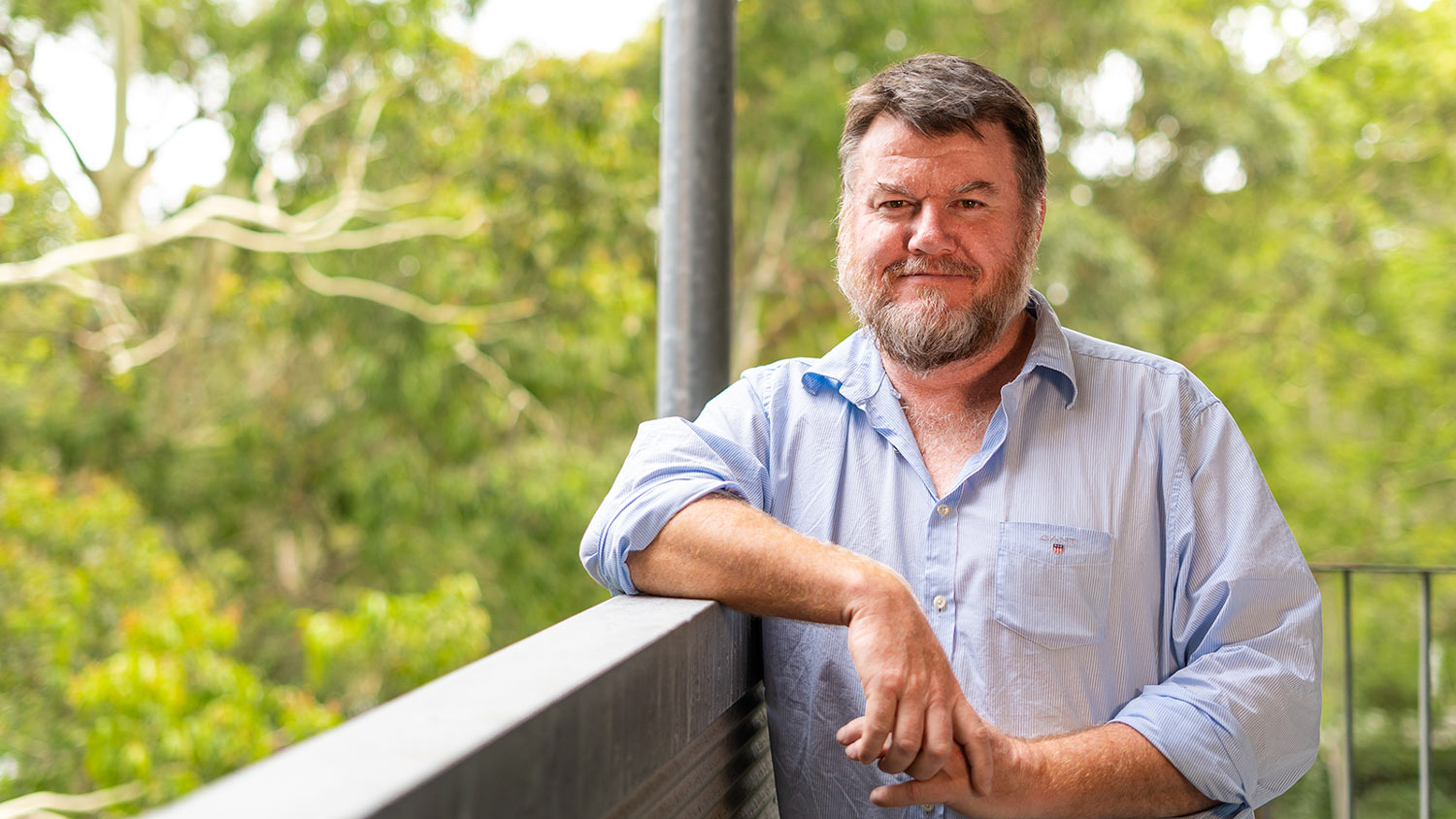
Professor Matthew Hayward, Centre for Conservation Science.
By working with environmental NGOs and community organisations, the University connects research expertise with local knowledge and practical restoration. These partnerships support environmental learning and strengthen the capacity of communities and ecosystems to respond to changing conditions.

Current Research Projects
Safe Havens
Location: Multiple (Lat: -24.67, Long: 135.5576)
Species Involved: Multiple
Staff: Matt Hayward, John Gould, Darren Southwell, Andrea Griffin
Post-doc(s): John Gould
Parma wallaby conservation
Location: Gondwana Rainforests (Lat: -29.8777, Long: 152.58)
Species Involved: Parma wallaby
Staff: Matt Hayward, Andrea Griffin, Darren Southwell
Student(s): Emily Jarvis
Rewilding Norfolk
Location: Norfolk Island (Lat: -29.033, Long: 167.947)
Species Involved: Black Rat, Polynesian Rat, House Mouse
Staff: Matt Hayward, Finella Dawlings, Andrea Griffin, Darren Southwell
Post-doc(s): Finella Dawlings
Rewilding Ngambaa
Location: Ngambaa Nature Reserve (Lat: -30.848, Long: 152.758)
Species Involved: Parma wallaby
Staff: Matt Hayward
Student(s): Emily Jarvis
Post-doc(s): Lynette Plendergath
Cats in the Fitz-Stirling Priority Place
Location: Fitz-Stirling region (Lat: -34.171, Long: 118.79)
Species Involved: Feral cat
Staff: Matt Hayward
Post-doc(s): Luke Emerson
Monitoring Land Management Actions
Location: Australia-wide (Lat: -23.4, Long: 133.76)
Species Involved: Cats and foxes
Staff: Matt Hayward, Darren Southwell, Brooke Williams
Post-doc(s): Matthijs Hollanders
Greater Glider Conservation
Location: Gondwana Rainforests (Lat: -33.22, Long: 151.297)
Species Involved: Southern greater glider
Staff: Matt Hayward, Andrea Griffin
Student(s): Melina Budden
Broad-toothed rat conservation
Location: Barrington Tops (Lat: -31.958, Long: 151.428)
Species Involved: Broad-toothed rat
Staff: Matt Hayward, Darren Southwell
Student(s): Charlotte Alley
Green and golden bell frog habitat selection
Location: Koorgang Island (Lat: -32.148459, Long: 150.7016)
Species Involved: Green and golden bell frog
Staff: Alex Callen, Matt Hayward
Student(s): Lynne Matthews
Biomon – ZeroShot learning for acoustic detection of the threatened green and golden bell frog
Location: Muddy Lake (Lat: -33.07654, Long: 151.501196)
Species Involved: Green and golden bell frog
Staff: Alex Callen, Matt Hayward, Andrea Griffin, Darren Southwell, Stephan Chalup
Student(s): Oliver Kelly, Ysobel Sims
The interaction between estuary hydrodynamic regimes and the endangered green and golden bell frog Litoria aurea
Location: NSW coastline (Lat: -33.459047, Long: 151.43243)
Species Involved: Green-and-golden bell-frog
Staff: Alex Callen, Hannah Power, Matt Hayward
Student(s): Kate Tunstill
Developing non-invasive biomarkers of stress in amphibians and non-lethal gene expression studies for chytrid
Location: Multiple (Lat: -33.009336, Long: 151.370499)
Species Involved: Amphibians
Staff: Alex Callen, Phil Jobling, Kaya Klop-Toker
Student(s): Anne Ibbotson
Post-doc(s): Rose Upton
The biology and ecology of aquatic weeds and their biocontrol agents
Location: Multiple (Lat: -33.07654, Long: 151.501196)
Species Involved: Invasive aquatic plants
Staff: Alex Callen, Craig Evans
Student(s): Amy Stephens
Post-fire habitat creation for Littlejohn's tree frog and giant burrowing frog
Location: Watagans (Lat: -33.009336, Long: 151.370499)
Species Involved: Amphibians
Staff: Alex Callen, Matt Hayward, Kaya Klop-Toker, John Clulow, Michael Mahony
Student(s): Nadine Nolan
Post-doc(s): Rose Upton
Global flows and impacts of forest-based carbon
Location: Global
Staff: Brooke Williams
Leveraging the potential of tropical natural regeneration to achieve multiple objectives
Location: Global
Staff: Brooke Williams
Private land conservation for Koalas under climate change (led by Prof Jonathan Rhodes at QUT)
Location: NSW coastal and inland regions (Lat: -33.184782, Long: 151.218799)
Species Involved: Koalas
Staff: Brooke Williams
Delivering benefits from nature in a highly connected world (led by Prof Jonathan Rhodes at QUT)
Location: Global
Staff: Brooke Williams
Global potential for natural regeneration in deforested tropical regions (contributed during PhD at UQ - project led by CI and ICEED)
Location: Global
Staff: Brooke Williams
Four African case studies exploring how to incorporate biodiversity into land use planning using spatial prioritisation and scenario analysis (contributed during PhD at UQ - project led by WCS)
Location: The Maiko-Tayna-Kahuzi-Biega landscape, eastern DRC (Lat: -2.886808, Long: 28.273298)
Staff: Brooke Williams
Land use change in the Orinoquia (contributed during PhD at UQ - led by WCS)
Location: Orinoco region, Colombia (Lat: 5.067236, Long: -70.780326)
Staff: Brooke Williams
Achieving multiple objectives in a fire-dependent ecosystem
(contributed during Honours at UQ – led by Prof Kerrie Wilson, QUT)
Location: Dry sclerophyll forests in the City of Gold Coast (Lat: 27.9769, Long: 153.3809)
The University of Newcastle acknowledges the traditional custodians of the lands within our footprint areas: Awabakal, Darkinjung, Biripai, Worimi, Wonnarua, and Eora Nations. We also pay respect to the wisdom of our Elders past and present.