

The Don McNair Herbarium
The impact of the Don McNair Herbarium has now far exceeded its original goal to ‘record environmental and plant changes, particularly in response to climate change’, having become an internationally-recognised teaching and research resource for plant taxonomy, ecology, biology, genetics and natural history illustration.
History and Vision
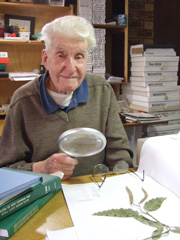
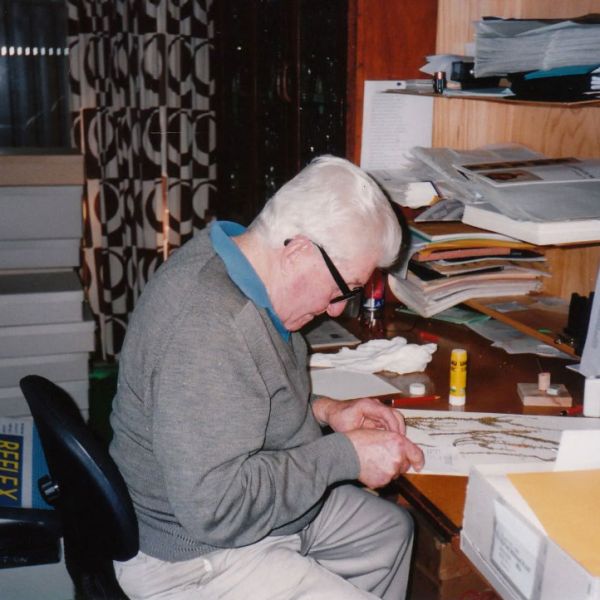
The late Dr Don McNair (1920 – 2014); Honorary Doctor of Science, (1996) was a Novocastrian who combined his career as an auto-electrician with an extraordinary passion for the Australian native flora and its ecology. He was a meticulous collector of plant specimens for almost 70 years and undertook extensive floral surveys. Thanks to his passion, forethought and dedication, the Don McNair Herbarium contains a record of the floral diversity of the Hunter Region since the 1950s.
Don donated his collection as a gift-in-kind to the University of Newcastle and worked with volunteers and staff of the University to establish the Herbarium in his name. He provided a generous bequest to the University to assist in sustaining the Don McNair Herbarium and to foster postgraduate research in plant identification and conservation.
Don was awarded an Honorary Doctorate by the University of Newcastle in 1996, recognising his lifetime work in botany and his remarkable contributions to the Hunter community.
Don’s vision for the Herbarium was that:
“The Herbarium should be a vibrant working unit supporting the research and teaching of The University and engaging with the community in the areas of Plant Taxonomy, Ecology and Natural History Illustration, and itself continuing to build the collection for perpetuity”.
A Valuable Resource
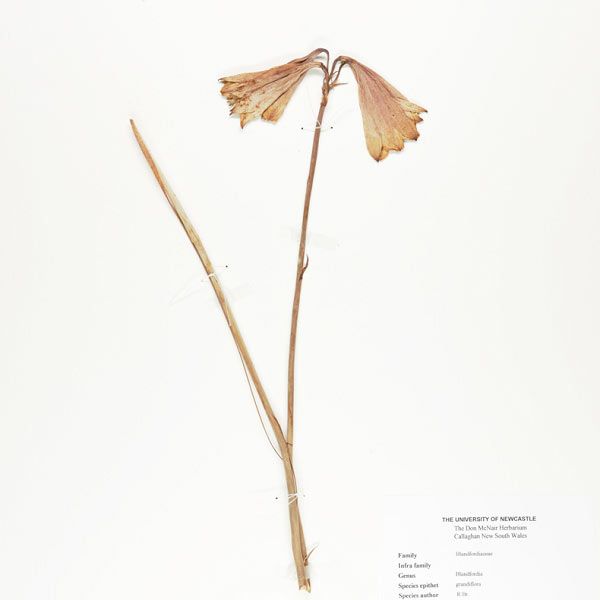
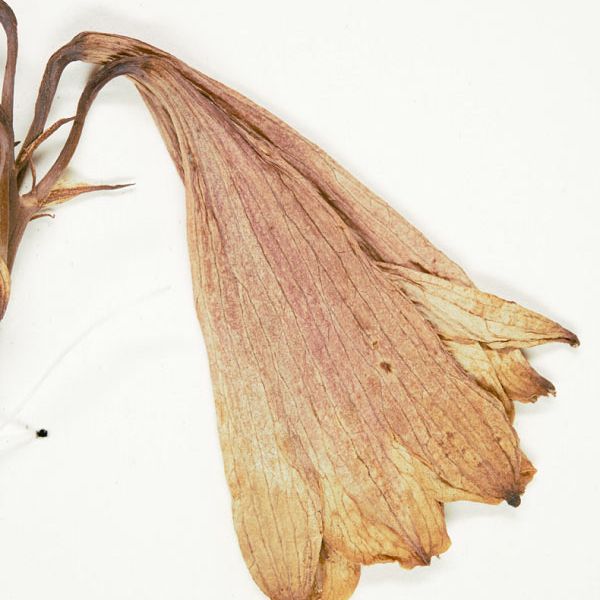
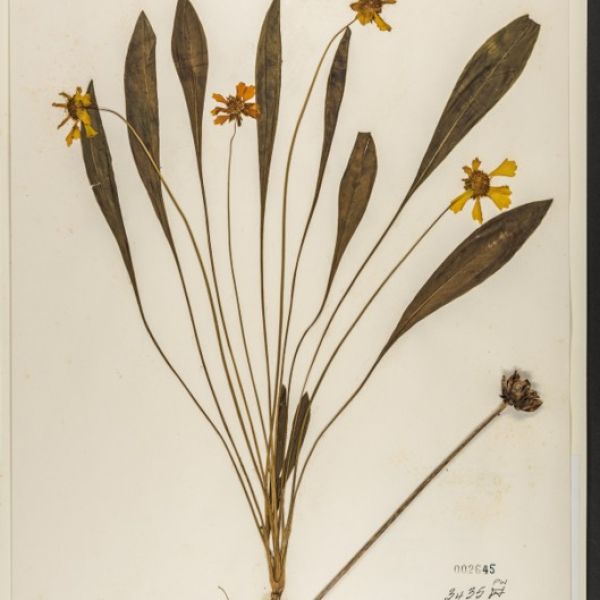
The Don McNair Herbarium houses a collection of over 14,500 specimens, including Angiosperms (flowering plants), Gymnosperms (conifers) and Pteridophytes (ferns). The collections focus is on the flora diversity of the Mid North Coast and Hunter regions of New South Wales and the arid zone flora of New South Wales, South Australia, Western Australia, Queensland and the Northern Territory.
The collection is a valuable resource for plant identification, student learning and research, and specimen data provides a spatial and temporal map of the changes in flora distribution and loss in the Hunter region. It also provides a historical record and ancient DNA fingerprint of the regional flora.
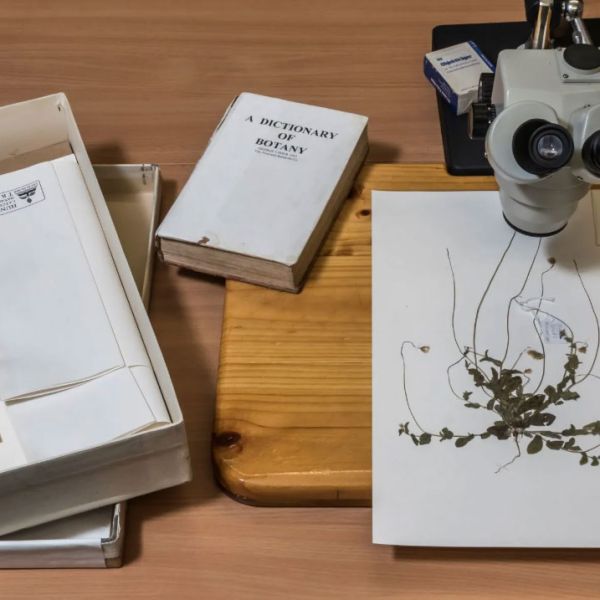
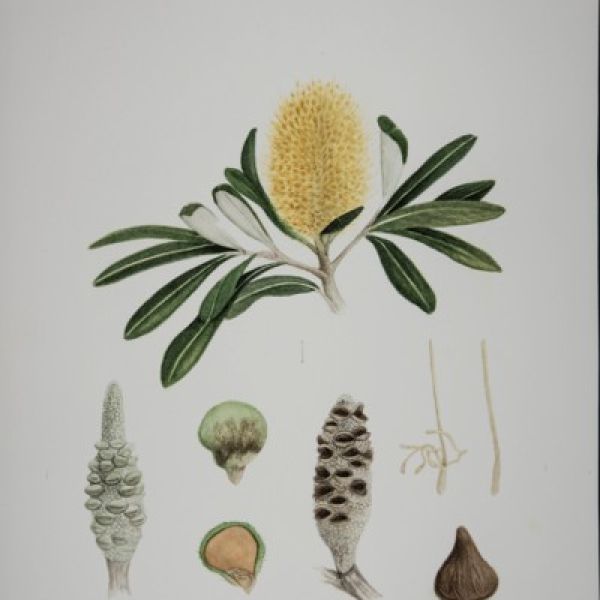
The collection is made up of the main specimen collection, as well as additional reference collections for use by students and the community. The Herbarium also holds a collection of botanical illustrations, digital flora images and a library, resources that are used as additional tools to assist in plant identification.
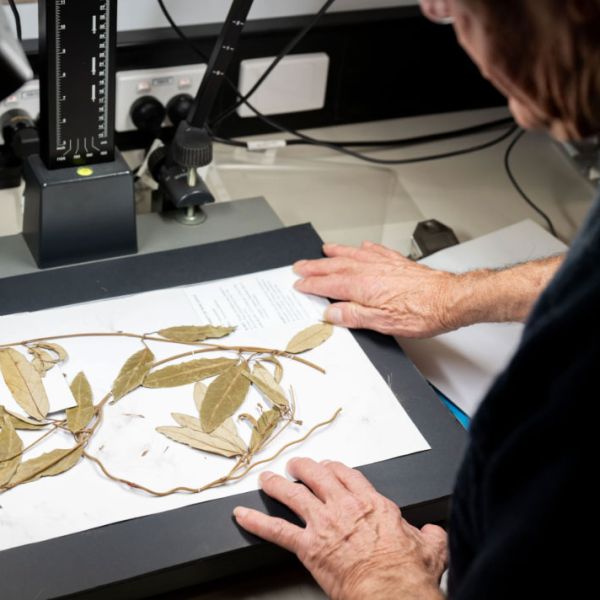
All of the collections are catalogued and digitised, and held on an internal access database platform whose data can be made available on request. In 2023 the collection was rehoused in a secure climate and pest-controlled storage area with separate workspaces for volunteers and students.
The collection can be accessed by appointment by contacting the Collections Manager at
Don-McNair-Herbarium@newcastle.edu.au
Support Us
The Don McNair Herbarium collection is an invaluable resource that assists in our understanding of the human and environmental pressures being placed on the flora of the region.
It can be used for innovative research into the understanding of the environment, its cultural connections and how to ensure its sustainable use and management for future generations.
It also provides a valuable tool to train students in the skills needed to work in the environmental sector and provides a resource for the community to learn about the importance of the region’s flora.
The wider Hunter region supports over 100 locally endemic plant species that occur nowhere else and provides habitat for more than 110 threatened species.
Support The Herbarium
Volunteer Opportunities
Are you passionate aa about plants and biodiversity?
Both student and community member volunteers continue to be a vital part of the Herbarium, donating their time and expertise to prepare and catalogue specimens and digitise the collection.
The Don McNair Herbarium welcomes volunteers to assist with activities such as:
- Specimen preparation and mounting
- Data entry and digitisation
- Collection maintenance and organisation
Volunteering is a great way to gain hands-on experience and contribute to preserving Australia’s botanical heritage.
Interested? Please contact our Volunteer Program Coordinator
Don-McNair-Herbarium@newcastle.edu.au
Herbarium Stories
Using Sniffer Dogs to Detect a Plant Pathogen at the Don McNair Herbarium
By Elise Rourke
Phytophthora cinnamomi is a microscopic plant pathogen that threatens biodiversity across Australia, and often goes undetected until plants begin to die. This fungus-like water mould causes dieback disease by infecting plant roots and limiting their ability to absorb water and nutrients. It spreads through the movement of contaminated soil and water, and is recognised as a threat to 236 nationally listed threatened species and 32 threatened ecological communities in Australia.
As there is no cure for infected plants, rapid and reliable detection is essential to prevent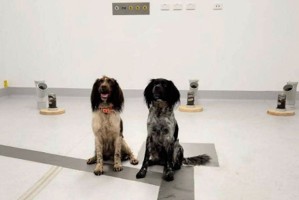 further spread. Traditional laboratory testing of soil samples can be costly and time-consuming, so an emerging alternative is being explored: the use of conservation sniffer dogs.
Through the NSW Government’s Saving our Species program, two spaniels, Alice and Echo, have been trained to detect P. cinnamomi in soil. The project is led by the NSW National Parks and Wildlife Service, in collaboration with Tate Animal Training Enterprises and research partners including the University of Sydney and Botanic Gardens of Sydney. Honours student Elise Rourke (University of Newcastle) has contributed her own research questions and assisted with the project.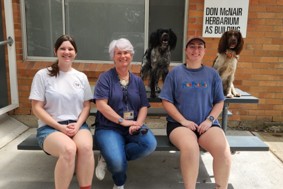 The Don McNair Herbarium hosted several controlled detection trials, providing a valuable space for testing the dogs’ accuracy.
Preliminary results suggest the dogs can reliably detect the pathogen in both wet and dried soils, supporting their potential use at vehicle checkpoints, plant nurseries and in broader landscape surveys. Elise has expressed her gratitude for the herbarium staff and volunteers, whose support made these trials possible and helped ensure their success.
30 Years On - History of Don McNair Herbarium
Thirty years ago, a local auto-electrician with a keen interest in Australian native flora made an invaluable donation to research and teaching at the University - as well as to the Hunter’s ecology at large.
As the University celebrates 60 years of pioneering research and education, it’s important to recognise the individuals, like Dr Don McNair, whose passion and commitment made this milestone possible.
Born in 1920, and with no official training in taxonomy, Don spent almost 70 years meticulously collecting and pressing plant samples from around the Hunter.
By the time Don donated his collection to the University in 1995, he had amassed around 5500 pressed plant specimens. This was supplemented by other collections gifted to Don, so that close to 6000 specimens came to the University thirty years ago.
This would become the Don McNair Herbarium.
In recognition of his incredible contribution to botany in the Hunter, Don was awarded an Honorary Doctorate by the University of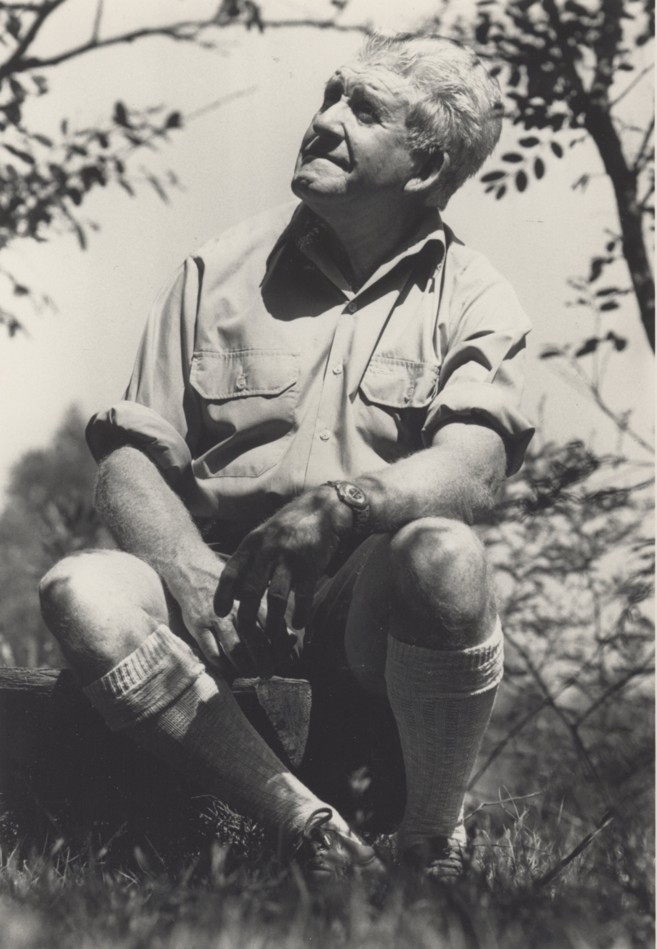 Newcastle in 1996.
“The Herbarium should be a vibrant working unit supporting the research and teaching of The University and engaging with the community in the areas of Plant Taxonomy, Ecology and Natural History Illustration, and itself continuing to build the collection for perpetuity”.
Now, volunteers like Don McNair Herbarium Collections Manager Ingrid Offler are keeping this legacy alive.
“Our endeavour will be to continue to grow the collection so that, over time, the data that we hold will be able to help us track changes in flora in this region,” Ingrid says.
“It’s critical, from a research perspective, to have herbaria located where people are actually working in the field. Universities are the ones training the next generation.”
Herbal Medicine Research at the Herbarium
About the Don McNair Herbarium
Enquiries
| General enquiries | Don-McNair-Herbarium@newcastle.edu.au | |
Mailing address | The Don McNair Herbarium |
Herbarium Staff

The University of Newcastle acknowledges the traditional custodians of the lands within our footprint areas: Awabakal, Darkinjung, Biripai, Worimi, Wonnarua, and Eora Nations. We also pay respect to the wisdom of our Elders past and present.