
Research highlights gaps in gender-based violence recovery support
University of Newcastle researchers are drawing attention to a critical gap in responses to gender‑based violence: the lack of ongoing, well‑resourced healing and recovery support for victim‑survivors once the immediate crisis has passed.
A new report developed in close partnership with frontline service providers in the Hunter and surrounding regions shows that services are overstretched, under‑resourced and fragmented, which limits their capacity to provide long‑term, post‑crisis support.
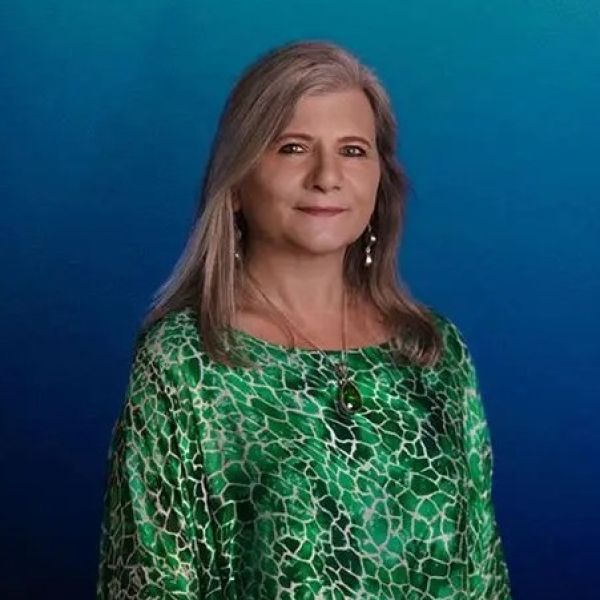
Director of the Centre of Excellence for Equity in Higher Education and lead researcher, Professor Penny Jane Burke, said long‑standing relationships with local support services was crucial to understanding community needs.
“One of the most important aspects of our research has been giving a voice to people in the community sector who are doing this work day in, day out." Professor Burke said.
"They consistently told us that healing and recovery are absolutely critical, yet they are not well serviced within the current system."
The Centre of Excellence for Equity in Higher Education works with communities to understand and challenge the systems that shape access to education. It focuses on changing structures – not fixing individuals – by co‑creating knowledge and solutions with people navigating inequality.
The Centre's research team worked closely with a core group of frontline service providers, including members of the Hunter Domestic Violence Consortium, using a co‑designed approach built on trust and sustained engagement. As well as in-depth interviews, surveys, workshops and facilitated forums allowed a broader range of services to contribute their knowledge and experience.
The research, focusing on our regions, captured how victim‑survivors often need to navigate multiple disconnected systems, including housing, legal, financial, education and health services. It found that the lack of coordination can make recovery far more difficult.
“If people don’t have the ongoing support they need to rebuild their lives and reconnect with the community, they become more vulnerable to future victimisation,” Professor Burke said.
“The impacts also extend to children, creating generational consequences if healing and recovery are not properly supported.”
The report shows that healing and recovery can shape whether people can imagine themselves returning to study, building confidence and reconnecting with opportunity. It also highlights considerable challenges for people with lived experience of gender‑based violence who want to pursue education. Common challenges included childcare responsibilities, time pressures, limited funding, lack of social support and reduced self‑belief following trauma.
These findings build on earlier research from the Centre, including a 2021 study that examined how gender‑based violence affects access to and participation in higher education. That work highlighted the significant barriers faced by students with lived experience of violence and helped shape the University’s increasing focus on equity, recovery and participation.
Professor Burke said universities have an important role to play, not only through research but by working collaboratively with the community sector to support evidence‑building and advocacy.
“Our role as a university is to listen to the sector and use research as a tool to support their calls for change,” she said. “Healing and recovery must be central to how we address gender‑based violence – not an afterthought.“
Related news
- Opinion: AI is our way back and investment's our future
- Tiny ocean microbe unlocks new clue to Earth's carbon cycle
- World-leading study uncovers new targets for inflammatory bowel disease treatment
- Every hour counts: Global study links assessment delays to higher risk of burst appendix
- Meet the robot scientists transforming research discovery
Aligned with the United Nations Sustainable Development Goals
The University of Newcastle acknowledges the traditional custodians of the lands within our footprint areas: Awabakal, Darkinjung, Biripai, Worimi, Wonnarua, and Eora Nations. We also pay respect to the wisdom of our Elders past and present.