Young innovators explore sustainable housing through SMART eco-house program
Primary school students are building clay-and-straw eco-houses, testing them with thermal imaging cameras and exploring renewable energy through a collaboration between the University of Newcastle's SMART Program and the School of Architecture and Built Environment.
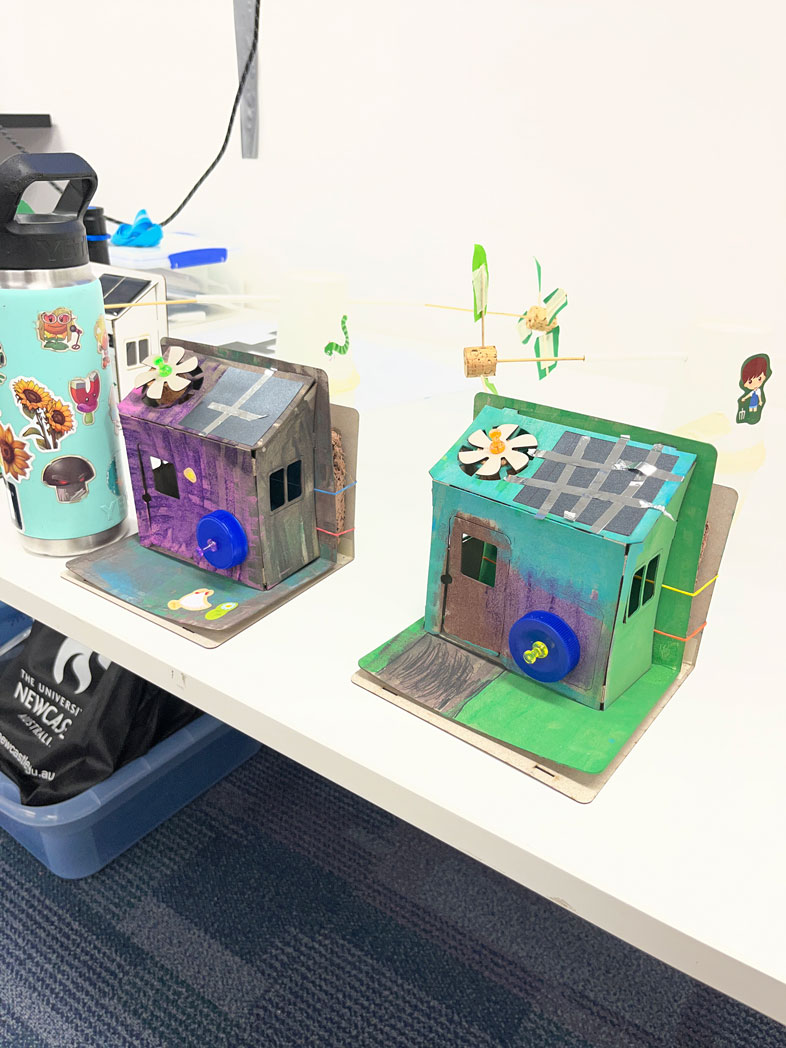 Delivered through SMART Squad's Future Makers: Build a Mini Eco-House program, students are investigating the same natural building principles being explored in the University's Fast/Slow Project, an innovative housing initiative developing more accessible, energy-efficient homes through a combination of prefabricated construction systems and natural building materials.
Inspired by the Fast/Slow prototype currently under development at Narara Ecovillage on the Central Coast, the program introduces young learners to how architecture, engineering and environmental design can work together to address real-world housing challenges. By building and testing their own model homes, students discover how material choices and thoughtful design can improve comfort, reduce energy use and support more resilient communities.
Dr Sarah Breen Lovett, who co-leads the Fast/Slow Project, said the collaboration demonstrates the importance of introducing young people to architecture and design thinking from an early age.
"Teaching the Fast/Slow Project through this SMART collaboration reminds us why thinking about architecture from an early age matters. Through learning about earth building techniques and thoughtful design choices, students discover that buildings can be tools for environmental, self, and community care."
Across five weekly sessions, students design and construct their own model eco-houses while learning about renewable energy, environmentally conscious construction materials and engineering principles. Activities include building insulated clay-and-straw walls, powering lights with mini solar panels, designing and testing wind turbines, creating furniture from recycled materials and decorating their finished homes to take home.
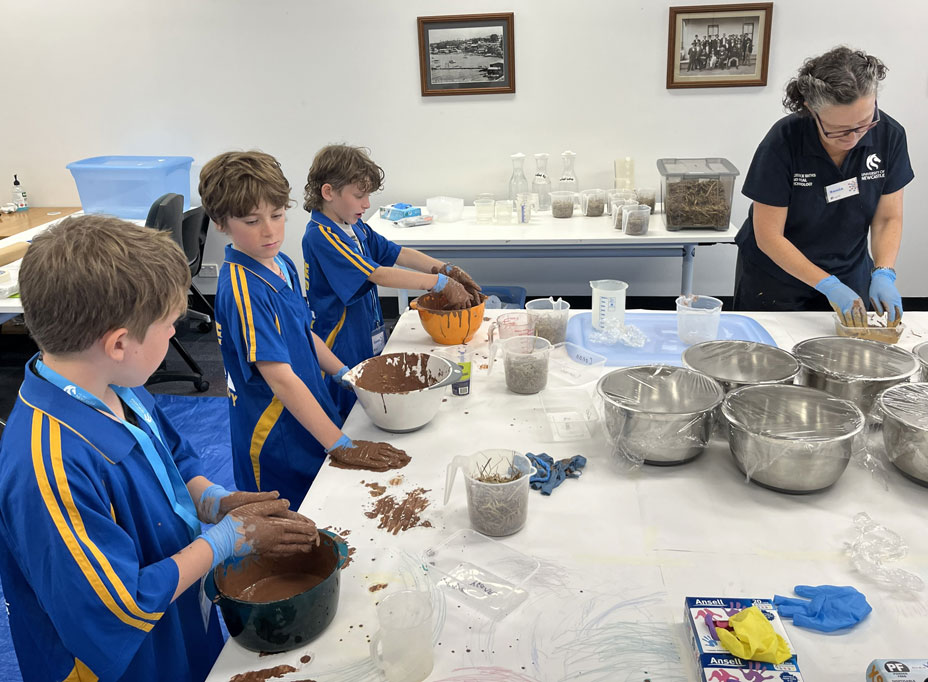 SMART Education Officer Sonia Cousins said the collaboration provided an opportunity to connect STEM learning with building techniques being explored through University research.
"After meeting with Dr Sarah Breen Lovett, we decided the clay and straw wall would be a fantastic activity to incorporate into our five-week Build a Mini Eco-House program, showing how traditional building materials are still relevant in a sustainability-focused context. The children really loved getting hands-on — and a bit messy — when mixing and making their mini clay and straw wall for their model eco-house."
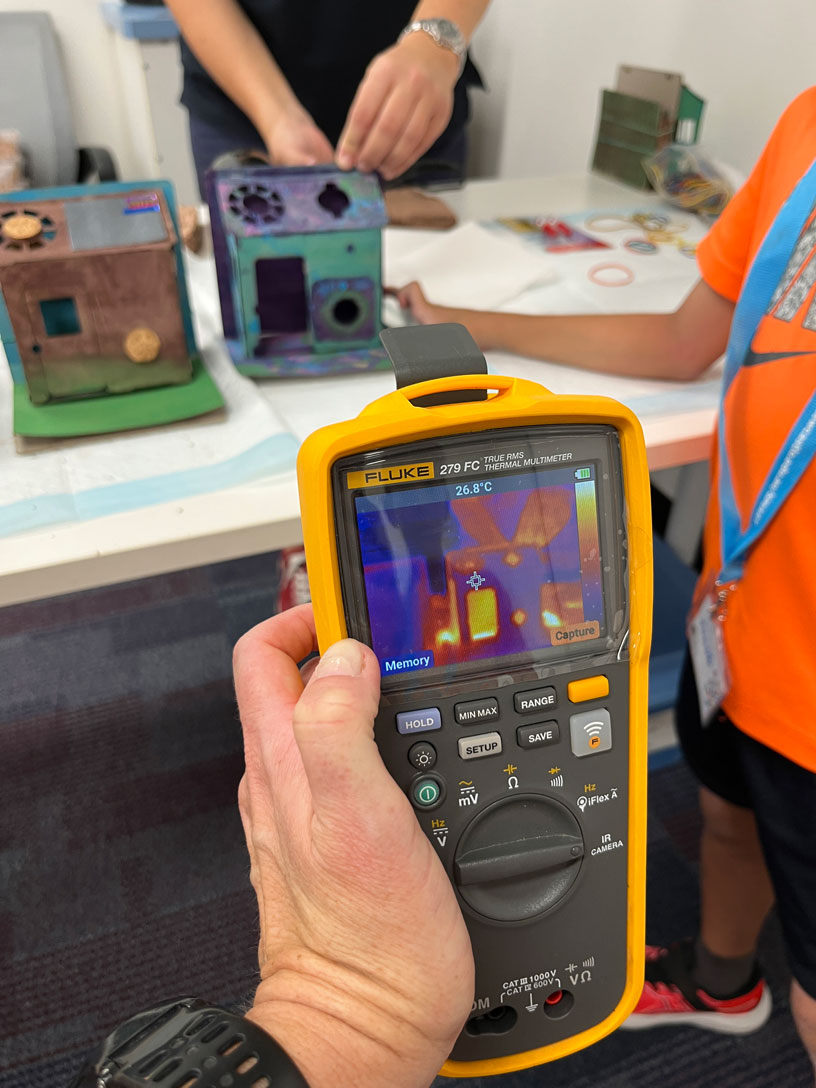 SMART Program Team Leader Megan Walker said students were highly engaged with both the practical activities and the broader concepts behind the Fast/Slow Project.
"Watching the thermal camera confirm that the walls students created could help protect homes from harsh heat was a particularly memorable moment. It helped them see how simple building materials and design choices can become real-world solutions."
The collaboration highlights how University research can be translated into hands-on learning experiences that inspire the next generation of innovators, designers and problem-solvers. Following the success of the program, families now have the opportunity to register for the next SMART Squad Future Makers: Build a Mini Eco-House program.
Upcoming Programs
The next SMART Squad Future Makers: Build a Mini Eco-House program will commence on 11 August at Sugar Valley Library Cameron Park, running as a five-week after-school STEM program from 4:00pm to 5:15pm for primary school students in Years 3–6.
Students will build a mini eco-house, explore solar and wind power, get creative with recycled materials, and discover how STEM helps us design the homes of the future. For further information or to purchase tickets, click on the link below.
Explore all upcoming SMART activities via the SMART Events Calendar
For more information about SMART, contact the team at smart@newcastle.edu.au
Related news
- University of Newcastle engineering leader awarded prestigious Engineers Australia Fellowship
- Local sport gets a boost with new multisport facility honouring Mark and Kirralee Hughes
- Opinion: AI is our way back and investment's our future
- Tiny ocean microbe unlocks new clue to Earth's carbon cycle
- World-leading study uncovers new targets for inflammatory bowel disease treatment
Aligned with the United Nations Sustainable Development Goals
The University of Newcastle acknowledges the traditional custodians of the lands within our footprint areas: Awabakal, Darkinjung, Biripai, Worimi, Wonnarua, and Eora Nations. We also pay respect to the wisdom of our Elders past and present.