
Architecture student gains invaluable experience through remote Indigenous community design project
For Bachelor of Design (Architecture) and proud Indigenous student Indianna Eckford, a recent work-integrated learning placement offered far more than a professional experience. It provided firsthand insight into how architecture can improve health, wellbeing and quality of life in remote Indigenous communities.
As part of her studies at the University of Newcastle, Indi completed a placement with Dogspike Design & Architecture in Alice Springs, contributing to community-led housing and design projects developed in partnership with the Rirratjingu Aboriginal Corporation in Yirrkala, East Arnhem Land.
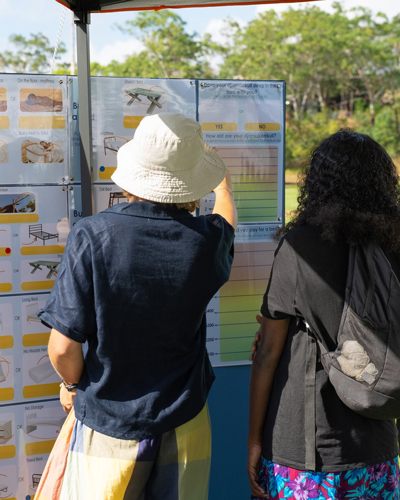 The two-week placement focused on
exploring innovative responses to housing challenges in remote Australia. One project focused on developing compact, affordable personal spaces for children living in overcrowded homes, while the other investigated modular and prefabricated housing solutions designed for Central Australia's harsh climate and remote conditions.
For Indi, the experience offered a unique opportunity to explore how design can support communities and strengthen connections to Country.
"As an Indigenous architecture student, I really wanted to educate myself further on what connecting with Country through architecture can look like beyond places like Sydney or Newcastle, and particularly what this means within remote Indigenous communities," Indi said.
While her first week was spent working remotely on project logistics, freight coordination and presentation preparation, the second week saw her based in Alice Springs, immersed in Dogspike Design's studio environment and broader community projects.
A major focus of her placement was the Djamarrkuli Off the Ground Beds Project, a community led initiative designed to address overcrowding housing and improve children's health outcomes.
Working alongside Dogspike Design and the Rirratjingu Aboriginal Corporation, the project is trialling a range of bed designs with children and families in Yirrkala. Feedback gathered over a six month period will help inform the development of the final design is tailored to community needs.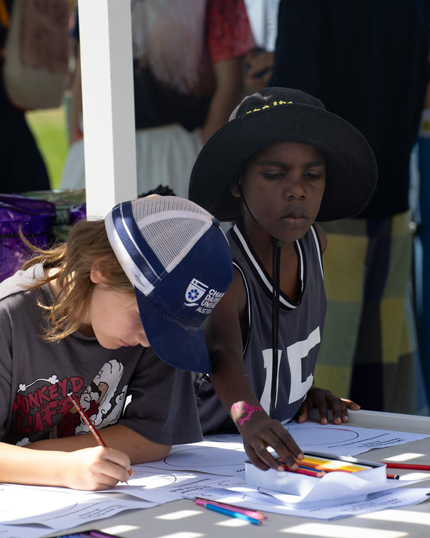
For Indi, the project highlighted the importance of listening before designing.
"I really loved this aspect of the project because it showed me what genuine community-led design can look like. It showed me that the role of the designer is not necessarily to arrive with the answer, but to listen, observe, test ideas and create something alongside the people who will actually be using it," she said.
The initiative grew directly from conversations within the Yirrkala community about practical needs for children and families. Beyond providing children with a dedicated sleeping space, the project aims to support health outcomes while fostering a sense of ownership, belonging and independence.
The placement also exposed Indi to broader community and housing projects across Central Australia. Through Dogspike Design's industry partnerships, she visited town camps, community facilities and projects focused on improving housing health and functionality in remote communities.
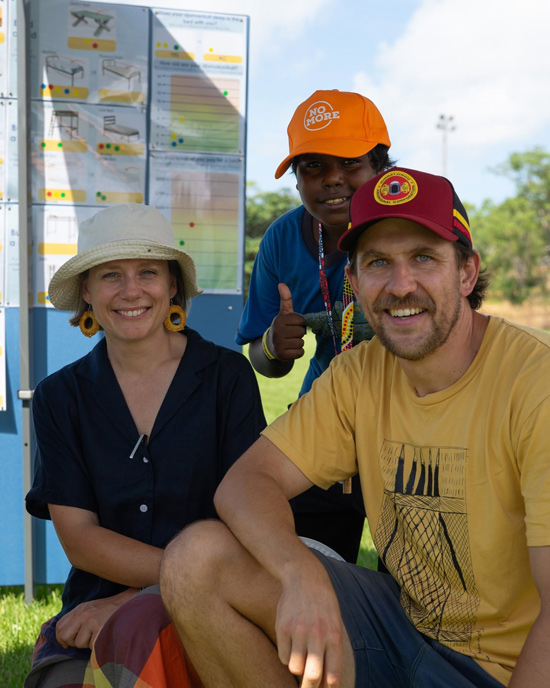 One memorable highlight was visiting a community centre designed and built by previous University of Newcastle students, demonstrating the lasting impact student design projects can have on communities.
The experience challenged Indi's perceptions of architecture and the role designers can play.
"One of my biggest takeaways was understanding that good architecture is not always about creating an amazing new, shiny building. Sometimes the most meaningful work is about addressing the root of an existing problem rather than putting a band aid over it. It can mean making sure homes are functioning as well as they can, that people have access to basic health hardware, and that housing genuinely supports the health, wellbeing and quality of life of the people living within it."
Dogspike Design & Architecture Director Owen Kelly praised Indi's contribution during the placement.
"We couldn’t be more impressed with how Indi thrived being thrown in the deep end of remote bed logistics and cross cultural and language communication," he said.
Indi's experience highlights how the University of Newcastle's approach to architecture extends beyond the classroom. Through partnerships with industry and First Nations communities, students are given opportunities to contribute to projects that address real world challenges and create lasting social impact. By learning from communities and designing alongside them, graduates develop the skills, cultural understanding and empathy needed to help shape a more inclusive and sustainable future.
Related news
- Architecture student gains invaluable experience through remote Indigenous community design project
- Sugarloaf koalas show no evidence of chlamydia as population exceeds expectations
- Earth Science Week Inspires Discussion on Critical Minerals and Sustainable Futures
- New discoveries in tree ring dating
- Staying the course through cost pressures
Aligned with the United Nations Sustainable Development Goals

The University of Newcastle acknowledges the traditional custodians of the lands within our footprint areas: Awabakal, Darkinjung, Biripai, Worimi, Wonnarua, and Eora Nations. We also pay respect to the wisdom of our Elders past and present.