$1.09 million to drive innovation in green iron, infrastructure safety and robotics
Heavy industry, advanced manufacturing and major infrastructure projects all face growing pressure to reduce emissions, improve precision and manage risk.
Three University of Newcastle research teams will tackle these challenges after securing more than $1 million in the latest round of the Australian Research Council Linkage Projects scheme.
Advancing green iron production for a low-emissions future
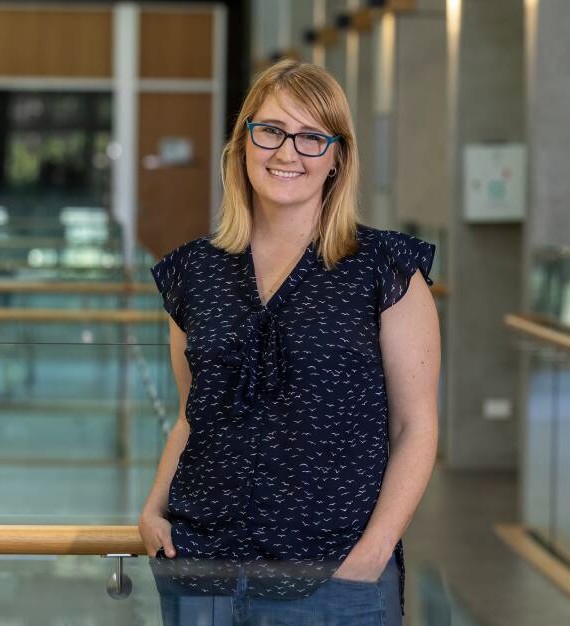
Traditional ironmaking produces significant greenhouse gas emissions and relies on high-grade ores. Researchers are testing a cleaner, more cost-effective way to use Australia’s abundant medium-grade resources.
Dr Jessica Allen is co-leading the project to produce iron using molten salts instead of traditional methods, which allows iron and oxygen to be separated from common types of iron ore in a single step.
Working with BHP Innovation Pty Ltd, the research team will study how iron forms in molten salt, how to control the process and how materials perform under extreme conditions.
Validating a new process to make high-purity iron without greenhouse gas emissions would help reduce the carbon footprint of iron and support the shift away from fossil fuels.
Funding awarded: $496,100
Safer infrastructure through advanced rock modelling
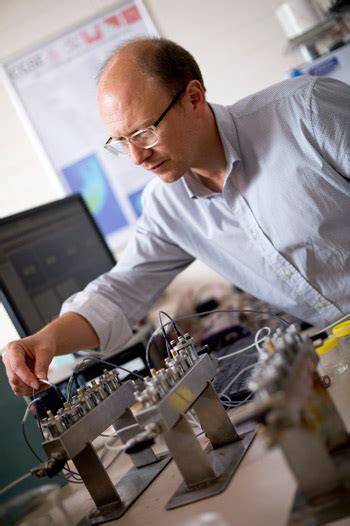
Engineers often lack reliable tools to predict the stability of large rock formations. This creates risk for major infrastructure, mining and renewable energy projects.
Professor Olivier Buzzi is leading a project that aims to improve how engineers assess rock strength and stability.
Working with geotechnical engineering consultants PSM, the research team will develop a design tool to better predict how rock masses perform under stress. They will focus on how rock discontinuities behave and how this affects overall stability.
The project will give industry clearer guidance and better tools, helping deliver safer and more efficient infrastructure, including in the growing renewable energy sector.
Funding awarded: $370,390
Enabling safer, smarter robotics in complex environments

Robots struggle to work with small, soft or fragile objects, especially in tight or hard-to-see environments. This limits their use in industries like healthcare and advanced manufacturing.
Dr Changyan He from the HMRI* Brain Health Research Program will lead a project that aims to help robots handle these tasks safely and precisely.
Working with Beijing Xianwei Medical Technology Co., Ltd. and ResTech, the research team will develop new ways for robots to see, learn and respond in complex settings.
They will build systems that improve depth perception, model how tools interact with objects and allow robots to adapt to constraints in real time.
The project aims to deliver new algorithms and working robotic systems that industry can apply in real-world settings.
Funding awarded: $224,979
*HMRI is a partnership between the University of Newcastle, Hunter New England Health and the community.
Related news
- Tiny ocean microbe unlocks new clue to Earth's carbon cycle
- Opinion: AI is our way back and investment's our future
- World-leading study uncovers new targets for inflammatory bowel disease treatment
- Every hour counts: Global study links assessment delays to higher risk of burst appendix
- Meet the robot scientists transforming research discovery
Aligned with the United Nations Sustainable Development Goals

The University of Newcastle acknowledges the traditional custodians of the lands within our footprint areas: Awabakal, Darkinjung, Biripai, Worimi, Wonnarua, and Eora Nations. We also pay respect to the wisdom of our Elders past and present.