
Research
Innovative methodologies
We develop innovative and socially engaged methodologies that challenge narrow understandings of equity. Rather than treating equity as a matter of removing simple “barriers” or “fixing” individuals, our work addresses the deeper social, economic and cultural conditions that shape who participates in higher education, and on what terms.
We help reframe equity as a qualitative condition grounded in recognition, dignity and genuine parity of participation.
Learn more on our key frameworks
Collaborative research with practical intent
Collaborative practice is central to how we work. Through partnerships across local communities, national networks and global institutions, and as home to the UNESCO Chair in Equity, Social Justice and Higher Education led by Professor Penny Jane Burke, we co‑create research that responds to persistent inequalities. We aim to drive meaningful change in policy and practice.
We are committed to building long‑term research capacity. We foster reflective, participatory research cultures that support emerging scholars, students, practitioners and community partners.
Learn more about studying with us
Current areas of work
Our research impact is expressed through key areas of focus that address urgent issues in equity:
- Our Gender Justice Hub investigates the intersection of gender-based violence and higher education with other forces of injustice and inequality. It supports collective advocacy through research, and sustained partnerships with local Domestic, Family and Sexual Violence services. Through networks and a UNESCO Chair Scholarship, this work is extended into the Ghanaian context. We are developing new concepts such as “trauma-transformative agency” (Burke & Hardacre, forthcoming). In collaboration with Professor Deb Loxton at the Centre for Women’s Health Research, we are exploring the role of lifelong learning in healing and recovery.
- Our work on equity in the sciences—developed with colleagues at the University of Bath, UK, and the University of Cairo, Egypt—generates new insights into disciplinary cultures and patterns of inclusion. Pedagogical methodologies (Burke & Lumb) have been engaged across the research sites, supporting university staff to engage with research data through written and (de-identified) audio media.
- CEEHE leads evaluative research projects, building innovative methodologies (read more here). These position evaluation as a powerful tool for challenging and reshaping systems of inequality. The team publishes, delivers national workshops, and provides guidance across the sector on ethical evaluation and program design. Through the development of a collection of papers in the journal, Access (read here), the team is connected to an international network of evaluators. The team has also contributed to the large-scale project Reimagining Evaluation: A culturally responsive evaluation framework commissioned by the NSW Department of Education and led by Deputy Vice-Chancellor Engagement and Equity, Nathan Towney.
Highlighted publications
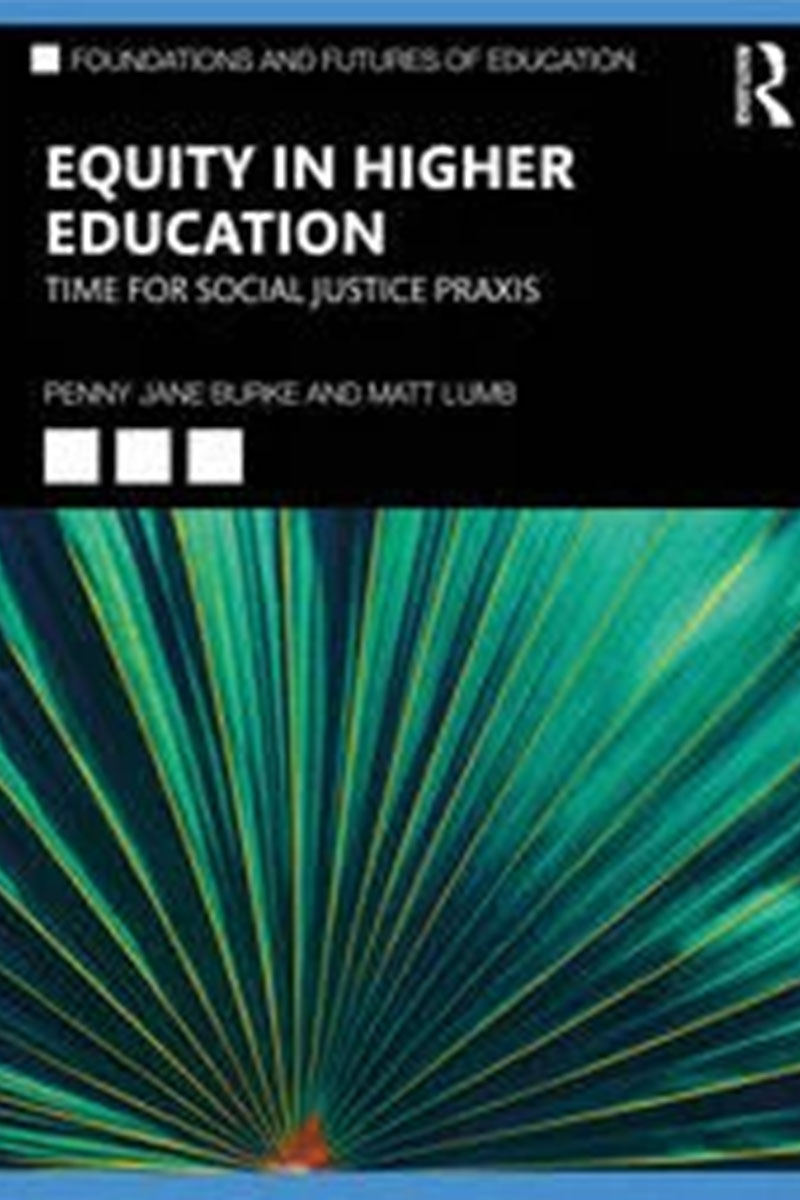
Equity in Higher Education: Time for Social Justice Praxis
Penny Jane Burke and Matt Lumb
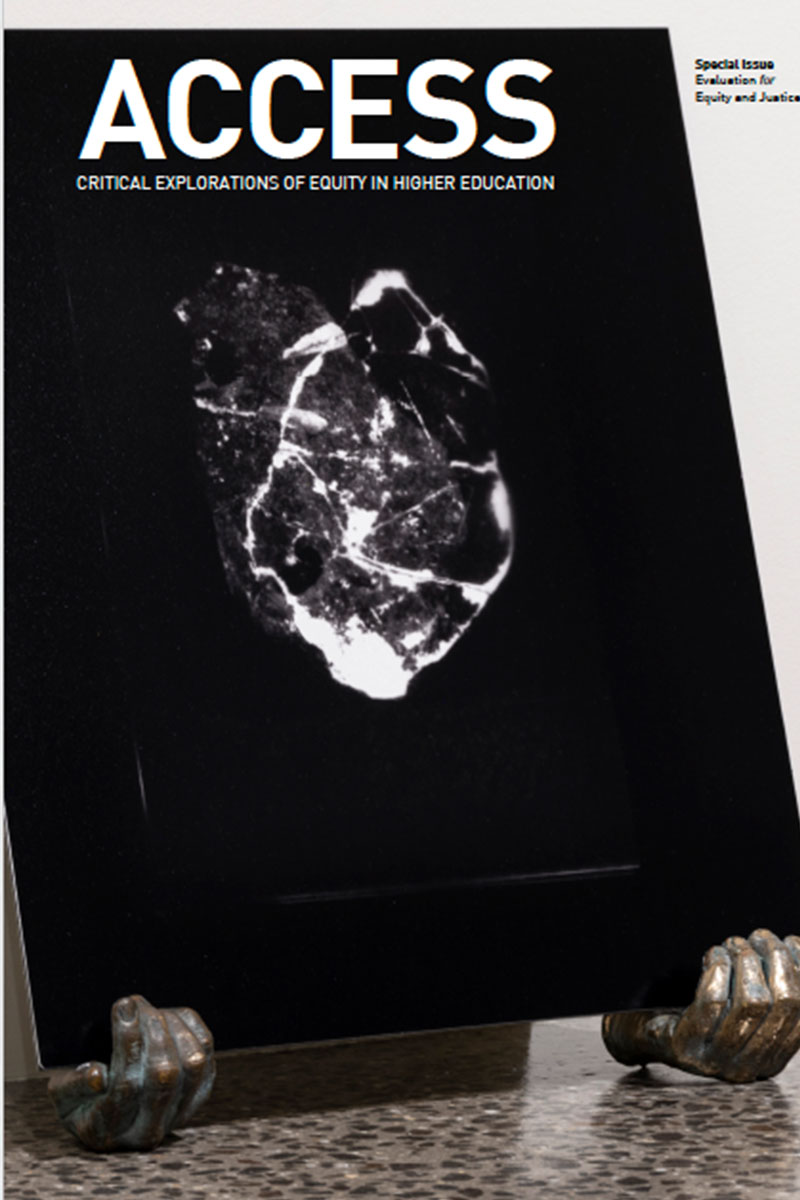
ACCESS: Critical explorations of equity in higher education
Special issue ‘Evaluation for Equity and Justice’
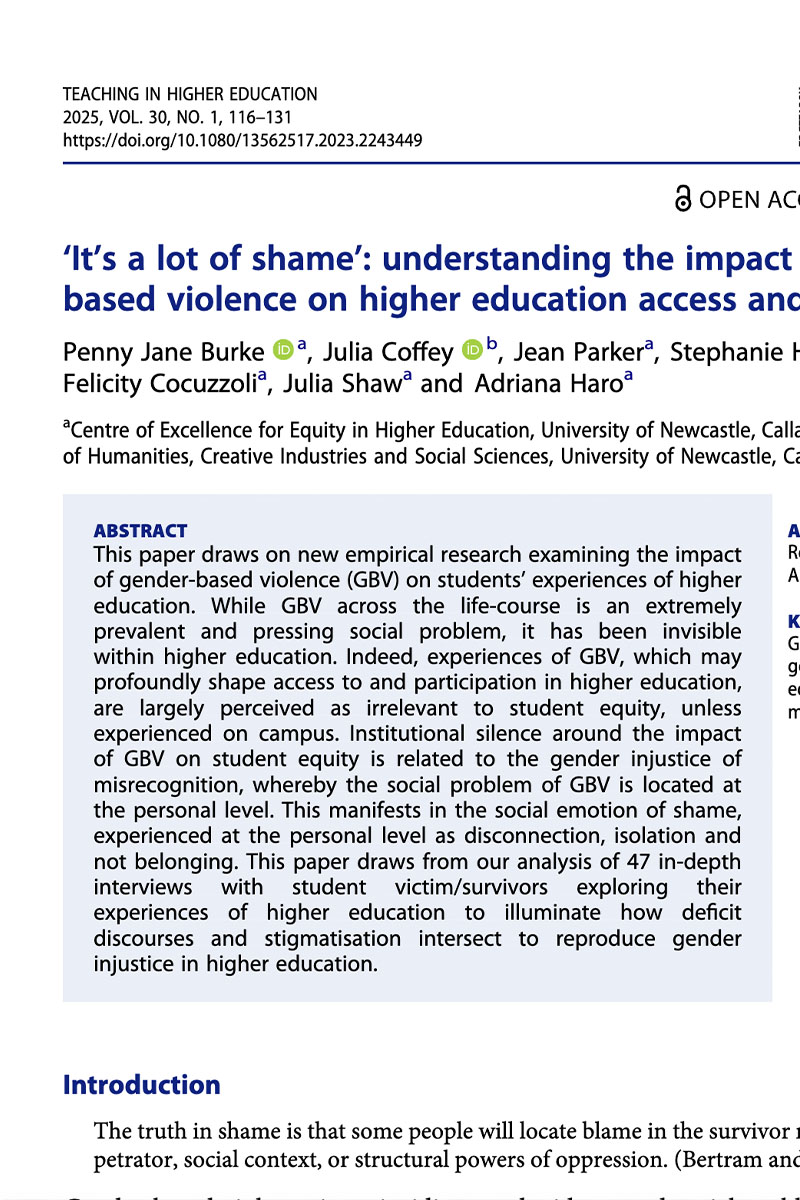
‘It’s a lot of shame’: understanding the impact of gender-based violence on higher education access and participation
Penny Jane Burke, Julia Coffey et al.
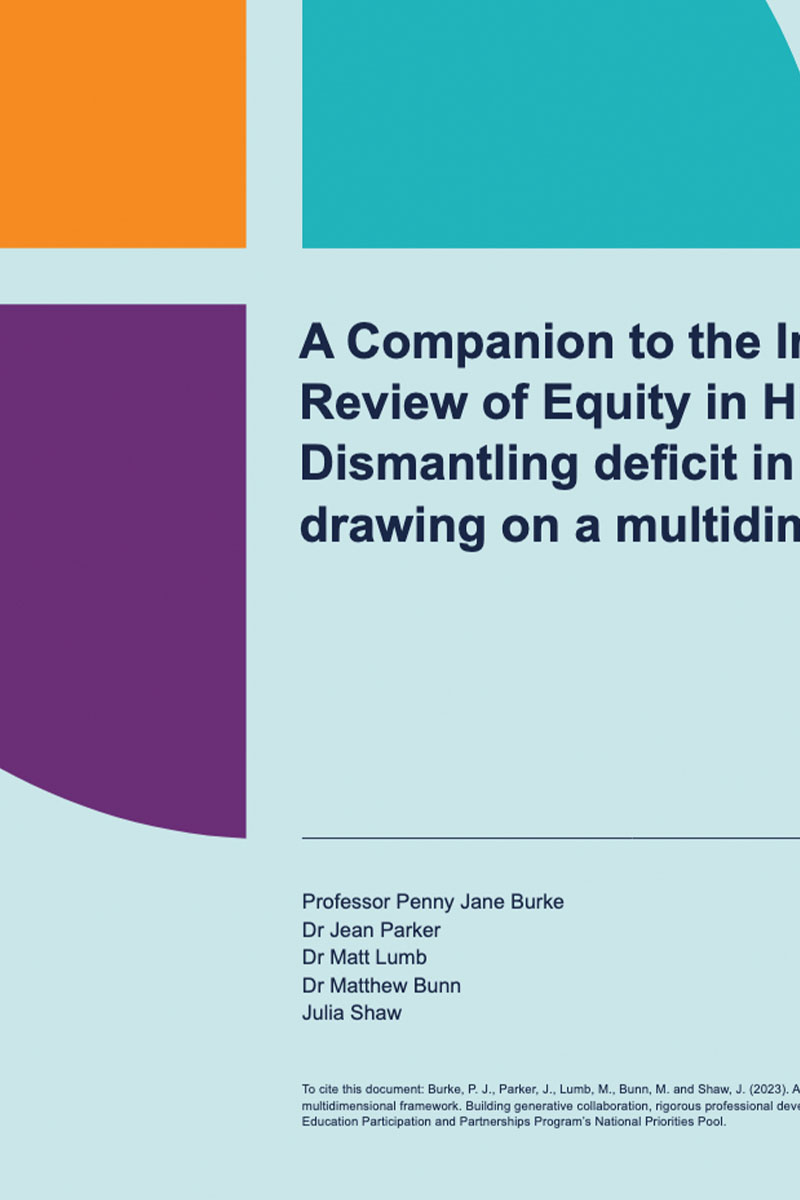
International literature review of equity in higher education: dismantling deficit in equity structures by drawing on a multidimensional framework and Companion Document
Penny Jane Burke, Matt Bunn, Matt Lumb, Jean Parker et al.
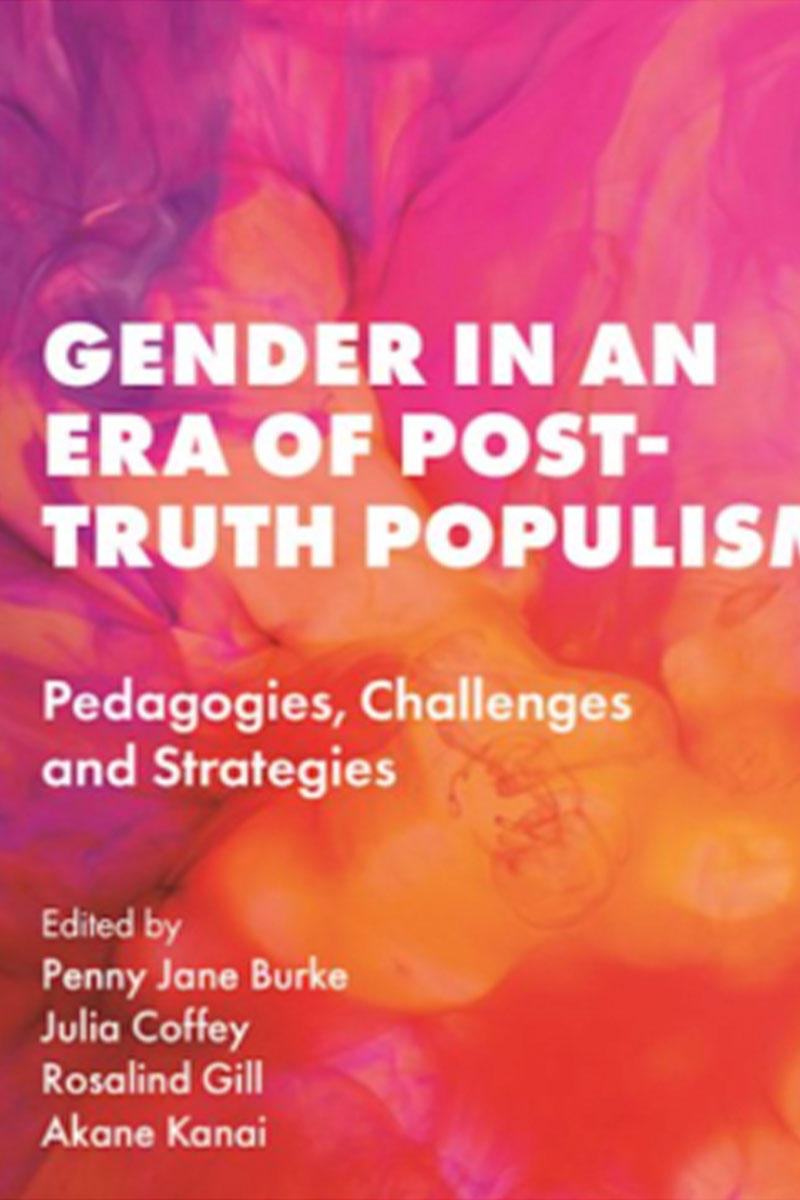
Gender in an era of post-truth populism
Penny Jane Burke, Julia Coffey, Rosalind Gill and Akane Kanai (Eds)
Stay connected
- Phone: +61 2 4913 8199
- Email: ceehe@newcastle.edu.au
- Subscribe to our mailing list
The University of Newcastle acknowledges the traditional custodians of the lands within our footprint areas: Awabakal, Darkinjung, Biripai, Worimi, Wonnarua, and Eora Nations. We also pay respect to the wisdom of our Elders past and present.