

Reduced Inequalities
Anti-Discrimination Policies
The University of Newcastle is committed to creating learning and working environments where people are treated fairly, respectfully and without discrimination.
A university-wide approach to equity and inclusion
The University’s Equity, Diversity and Inclusion Policy applies across the University community and its operations. It covers students, staff, Council and associated committees, professional and support services, controlled entities and volunteers across physical and digital settings, including external placements. The policy also extends to research activities and the structure and delivery of academic programs.
Effective from 10 December 2024, the policy was in place throughout 2025. It recognises diversity across characteristics including race, ethnicity, caste, gender, gender identity, sexual orientation, age, disability, neurodiversity, physical and mental health, and religious and political beliefs. It also supports equitable access, inclusive learning and working environments, professional development, accessible reporting pathways, co-design with equity cohorts, and ongoing monitoring and evaluation.
Preventing discrimination, harassment and bullying
The University’s Workplace Bullying, Harassment, and Discrimination Policy supports an inclusive, respectful and safe workplace by setting expectations for preventing and responding to workplace bullying, unlawful harassment and unlawful discrimination. The policy was effective from 8 April 2024 and remained in place throughout 2025 and will be reviewed in 2027.
The policy explains that unlawful discrimination can occur when a person or group is treated less favourably, or placed at a disadvantage, because of a characteristic protected by law. These characteristics include race, colour, nationality or ethnic origin; sex and sex characteristics; sexual orientation and gender identity; disability; age; religious or political belief; family and carer responsibilities; and other protected attributes.
It applies to workers across University workplaces, work activities and work-related events, including interactions with students, the University community and the public. The policy also recognises that unlawful discrimination can occur in recruitment, employment and the provision of goods and services.
These protections sit alongside the University’s Staff Code of Conduct and broader expectations of fairness, trust, respect and professional behaviour.
Together, these policies support the University’s broader commitment to equity, diversity and inclusion across learning, research, employment and engagement.
Standing against racism
At the University of Newcastle, we stand firmly against racism in all its forms. We recognise that racism is a pervasive issue that is embedded in Australian history and contemporary society. Our commitment to fostering an inclusive and culturally responsive university requires us all to actively confront and address racism.
Learn more about the University’s cultural diversity and anti-racism work.
Conversations about racism can be confronting. Engaging in open dialogue with people who experience racism is an important step in identifying and addressing racist practices and systems. Meaningful anti-racism requires action and accountability, not only statements of principle.
Every member of our University community, including students, staff, administrators and affiliates, deserves to work and learn in an organisation that is free from racism. We acknowledge the historical and ongoing injustices experienced by marginalised groups, particularly Aboriginal and Torres Strait Islander peoples, international communities and refugee populations. Racism can also take forms including Islamophobia and Antisemitism. We are dedicated to promoting equity and justice through education, dialogue and mutual respect, and recognise that proactive collective action is necessary to address racism within society and institutions.
We invite every member of our community to join us in this vital work.
Our anti-racism commitments include:
- Open and honest conversations about race and racism, with safe spaces for dialogue and diverse perspectives.
- Training and education that build awareness of racism, privilege and inclusion.
- Systems to monitor, measure and respond to racism, including culturally responsive and accessible pathways for reporting concerns and making formal complaints.
- Educational resources and support for students and staff, helping ensure that diverse voices are heard and valued across our community.
- Regular evaluation of institutional practices and community experiences to identify racism, monitor progress and respond to areas of concern.
Accountability and continuous improvement
The Equity, Diversity and Inclusion Policy provides for ongoing data collection, feedback and monitoring to help identify areas for improvement. The Equity, Diversity and Inclusion Unit and the University Equity, Diversity and Inclusion Committee oversee adherence to the policy, while reporting and complaint mechanisms are available to students and staff.
Learn more about what's happening at the University:

News • 27 May 2026
Research highlights gaps in gender-based violence recovery support
University of Newcastle researchers are drawing attention to a critical gap in responses to gender‑based violence: the lack of ongoing, well‑resourced healing and recovery support for victim‑survivors once the immediate crisis has passed.

News • 06 May 2024
Sector-first approach to Indigenous health research
Community members and top medical bodies across the Hunter and New England regions have joined forces in a powerful bid …

News • 07 Mar 2023
Beginning teachers deliver same quality of teaching as experienced teachers
Early career teachers deliver the same quality of teaching as their more experienced colleagues, new research from the University of Newcastle’s Teachers and Teaching Research Centre (TTRC) reveals.

News • 31 Jan 2023
University of Newcastle Professor Appointed UNESCO Chair
The University of Newcastle’s Professor Penny Jane Burke has today been appointed a UNESCO Chair in Equity, Social Justice and Higher Education – a globally-prestigious role that will see her working to improve the lives of marginalised groups around the world.

News • 28 Jun 2022
Tertiary system can better support victims of gender-based violence
New research by the University of Newcastle has found students who are victim-survivors of gender-based violence overcome major challenges to access and fully participate in higher education – and the institution is pushing for change.
News • 06 Apr 2022
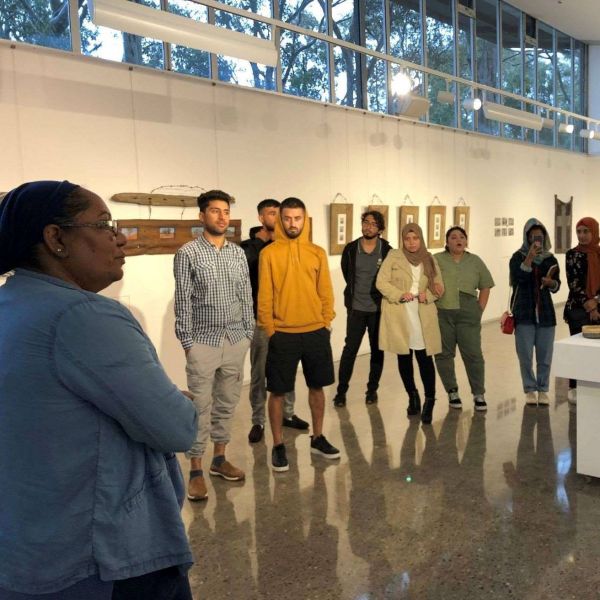
Young refugee adults learn about Aboriginal resilience and survival
In the spirit of public pedagogy, young adults belonging to the Hunter region’s refugee cohort, visited the University of Newcastle’s (UoN) Gallery to see the Looking Through Windows exhibition and learn about Aboriginal Australians who grew up and lived on the missions, reserves and fringe camps at

News • 18 Feb 2022
Welcoming students from refugee backgrounds to study at Newcastle Law School
Newcastle Law School and the Centre for Law and Social Justice are celebrating the commencement of four new students of refugee background in the undergraduate Law program.

News • 20 Jun 2021
Understanding the impact of gender based violence on access to and participation in higher education
A team at the University of Newcastle, Professor Penny Jane Burke, Dr Julia Coffey, Felicity Cocuzzoli and Dr Stephanie Hardacre, have launched a new research project to explore the impact of gendered violence on access to and participation in higher education.

News • 28 Jul 2020
Professor Penny Jane Burke joins new Australian Equity in Higher Education Panel
Professor Penny Jane Burke (Centre of Excellence for Equity in Higher Education) attended the first meeting of the new Federal government Equity in Higher Education Panel (EHEP) as one of two invited research experts in the field.

News • 12 May 2020
Collaboration with the University of Bath through Global Chair role
The award of the 2020-2021 Global Chair role to Professor Penny Jane Burke will support ongoing research collaboration with the University of Bath. Professor Burke will provide mentorship to colleagues in the UK and co-develop research projects and online courses.

News • 05 Mar 2020
Writing Program for equity practitioners in full swing
The 2020 National Writing Program for Equity and Widening Participation Practitioners was recently launched, along with the upcoming publications for 2019 participants.

News • 10 Jul 2019
National Priority Pool funded research to investigate student perspectives on success
The University of Newcastle has been awarded a second grant in the latest Higher Education Participation and Partnerships Program National Priorities Pool (HEPPP NPP) scheme.
The University of Newcastle acknowledges the traditional custodians of the lands within our footprint areas: Awabakal, Darkinjung, Biripai, Worimi, Wonnarua, and Eora Nations. We also pay respect to the wisdom of our Elders past and present.