
New medical engineering tech aims to speed up recovery for burns victims
A new medical engineering technology developed at the University of Newcastle could significantly improve recovery outcomes for burn patients.
The breakthrough overcomes a longstanding limitation in current wound dressing: maintaining reliable, long-term adhesion with soft, tissue-like materials, without causing damage or discomfort, while withstanding moisture and movement.
Led by Associate Professor Behnam Akhavan, an ARC DECRA Fellow at the University of Newcastle and the Hunter Medical Research Institute (HMRI), the research team has developed a platform technology that allows medical patches, wound dressings, soft robotics and wearable health devices to stay in place longer while continuing to deliver treatment and monitor healing.
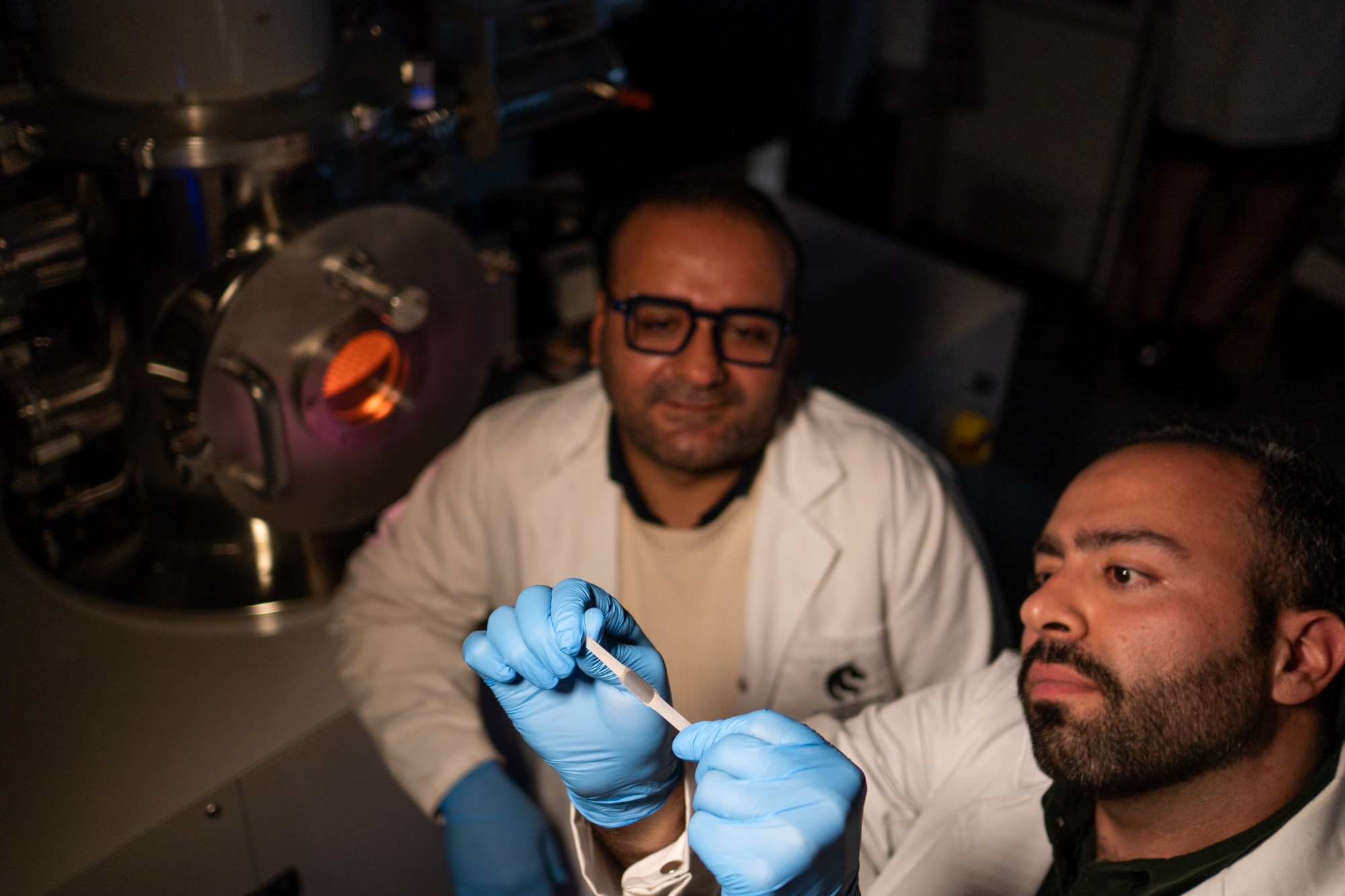
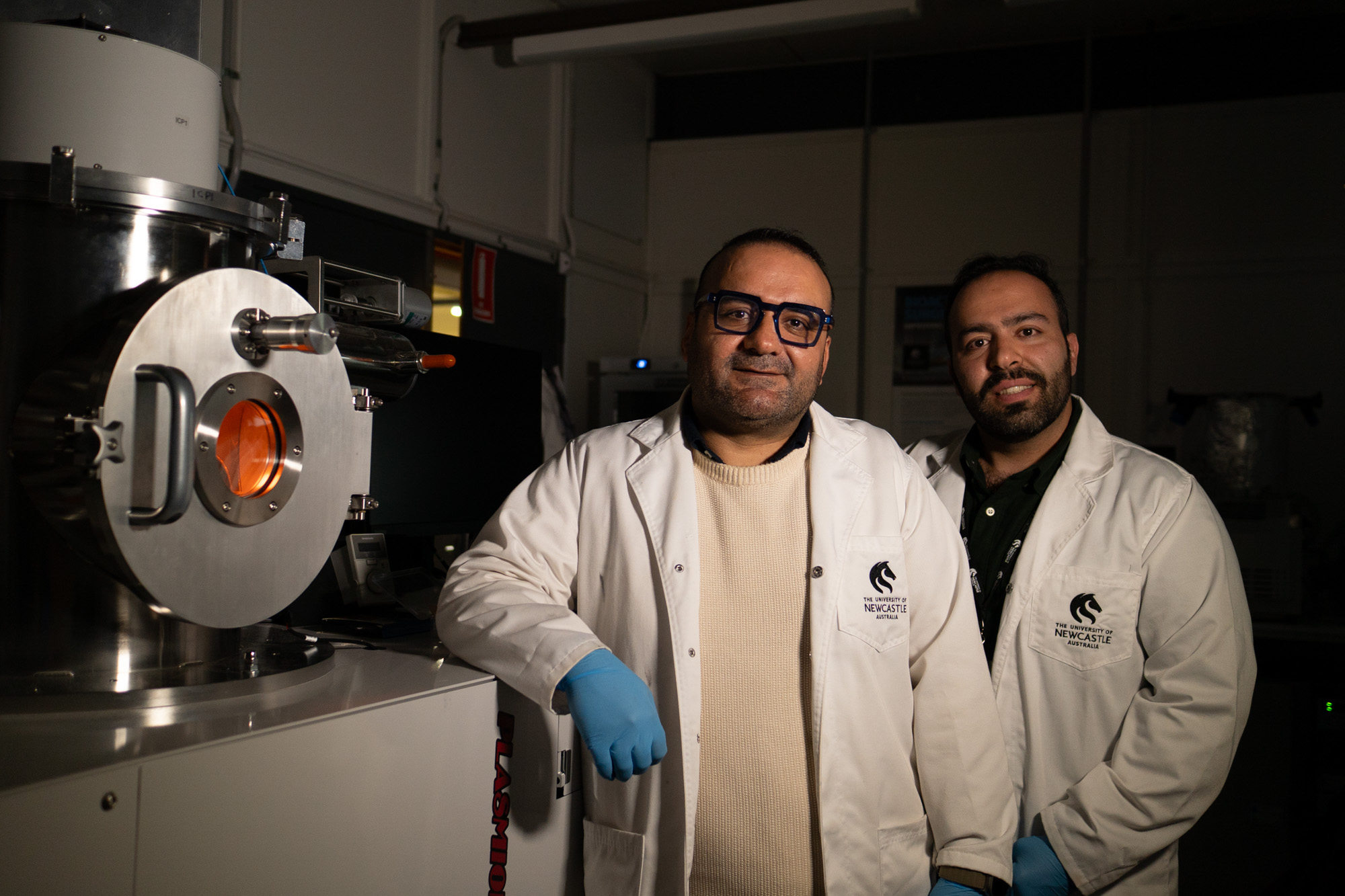
Associate Professor Behnam Akhavan (left) and Dr Masoud Zhianmanesh pictured with the technology
Traditionally, burn wound care requires frequent and often painful dressing changes, which can slow recovery and increase infection risk.
“The core challenge in this field has been bonding soft hydrogels reliably to stretchable polymer backings. We solved that using a plasma-based process. That strong, stable interface is what makes the device work,” Associate Professor Akhavan said.
“It allows wound dressings to remain in place for longer periods while enabling liquid treatments, such as antibacterial therapies, to pass through the dressing. This means fewer dressing changes, less pain for patients and improved healing conditions.”
Dr Masoud Zhianmanesh, a post-doctoral researcher in biomedical engineering at the University of Newcastle, said it’s an exciting project because of the wide range of potential applications.
“This hybrid device can be stored in a dry form for years without degrading and can simply be rehydrated in a biomolecule solution of choice when needed in the clinic,” Dr Zhianmanesh said.
“It creates new possibility for how medical materials can function reliably on the body in real-world settings.”
Solving a long-standing materials challenge
Soft gels are widely used in biomedical engineering because they mimic the body’s natural tissue environment. However, their instability and poor adhesion to medical devices have historically limited their clinical applications.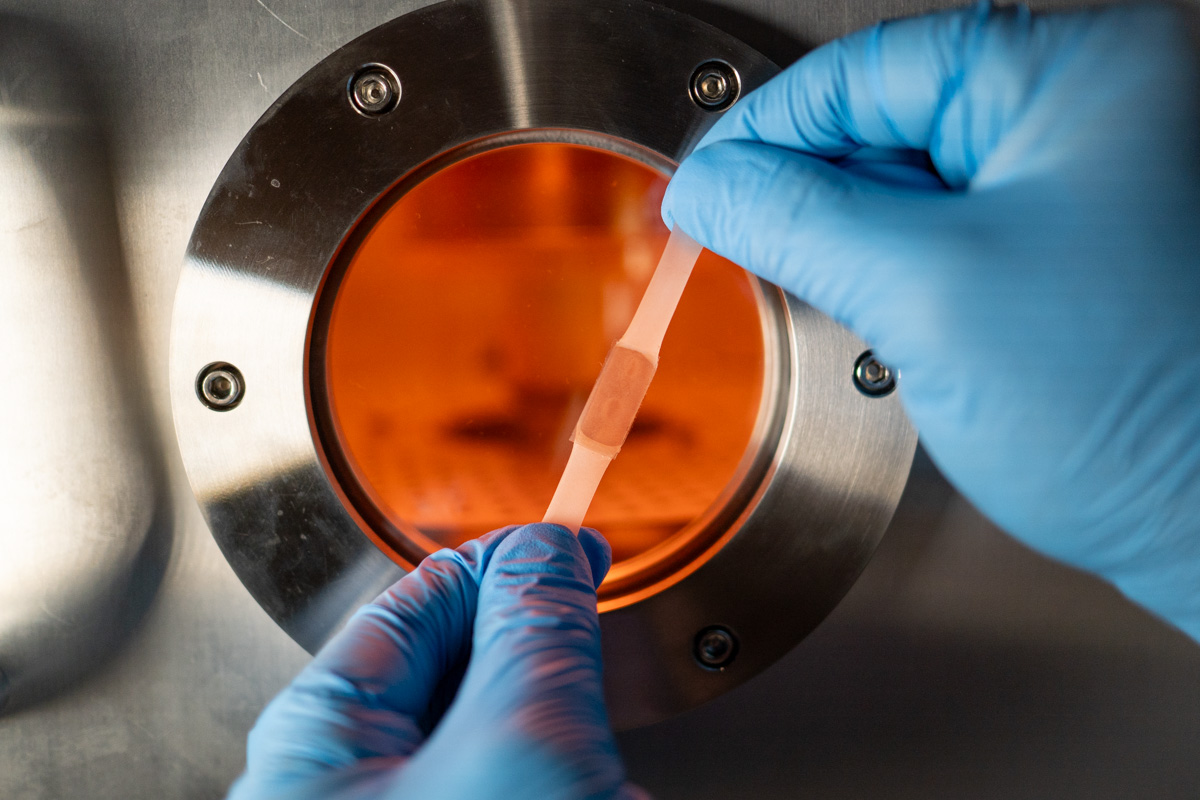
“Gels are ideal for biomedical use because they behave like soft tissue,” Associate Professor Akhavan said.
“But they are mechanically unstable and difficult to attach to medical devices. Our technology solves that problem.”
The innovation combines a soft therapeutic gel with a stretchable polymer backing that forms a strong, stable interface.
“Think of the stretchable polymer layer like a kitchen cling wrap. It conforms to the body but also serves as the structural backbone that holds the gel in place,” he said.
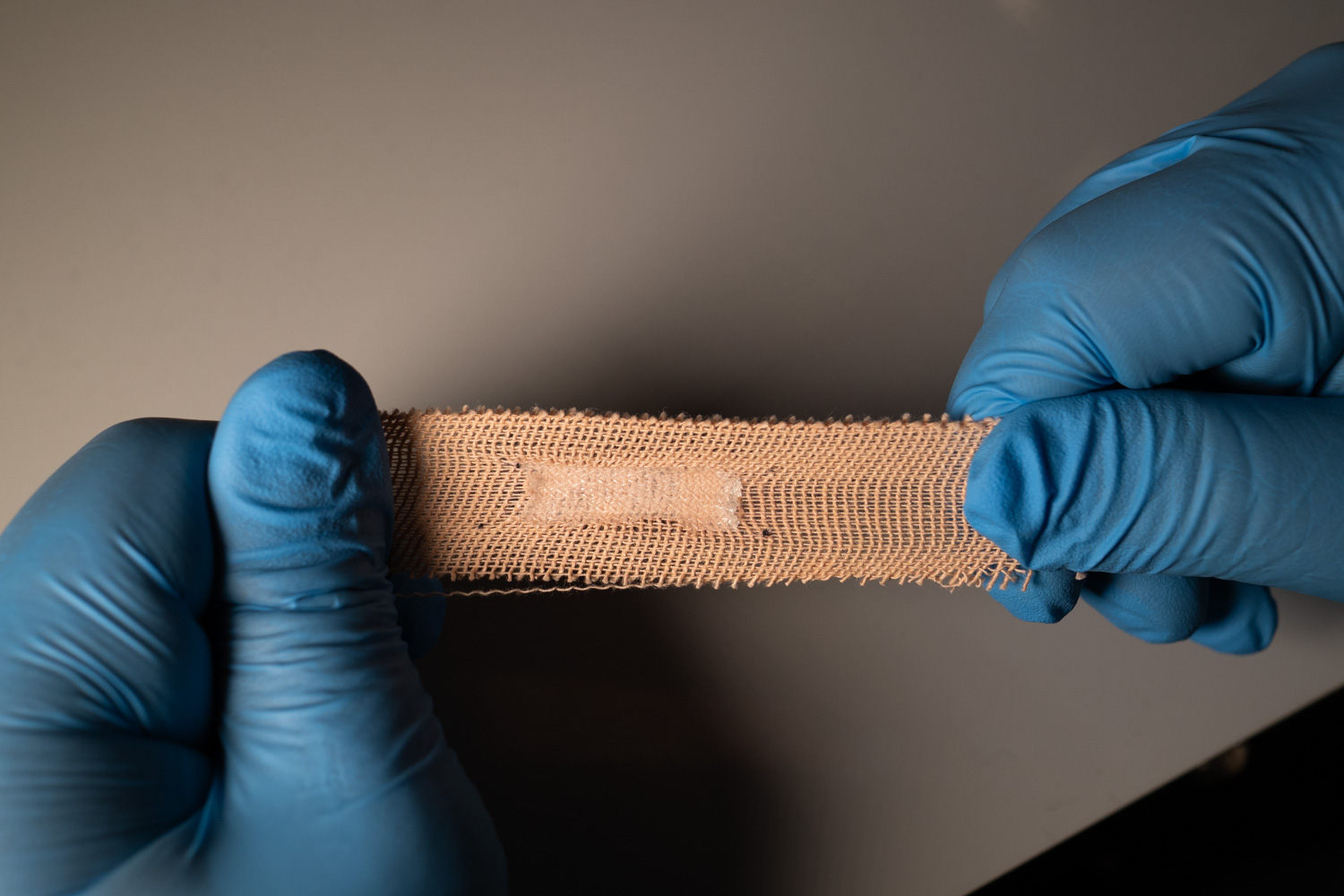 The flexible device has a wide range of applications, one of them being ‘smart’ wound dressings.
"One side contains the gel that contacts the wound, while the opposite side can host a sensing layer.
"This means we can simultaneously treat a wound and monitor factors such as pressure — an important indicator of healing — giving clinicians real-time feedback.”
In laboratory testing conducted at seven-days post-injury, the new technology drove wound closure up to 90 per cent, while conventional dressings reached only 50 per cent over the same period.
Designed for clinical translation
Medical technologies often face significant barriers to regulatory approval. The research team designed the platform with clinical adoption in mind.
“Our material is toxin-free and produced using plasma processes which are environmentally friendly,” Associate Professor Akhavan said.
The innovation is patent pending in Australia and internationally through the PCT process.
“I’m excited about this platform technology because it solves a historic problem in medical engineering and opens the door to applications that were previously not possible,” Associate Professor Akhavan said.
The technology be adapted across multiple applications with minimal changes to the manufacturing process required, including:
- Advanced wound care: long-wear dressings that remain attached during movement, sweating or extended treatment periods.
- Burn treatment: gentle dressings that reduce dressing changes, minimise pain and lower infection risk.
- Wearable health monitoring: flexible biosensing devices such as heart rate or ECG monitoring patches.
- Soft robotics and artificial skin technologies: improved integration between soft biological materials and electronic systems.
*HMRI is a partnership between the University of Newcastle, Hunter New England Health and the community.
Contact
- Media & Communications Specialist, Penny Harnett
- Email: penny.harnett@newcastle.edu.au
Related news
- Where Culture meets STEM: Empowering future leaders in Wadeye
- University of Newcastle engineering leader awarded prestigious Engineers Australia Fellowship
- Showing our support for the Koori Knockout
- Opinion: HSC students be ambitious, but also kind to yourself
- Vice-Chancellor Professor Alex Zelinsky to retire in February 2027
Aligned with the United Nations Sustainable Development Goals
The University of Newcastle acknowledges the traditional custodians of the lands within our footprint areas: Awabakal, Darkinjung, Biripai, Worimi, Wonnarua, and Eora Nations. We also pay respect to the wisdom of our Elders past and present.