
Top marks for sports uniform proposal to boost students’ physical activity
New research suggests most Australians support a simple change that could significantly boost children’s physical activity levels: letting students wear sports uniforms every day.
The majority of young Australians are still not active enough, despite well-established evidence that regular physical activity improves children’s physical and mental health.
Schools are seen as an important setting to address this—but some principals have been hesitant to move away from traditional uniforms due to concerns about community expectations.
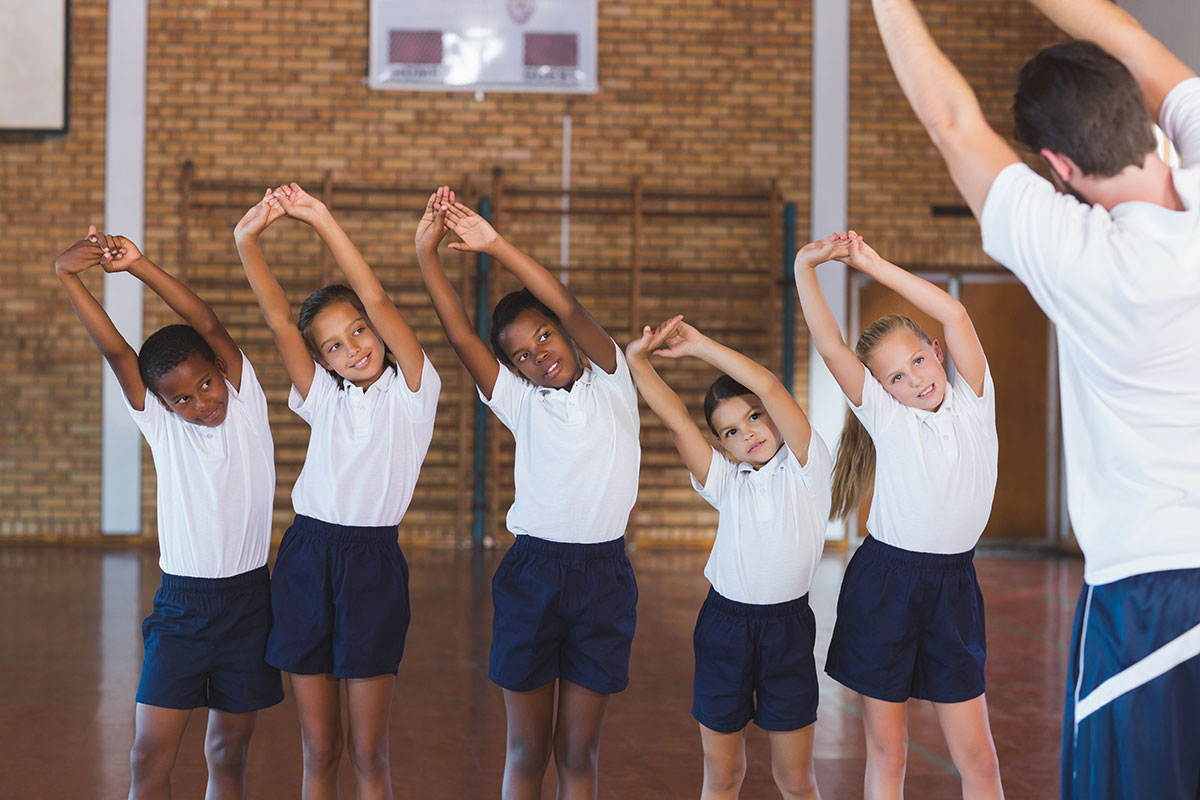
A University of Newcastle study in partnership with Hunter New England Local Health District’s Population Health, published today in the Australian and New Zealand Journal of Public Health, analysed nearly 2,000 public responses and hundreds of community comments, finding more than three-quarters of respondents back the daily wearing of activity-enabling sports uniforms in schools.
 University of Newcastle’s Ms Belinda Peden, of HMRI’s Population Health Research program, said ensuring children obtained adequate amounts of physical activity was important for their physical, social and mental health and could improve their attention and academic performance.
“Because physical activity patterns established in childhood often track into adulthood, supporting children to be sufficiently active can help prevent chronic disease later in life,” she said.
The World Health Organization (WHO) recommends children do at least 60 minutes of moderate to vigorous intense, physical activity each day. However, global data shows that only one third of children are sufficiently active, highlighting the need for population-wide interventions.
Traditional school uniforms are often formal in design, consisting of a dress or skirt and blouse for girls and trousers or shorts with a button-up business style-shirt for boys, paired with black leather shoes. Sports uniforms, consisting of shorts, polo shirts and sports shoes are only worn on days with physical education classes or scheduled sport, often requiring children to change at school.
Several studies have identified formal school uniforms as a barrier to students’ participating in physical activity, especially for girls.
“Reviews have found that traditional uniform policies more frequently disadvantage girls, students from diverse cultural and religious backgrounds, low-income families, and gender, and sexually diverse students,” Ms Peden explained.
This study conducted a multi method content analysis, examining public responses to media coverage of proposals to allow students to wear sports uniforms in schools.
An article originally published in research-based news and analysis media outlet, The Conversation, ‘Four reasons Australian schools should let students wear sports uniforms every day’ attracted coverage across television, digital, print and radio news, as well as social media platforms.
The multi method content analysis found the majority of responses to media coverage of The Conversation article (76 per cent) supported schools’ permitting students to wear sports uniforms every day with only 22 per cent opposed and 2 per cent categorised as unclear.
“This is one of the first studies to really look at what the public thinks—and it shows people are more open to flexible school uniforms than many might expect,” Ms Peden said.
“We found strong support for letting kids wear sports uniforms every day, which could make it much easier for schools to help students be more active. It’s a simple, low-cost change that could have a big impact, especially when we know parents, students and teachers are already on board.
Ms Peden said themes around equity, inclusion and autonomy also came through strongly across all the data.
“The data showed people felt that letting students wear sports uniforms every day could make a real difference—supporting gender equity and inclusion, giving kids more choice, and simply making them more comfortable. We also know from previous research that strict uniform rules can have the opposite effect, particularly for gender-diverse students, impacting both wellbeing and learning.”
While global, national and state level physical activity guidelines recommend increasing opportunities for students to be active at school, uniform policies are often overlooked as an easy modifiable factor that could potentially influence student activity, particularly during school break times.
Ms Peden said the study’s findings could inform strategies to address a barrier to a simple, scalable, population-level intervention to increase school-based physical activity.
“What this study shows is that the community is ready for change. There’s strong support for more flexible school uniforms, which could help remove a key barrier to getting kids more active. When you combine this with support from parents, students and teachers, it’s a great opportunity to rethink uniform policies in a way that supports wellbeing, inclusion, and equity.”
 Professor Luke Wolfenden is Editor-in-Chief, Australian and New Zealand Journal of Public Health and works alongside the research group that developed the paper. He hopes the research will help settle the ongoing debate regarding community support and perceived benefits of more physically activity enabling versus traditional school uniforms.
"This study suggests there is broad community support for school uniforms that support physical activity. Hopefully the findings prompt school principals and committees to focus on health when choosing school clothing. It’s a simple change that has the potential to have a big impact.”
HMRI is a partnership between the University of Newcastle, Hunter New England Local Health District and the community.
Contact
- Media and Communication Specialist Carmen Swadling
- Phone: +61 407 935 735
- Email: carmen.swadling@newcastle.edu.au
Related news
- Where Culture meets STEM: Empowering future leaders in Wadeye
- Showing our support for the Koori Knockout
- Opinion: HSC students be ambitious, but also kind to yourself
- Vice-Chancellor Professor Alex Zelinsky to retire in February 2027
- Local sport gets a boost with new multisport facility honouring Mark and Kirralee Hughes
Aligned with the United Nations Sustainable Development Goals



The University of Newcastle acknowledges the traditional custodians of the lands within our footprint areas: Awabakal, Darkinjung, Biripai, Worimi, Wonnarua, and Eora Nations. We also pay respect to the wisdom of our Elders past and present.