Research Themes
 Modified blast furnace ironmaking research
The blast furnace – basic oxygen furnace process produces over 70% of the World’s steel. In the transition to near net zero emission steel, it is critical to decrease the emissions of the blast furnace process, while alternative processes are being brought to commercial operation. Options include the introduction of a proportion of hydrogen through the tuyeres, replacement of some fossil carbon with biogenic carbon, and the full oxygen – top gas recycling blast furnace.
In Asia, the predominant ferrous feed to the blast furnace is sinter, so it is important to optimise the performance of the sinter in the modified blast furnace. Lump iron ore is a premium product, as it does not have to be agglomerated before charging to the blast furnace, removing the emissions associate with agglomeration. Centre researchers are evaluating and working to improve the smelting of lump ore and sinter in the modified blast furnace using laboratory softening and melting tests, with the capability to simulate hydrogen and steam atmospheres.
Centre researchers are also evaluation the behaviour of metallurgical coke under modified blast furnace reaction conditions to understand the impacts of hydrogen injection and oxygen enrichment on coke reactivity, degradation, and quality requirements. This is achieved through in-depth fundamental analysis using TGA reactivity tests, kinetics modelling, micro-CT image analysis, mechanical testing, fractography, and tribological testing of coke abrasion behaviour.
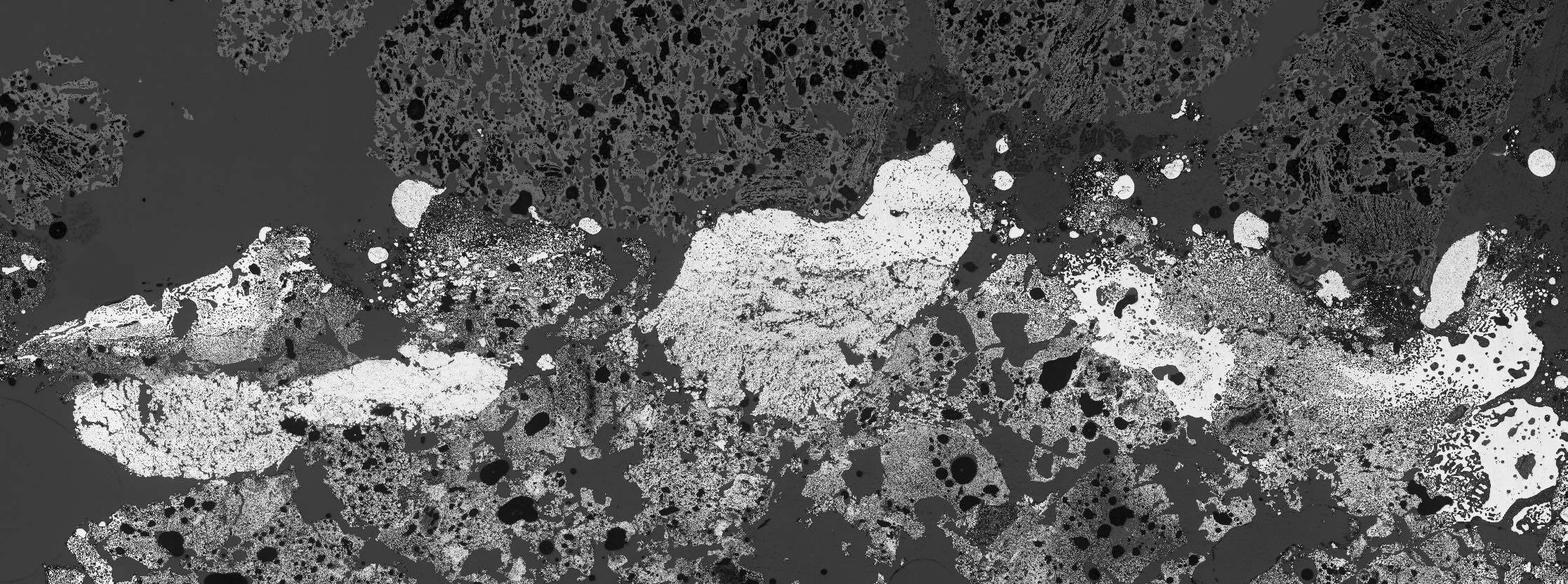
Centre researchers are also carrying out fundamental studies into the phenomena occurring in the cohesive zone of the blast furnace. A focus of the work is the interaction between lump iron ore and sinter in the cohesive zone. Interrupted softening and melting tests are analysed using a combination of optical microscopy and TIMA, as well as X-ray and neutron CT scans to study the development of void structure. This is complemented with numerical modelling.
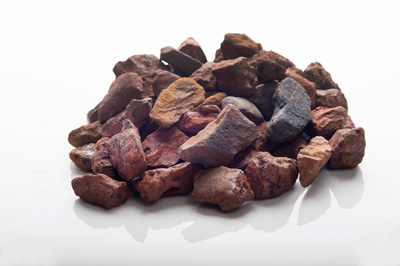
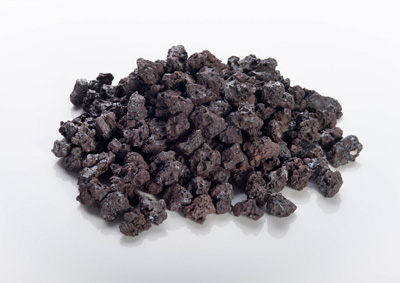
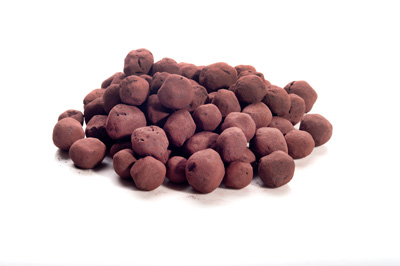
Lump iron ore Sinter Pellet
 Alternative low carbon iron and steelmaking
Reducing the emissions intensity of global steel production is technically challenging. Increasing recovery and melting of scrap steel is the easiest abatement lever, however scrap availability will remain well short of total global demand for steel products. Innovative low-emissions ironmaking technology is therefore required. Given Australia’s role as the largest exporter of iron ore by volume, we are compelled to develop solutions that can efficiently utilise Australian ore types. To this end, production of hydrogen direct reduced iron (DRI) followed by an electric smelting furnace (ESF) to separate the contained gangue is proposed as a future low emissions alternative to the Blast Furnace for Australia’s Hematite-Goethite resources.
Centre researchers are also investigating the feasibility of direct iron electrolysis utilising molten salts, at an intermediate temperature between the existing aqueous and molten oxide processes.
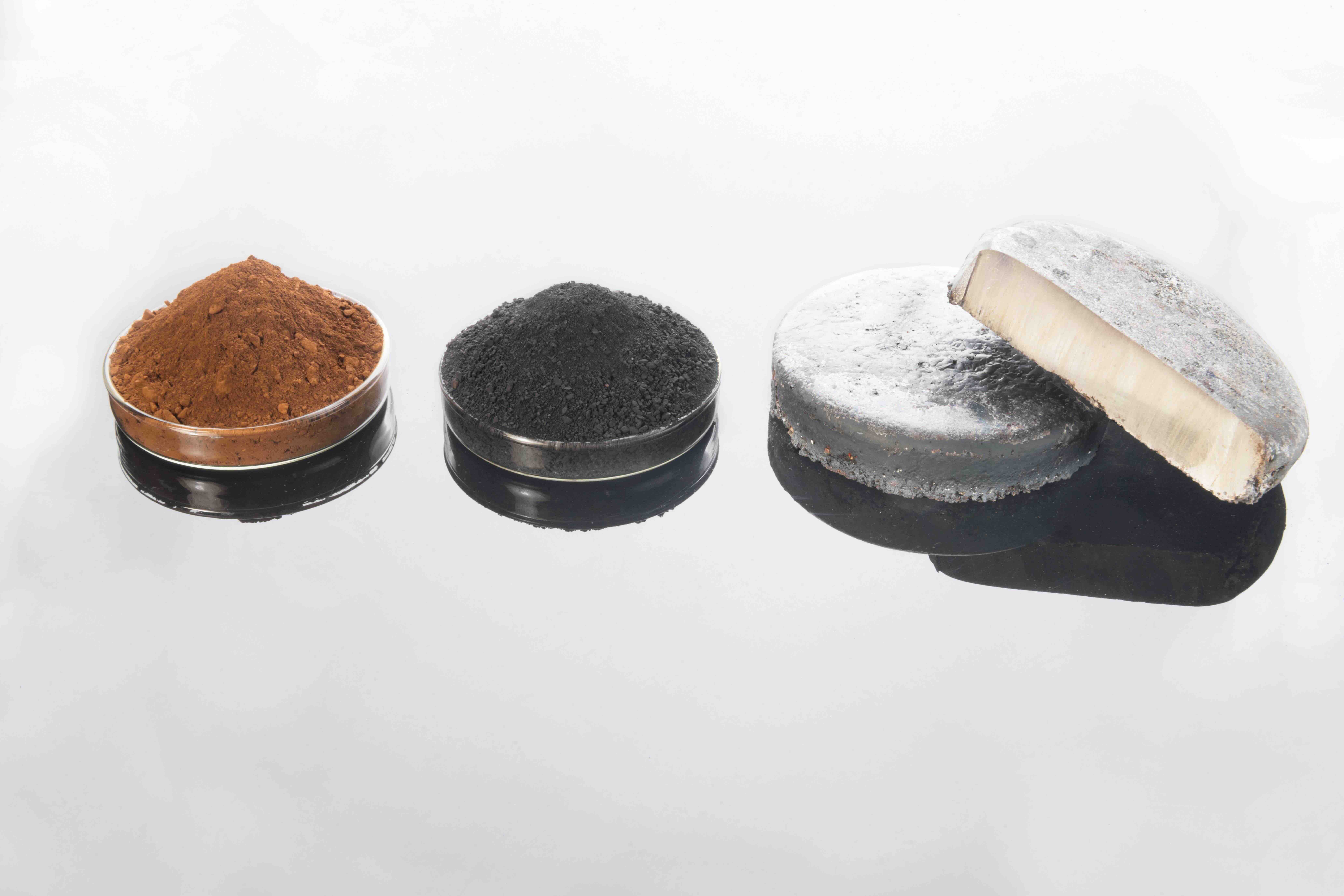
Australian iron ore fines, hydrogen DRI and laboratory ESF iron.
 Sintering research
Iron ore fines must be agglomerated via sintering before being charged to the conventional or modified blast furnace. Centre researchers are working to optimising iron ore blending, granulation and sintering conditions to maximise sintering process performance and sinter quality.
The productivity of the sintering process is controlled by the resistance to air flow during sintering. Centre researchers are carrying out fundamental studies to understand the mechanisms controlling the resistance to airflow during sintering, including the humidified green bed, flux calcination, coke combustion, and high temperature melt formation zones.
The quality of sinter is critical for efficient ironmaking in the blast furnace. Sinter quality is known to be governed by both pore structure and mineralogy. Centre researchers are continuing studies to elucidate the relationships between iron ore properties, sintering process conditions including temperature and oxygen partial pressure, and sinter quality. The behaviour of sinter in a modified blast furnace, e.g., hydrogen injected blast furnace, and the optimisation of sinter quality for these processes is a current area of focus.
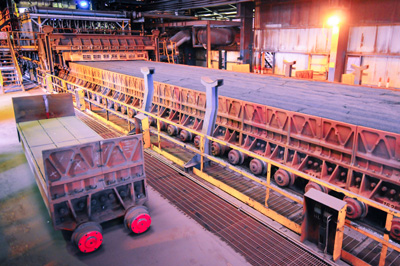
Sintering, source: BlueScope Steel
 Cokemaking research
Coke provides physical support for the ferrous burden in the blast furnace, as well as providing a source of permeability, heat and the reducing environment necessary for the production of iron. For coal producers and coke manufacturers, understanding the performance of different coals and blends during coking and ironmaking process is critically important for efficient utilisation of coal resources.
Centre researchers conduct research for fundamental understanding of coal to coke transformation and evaluate the behaviour of different coals during coke formation in blends as well as coke performance in blast furnace. A focus of research is to understand the impact of parent coal properties in physicochemical structure and strength of coke using innovative methodologies and purpose-built facilities. The use of biogenic carbon and solid wastes for direct substitution of coal in cokemaking is also an active topic of research. Pyrolysis properties of a range of biomass species, including lignocellulosic and algal biomass, and impacts on coking behaviour of Australian coals, including thermoplasticity, internal gas pressure, and product coke quality are studied. Some capabilities include:
- In-situ investigation of coking phenomena, including dilatation, contraction, and internal gas pressure
- Coke microstructure and microtexture analysis
- Stamped cokemaking
- Reactivity and mechanical properties of coke
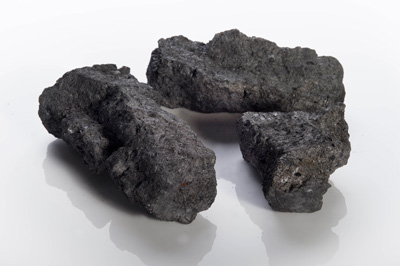
Coke
 Steelmaking research
The steelmaking process has been developed over many decades to efficiently remove impurities present in iron ore and coking coals, such as phosphorus. Higher levels of phosphorus in steelmaking slags have limited the ability of steelmakers to recycle slag within the process. Centre researchers are working with the ARC and the University of Wollongong and University of Western Australia on a project to enable recycling of steelmaking slag and production of a high phosphorus co-products for agriculture.
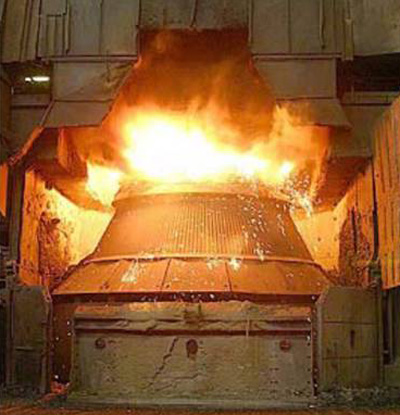
Basic Oxygen Furnace, source: BlueScope Steel
Contacts


The University of Newcastle acknowledges the traditional custodians of the lands within our footprint areas: Awabakal, Darkinjung, Biripai, Worimi, Wonnarua, and Eora Nations. We also pay respect to the wisdom of our Elders past and present.