

Reduced Inequalities
Anti-Discrimination Policies
The University of Newcastle is committed to creating learning and working environments where people are treated fairly, respectfully and without discrimination.
A university-wide approach to equity and inclusion
The University’s Equity, Diversity and Inclusion Policy applies across the University community and its operations. It covers students, staff, Council and associated committees, professional and support services, controlled entities and volunteers across physical and digital settings, including external placements. The policy also extends to research activities and the structure and delivery of academic programs.
Effective from 10 December 2024, the policy was in place throughout 2025. It recognises diversity across characteristics including race, ethnicity, caste, gender, gender identity, sexual orientation, age, disability, neurodiversity, physical and mental health, and religious and political beliefs. It also supports equitable access, inclusive learning and working environments, professional development, accessible reporting pathways, co-design with equity cohorts, and ongoing monitoring and evaluation.
Preventing discrimination, harassment and bullying
The University’s Workplace Bullying, Harassment, and Discrimination Policy supports an inclusive, respectful and safe workplace by setting expectations for preventing and responding to workplace bullying, unlawful harassment and unlawful discrimination. The policy was effective from 8 April 2024 and remained in place throughout 2025 and will be reviewed in 2027.
The policy explains that unlawful discrimination can occur when a person or group is treated less favourably, or placed at a disadvantage, because of a characteristic protected by law. These characteristics include race, colour, nationality or ethnic origin; sex and sex characteristics; sexual orientation and gender identity; disability; age; religious or political belief; family and carer responsibilities; and other protected attributes.
It applies to workers across University workplaces, work activities and work-related events, including interactions with students, the University community and the public. The policy also recognises that unlawful discrimination can occur in recruitment, employment and the provision of goods and services.
These protections sit alongside the University’s Staff Code of Conduct and broader expectations of fairness, trust, respect and professional behaviour.
Together, these policies support the University’s broader commitment to equity, diversity and inclusion across learning, research, employment and engagement.
Standing against racism
At the University of Newcastle, we stand firmly against racism in all its forms. We recognise that racism is a pervasive issue that is embedded in Australian history and contemporary society. Our commitment to fostering an inclusive and culturally responsive university requires us all to actively confront and address racism.
Learn more about the University’s cultural diversity and anti-racism work.
Conversations about racism can be confronting. Engaging in open dialogue with people who experience racism is an important step in identifying and addressing racist practices and systems. Meaningful anti-racism requires action and accountability, not only statements of principle.
Every member of our University community, including students, staff, administrators and affiliates, deserves to work and learn in an organisation that is free from racism. We acknowledge the historical and ongoing injustices experienced by marginalised groups, particularly Aboriginal and Torres Strait Islander peoples, international communities and refugee populations. Racism can also take forms including Islamophobia and Antisemitism. We are dedicated to promoting equity and justice through education, dialogue and mutual respect, and recognise that proactive collective action is necessary to address racism within society and institutions.
We invite every member of our community to join us in this vital work.
Our anti-racism commitments include:
- Open and honest conversations about race and racism, with safe spaces for dialogue and diverse perspectives.
- Training and education that build awareness of racism, privilege and inclusion.
- Systems to monitor, measure and respond to racism, including culturally responsive and accessible pathways for reporting concerns and making formal complaints.
- Educational resources and support for students and staff, helping ensure that diverse voices are heard and valued across our community.
- Regular evaluation of institutional practices and community experiences to identify racism, monitor progress and respond to areas of concern.
Accountability and continuous improvement
The Equity, Diversity and Inclusion Policy provides for ongoing data collection, feedback and monitoring to help identify areas for improvement. The Equity, Diversity and Inclusion Unit and the University Equity, Diversity and Inclusion Committee oversee adherence to the policy, while reporting and complaint mechanisms are available to students and staff.
Learn more about what's happening at the University:

News • 12 Jul 2017
Informing Policy and Practice
NCSEHE has released the third instalment of their Informing Policy and Practice publication series.

News • 29 Jun 2017
CEEHE to host 2018 Gender and Education Association International Conference
CEEHE will be hosting the 2018 Gender and Education Association (GEA) International Conference in December next year.

News • 22 Jun 2017
Visiting Scholar: Professor Linda Sax
The gender gap in computing will be explored later in July when Professor Linda Sax visits the University of Newcastle (UON).

News • 19 May 2017
Programs that prepare students for university study may no longer be free
For the first time, students may have to pay up to A$3271 for “enabling” courses, designed to prepare students for university study.

News • 17 May 2017
Reflections from visiting scholar Dr Marie-Pierre Moreau
Renowned scholar in gender and education, Dr Marie-Pierre Moreau, visited the Centre of Excellence for Equity in Higher Education (CEEHE) in April.

News • 28 Apr 2017
University deadlines affecting student engagement
New research from the University of Newcastle reveals equity students in higher education are challenged by institutional expectations about time.

News • 26 Apr 2017
Changes to the Australian Citizenship test may impact refugees
Dr Sally Baker and Dr Rachel Burke explore how proposed changes to the Australian Citizenship test are likely to further disadvantage refugees.

News • 05 Apr 2017
New guidelines on improving online retention
New research and comprehensive guidelines for improving student outcomes in online learning is now available to access.
News • 05 Apr 2017
Visiting Scholar: Dr Marie-Pierre Moreau
Experiences of staff and students with caring responsibilities will be investigated later when Dr Marie-Pierre Moreau visits the University of Newcastle

News • 27 Feb 2017
Dubbo receives AVID program in a digital first
The University of Newcastle (UON) will conduct the first-ever distance video link tutorials with students in Dubbo to prepare students for success in school
News • 13 Feb 2017
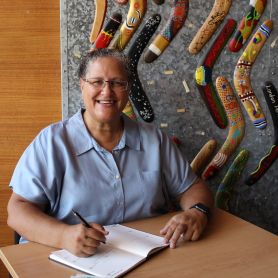
Fulbright Indigenous Scholarship for UON researcher
Dr Stephanie Gilbert is set to put an international perspective on her research after she was awarded a prestigious Fulbright Scholarship

News • 25 Nov 2016
Higher Education was life saving for me
CEEHE's Professor Penny Jane Burke's life story inspires filmmaker son.
The University of Newcastle acknowledges the traditional custodians of the lands within our footprint areas: Awabakal, Darkinjung, Biripai, Worimi, Wonnarua, and Eora Nations. We also pay respect to the wisdom of our Elders past and present.