
Clean Water and Sanitation
Preventing Water System Pollution
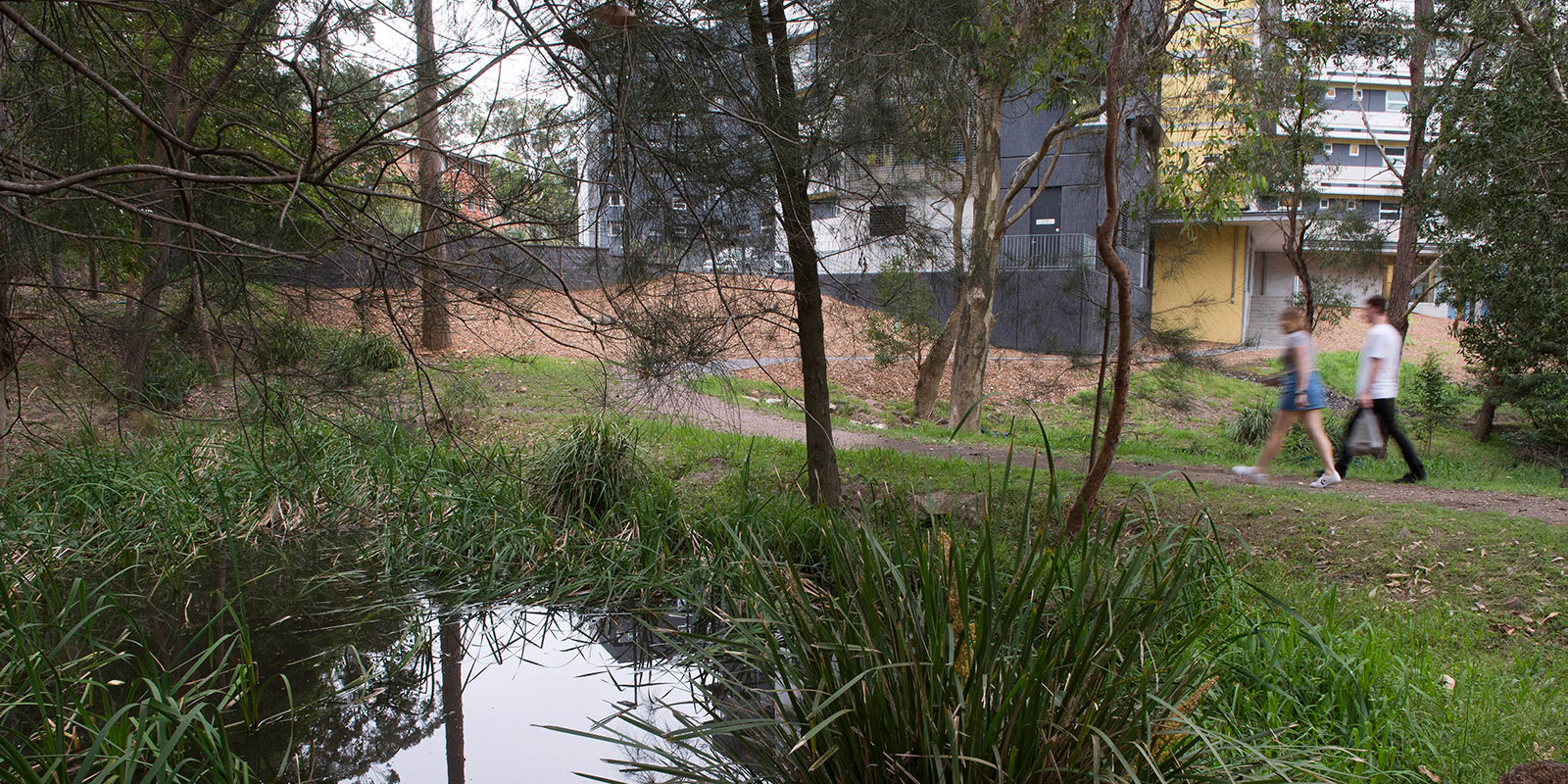
The University of Newcastle is committed to protecting water quality and preventing pollution across its campuses and surrounding environments. Through environmental policies, infrastructure design standards, monitoring systems and incident-response procedures, the University works to minimise the risk of contaminants entering stormwater networks, waterways and aquatic ecosystems. These pollution-prevention processes were in place during 2025.
Preventing pollution through policy and infrastructure
The University's Environmental Sustainability Policy, in effect throughout 2025, establishes a commitment to preventing pollution of water systems and aquatic ecosystems and complying with relevant local government water guidelines and standards.
This commitment is supported by the University's Hydraulic Services Guiding Principles, which establish requirements for drainage infrastructure, stormwater management and water-quality protection. The standards require stormwater and subsoil drainage discharges to meet applicable water-quality and discharge-rate requirements set by local councils, water authorities and the NSW Environment Protection Authority.
For new developments and refurbishment projects that affect stormwater runoff, erosion and sediment control plans are required to minimise the movement of soil and other pollutants into drainage systems and surrounding waterways.
Monitoring and early warning
The University's hydraulic design standards also incorporate monitoring and alarm systems to help identify potential sewerage infrastructure failures before they result in environmental contamination.
Sewerage pumps are connected to building management systems for operational and fault monitoring, while sewerage pits and pump systems are equipped with high- and low-level alarms to identify conditions that could lead to overflows. Audible alarms provide additional warning when faults or high wastewater levels are detected.
Water collected through subsoil and seepage drainage systems must also be assessed for suitability before discharge. Where testing identifies unsuitable water quality, appropriate treatment is required rather than allowing contaminated water to enter the stormwater network.
Responding to spills and pollution incidents
The University's Environmental Incident Reporting and Response Procedure establishes clear processes for reporting, managing and responding to environmental incidents on University-controlled land.
Staff and contractors are required to report pollution incidents through established emergency and incident-reporting systems, enabling appropriate action to contain spills, prevent further environmental harm and arrange safe clean-up and disposal.
For smaller incidents, trained personnel can use spill kits located within University facilities or provided by Infrastructure and Facilities Services to safely contain and manage released materials. Larger or uncontrolled spills, particularly those posing an immediate risk to people or the environment, are escalated through the University's emergency response arrangements, with emergency services and relevant regulatory authorities notified where required.
These procedures help ensure that accidental releases are managed promptly and that appropriate measures are taken to minimise contamination of drains, waterways and surrounding environments.
Managing chemical and laboratory spill risks
The University also maintains specific safety and environmental controls for laboratories and facilities where hazardous chemicals and other potentially polluting substances are stored or handled.
The University's Laboratory Safety guidance outlines requirements for managing chemical hazards, including access to appropriate spill-response equipment. Spill kits are available within individual facilities, with larger University spill kits accessible for incidents requiring additional containment resources.
The Chemical Management Procedure further requires facilities handling hazardous substances or dangerous goods to maintain spill kits suited to the materials present and implement appropriate waste-management and disposal practices. These measures help reduce the likelihood of chemical releases reaching drainage systems, soil or nearby waterways.
By integrating pollution prevention into infrastructure design, operational monitoring and emergency response, the University supports the protection of water quality and aquatic ecosystems across its campuses and surrounding environments.
University research collaboration initiatives
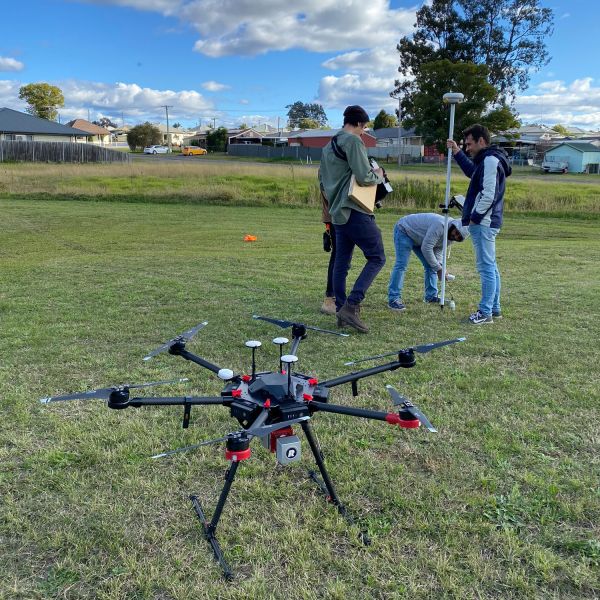
Drones to predict where water pipes are at risk of bursting
With leaking and burst water pipes costing water authorities and consumers time and money, as well as wasting a precious resource, researchers at the University of Newcastle are developing drone technology to help predict which areas, and even which specific pipes, are at risk of water loss.
Read more

University of Newcastle announces the best “hack” for water security
The New Futures Hackathon for Water Security saw seven teams learn from water security experts from Hunter Water, City of Newcastle, Hunter H2O, and the University of Newcastle before embarking on a 10 hour “hack” to evolve their ideas into a viable, technological solution.
Read more

Antarctic ice cores reveal Australian drought risk worse than thought
Antarctic ice core records have shown that eastern Australia’s drought risk is greater than thought.
Read more
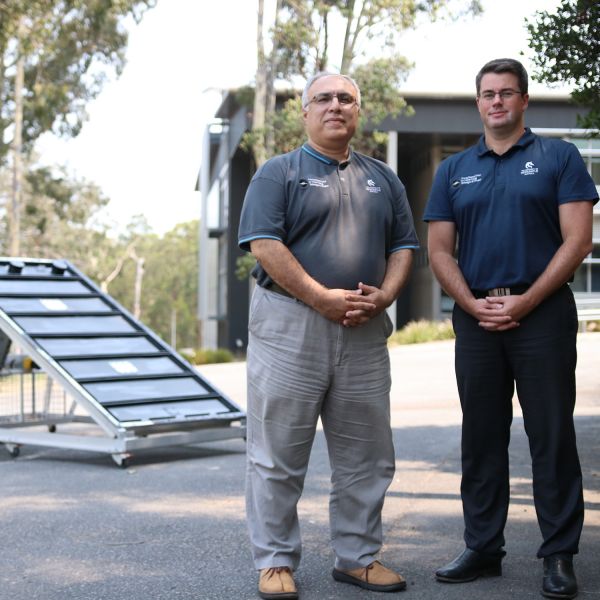
Hydro Harvester is making a splash to solve global water shortage
In what could be a game-changer for solving the world’s water shortage problem, an atmospheric water generator (AWG) developed at the University of Newcastle is one step closer to commercialisation.
Read more

International recognition for University’s green initiatives
The University of Newcastle has been awarded three of the eight 2020 Australasian ‘Green Gown Awards’ in the categories of Climate Action, Benefiting Society and Student Engagement.
Read more

University of Newcastle joins HEAL network to tackle health impacts of climate change
Australians will be better protected against the health impacts of climate change, thanks to the Healthy Environments And Lives (HEAL) network, with partners from across Australia, including the University of Newcastle, and $10 million in Federal Government funding.
Read more
The University of Newcastle acknowledges the traditional custodians of the lands within our footprint areas: Awabakal, Darkinjung, Biripai, Worimi, Wonnarua, and Eora Nations. We also pay respect to the wisdom of our Elders past and present.