
Affordable and Clean Energy
Upgrade Buildings to Higher Efficiency
The University of Newcastle is improving the energy efficiency and environmental performance of its buildings through sustainable design, refurbishment and adaptive reuse. Our established refurbishment plans require energy efficiency to be considered when upgrading existing buildings, from changes to lighting and building services to larger building transformations.
A University-wide plan for more efficient existing buildings
The University’s Environmental Sustainability Plan 2019–2025 identifies a programme to apply its Environmentally Sustainable Design (ESD) Tool across University-wide refurbishment projects, with a target of achieving a five-star Green Star or equivalent outcome from 2019. This is a refurbishment target, not a claim that every project has received certification. It was part of the University’s plan in place through 2025.
The University applies its ESD Tool to refurbishment projects, from minor works to major upgrades, to incorporate sustainability initiatives into project design and delivery. The Engineering Services Design Project Briefing Document requires designs to incorporate energy-efficient sustainable practices and provides for applicable energy rating schemes to be considered project by project. It also calls for assessment of existing building systems when planning alterations.
More detailed standards support practical upgrades: the University’s Interior Lighting and Control specification generally requires LED fittings where they meet the lighting need, while its HVAC specification sets requirements for energy-efficient heating, ventilation and air-conditioning design, including appropriate controls, system optimisation and consideration of existing plant. These standards provide an implementation framework for retrofit and refurbishment decisions.
2025 upgrades to existing University buildings
Larger building refurbishments completed in 2025
The University completed a $27 million refurbishment of the Health Education Research Building at Callaghan in July 2025, converting an existing multistorey carpark into health simulation laboratories and teaching facilities. It also completed the Vic Levi Building refurbishment in February 2025, upgrading the former Health and Physical Education Building through an $8.2 million project. These projects demonstrate the University’s continuing programme of adapting and upgrading existing facilities. Published project descriptions do not provide verified before-and-after energy-consumption figures for these buildings.
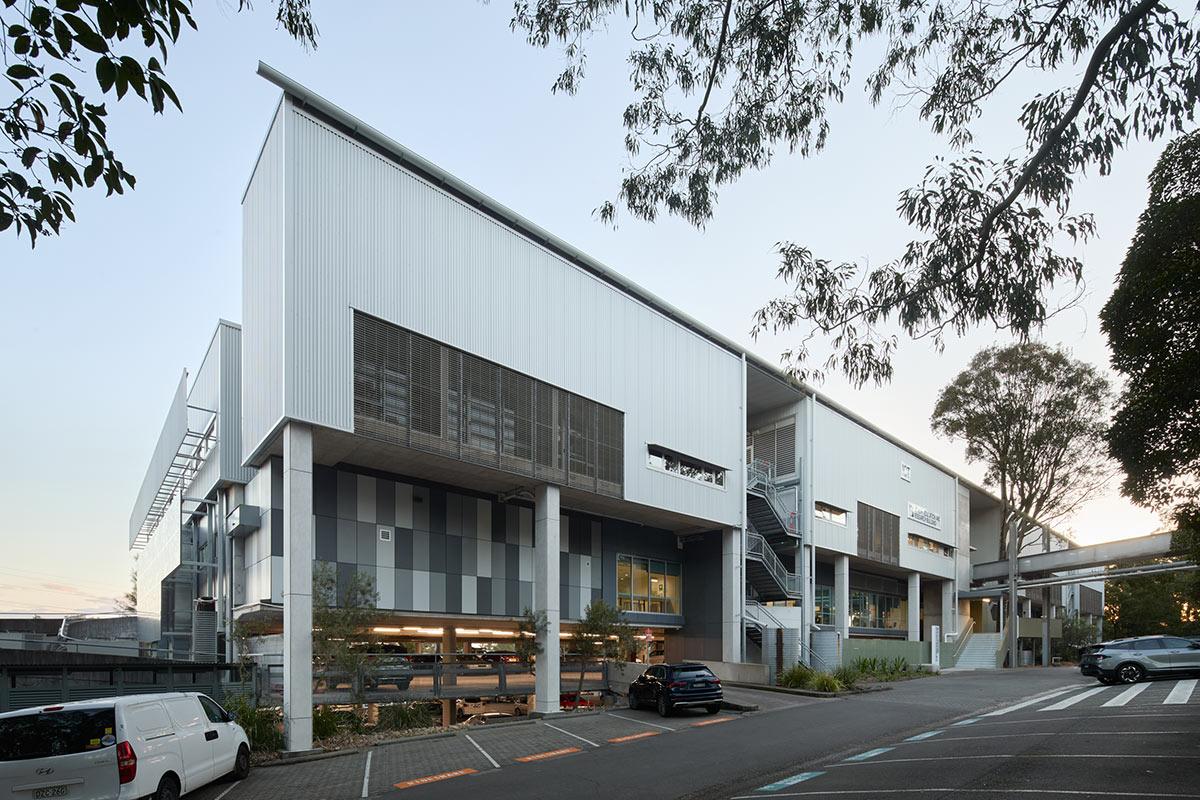
Health Education Research Building.
CT Building: energy-efficient lighting in a completed refurbishment
In 2025, the University refurbished Level 2 of the CT Building for the Joint Medical Program. Its 2025 Annual Report records the installation of energy-efficient LED lighting alongside a mix of new and recycled furniture and upgraded learning facilities. The refurbishment delivered 11 twelve-seat problem-based learning rooms and one eighteen-seat room, together with simulation, study and wellbeing spaces. The lighting is a specific example of an energy-efficiency improvement incorporated into an existing building during the reporting year.
The Great Hall: retaining and improving an established campus facility
The 2025 Annual Report also records completion of a $4.8 million upgrade to the Great Hall at Callaghan in October 2025. Works included new kitchen and catering facilities, a forecourt with water-reuse features and improved accessibility. Indigenous artwork by Associate Professor Liz Cameron (Banjalee) was incorporated into the kitchen cladding. This is a further example of extending the usefulness of an existing campus building; its reported works should not be mistaken for a quantified energy-efficiency result.
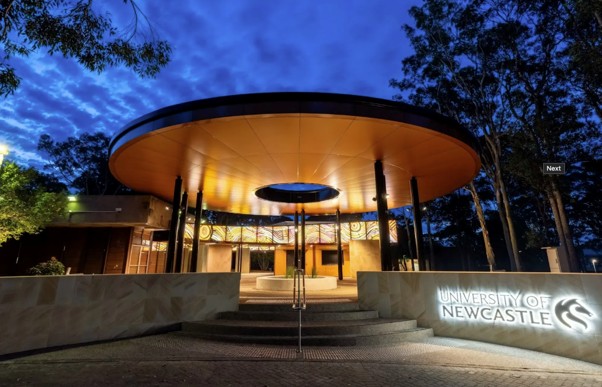
The upgraded Great Hall at Callaghan.
Across these projects, the University’s refurbishment programme combines energy-efficiency design requirements with practical upgrades to existing buildings.
University Policy & Plans to Upgrade Existing Buildings
We commit to refurbishment programs and sustainability upgrades of our existing built environment, guided by our Environmental Sustainable Design (ESD) principles and tools.
Some key elements are:
The University of Newcastle acknowledges the traditional custodians of the lands within our footprint areas: Awabakal, Darkinjung, Biripai, Worimi, Wonnarua, and Eora Nations. We also pay respect to the wisdom of our Elders past and present.