
Affordable and Clean Energy
Local Community Outreach for Energy Efficiency
The University of Newcastle provides programs to educate the local community about the importance of energy efficiency and clean energy.
In 2024, through the Centre for Organic Electronics (COE), we continued to raise awareness about solar technology and clean energy solutions. COE is a global leader in the exciting emerging field of 'functional printing', which uses conventional printing technologies to manufacture clever, high performing, low-cost materials to help solve some of the world's greatest challenges.
The Centre for Organic Electronics is marrying the creation of clever electronic inks with well-established printing technologies to address global challenges spanning renewable energy, health & medicine, and mining safety.
Their core focus is on translating cutting edge research for real world impact. As such, they partner with business, industry and government to generate products, systems and services that benefit our global community.
The COE is multidisciplinary, with expertise spanning physics, chemistry, engineering, biology, health, design and communications. This depth and breadth of talent and expertise enables us to successfully manage projects from end-to-end.
Research themes include:
- printed solar
- biosensors & bioelectronics
- artificial colour retina
- scanning helium microscopy (SHeM)
- medical physics
Not just a hub for innovative research, the COE is one of the only research facilities in the world capable of also manufacturing printed electronic devices at commercial scale.
The University of Newcastle's Centre for Organic Electronics (COE) Successfully Hosted Its 14th Annual Spring School in 2024

In 2024, this three-day event provided undergraduate students from various disciplines, including Science, Math, IT, Engineering, and Medical Sciences, with an opportunity to explore cutting-edge research in organic electronics. The program featured lectures from local and international experts, hands-on experiences in COE labs, and interactive think tank sessions aimed at inspiring students to pursue research careers. Highlights included fabricating organic solar cells, operating advanced microscopes, racing simulated EV cars, and learning about Printed Solar and its recycling. Accredited by CIFAL Newcastle and the United Nations Institute for Training and Research (UNITAR), students received formal recognition for their participation. The event, sponsored by Spruson & Ferguson Intellectual Property and the Australian National Fabrication Facility, saw students awarded for solar cell efficiency and EV racing. Following the event’s success, many students expressed interest in continuing their research journey with the COE.

In December 2024, University-made Printed Solar powered Coldplay concerts in COE partnership.
Coldplay has made significant commitments to sustainability, continuously exploring and applying new technologies to reduce their environmental impact. This partnership was another step towards achieving their ambitious sustainability goals to reduce their tour’s carbon emissions by 50%.
An array of 500 square meters (about twice the area of a tennis court) of Printed Solar was placed behind the seats behind the stage and elsewhere in the venue to collect power in battery packs. These batteries were then used to power Coldplay’s C Stage and fulfil other ancillary power needs throughout the venue.
Printed Solar uses organic photovoltaics (OPVs) which are a next-generation solar cell technology that uses organic compounds to convert sunlight into electricity. Now producing at scale with the support of the Newcastle Australian National Fabrication Facility (ANFF) Hub, located at the Newcastle Institute for Energy and Resources (NIER). Manufactured with PET plastic using roll-to-roll printing techniques and fully recycled in-house, Printed Solar is one of the lowest emission-intensive energy sources available.
Dr Ben Vaughan, Hub Manager for the ANFF, says Printed Solar has enormous potential for a variety of applications.
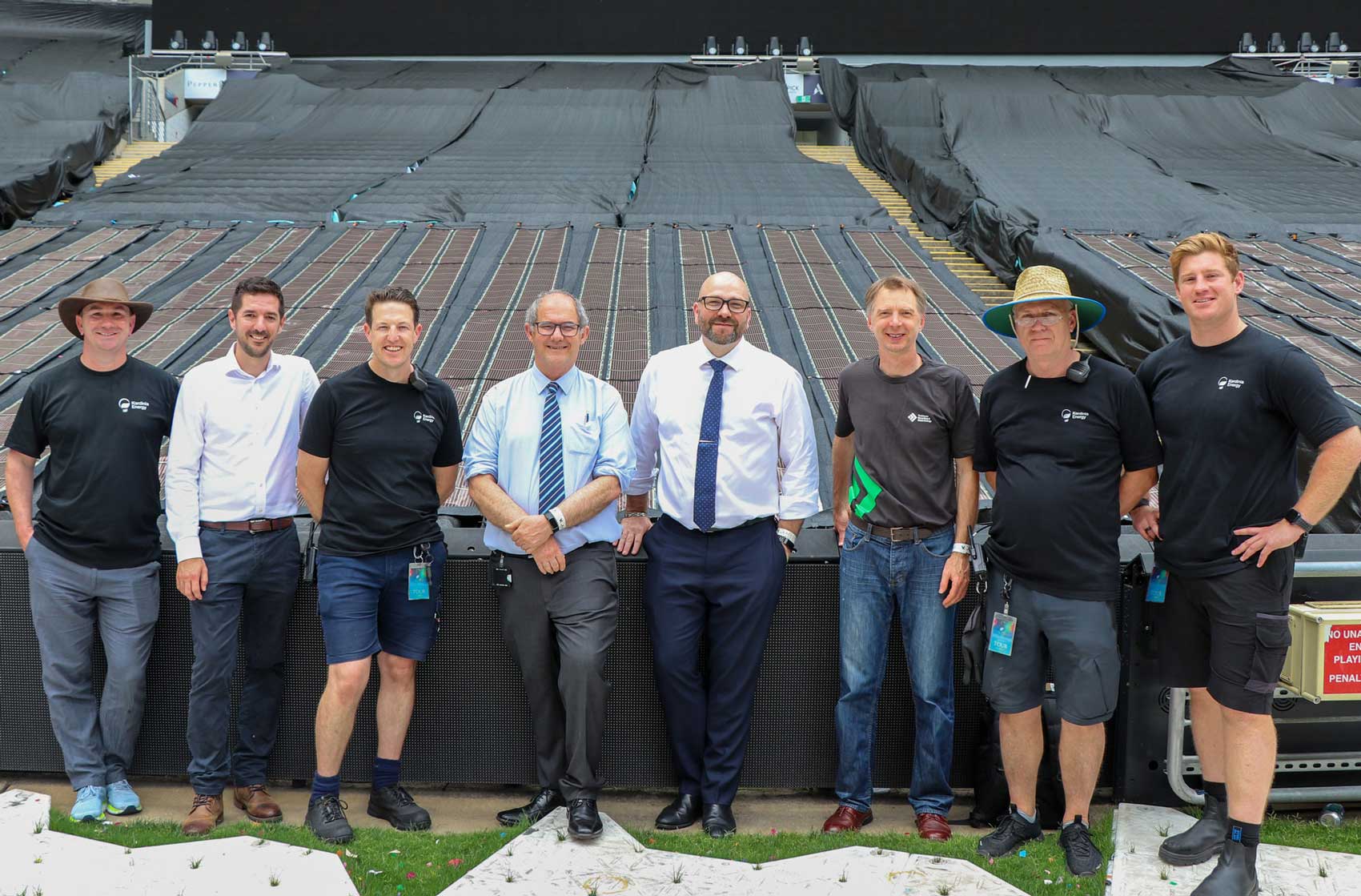
Members of TRaCE, NIER, COE and Kardinia Energy backstage at Accor Stadium.
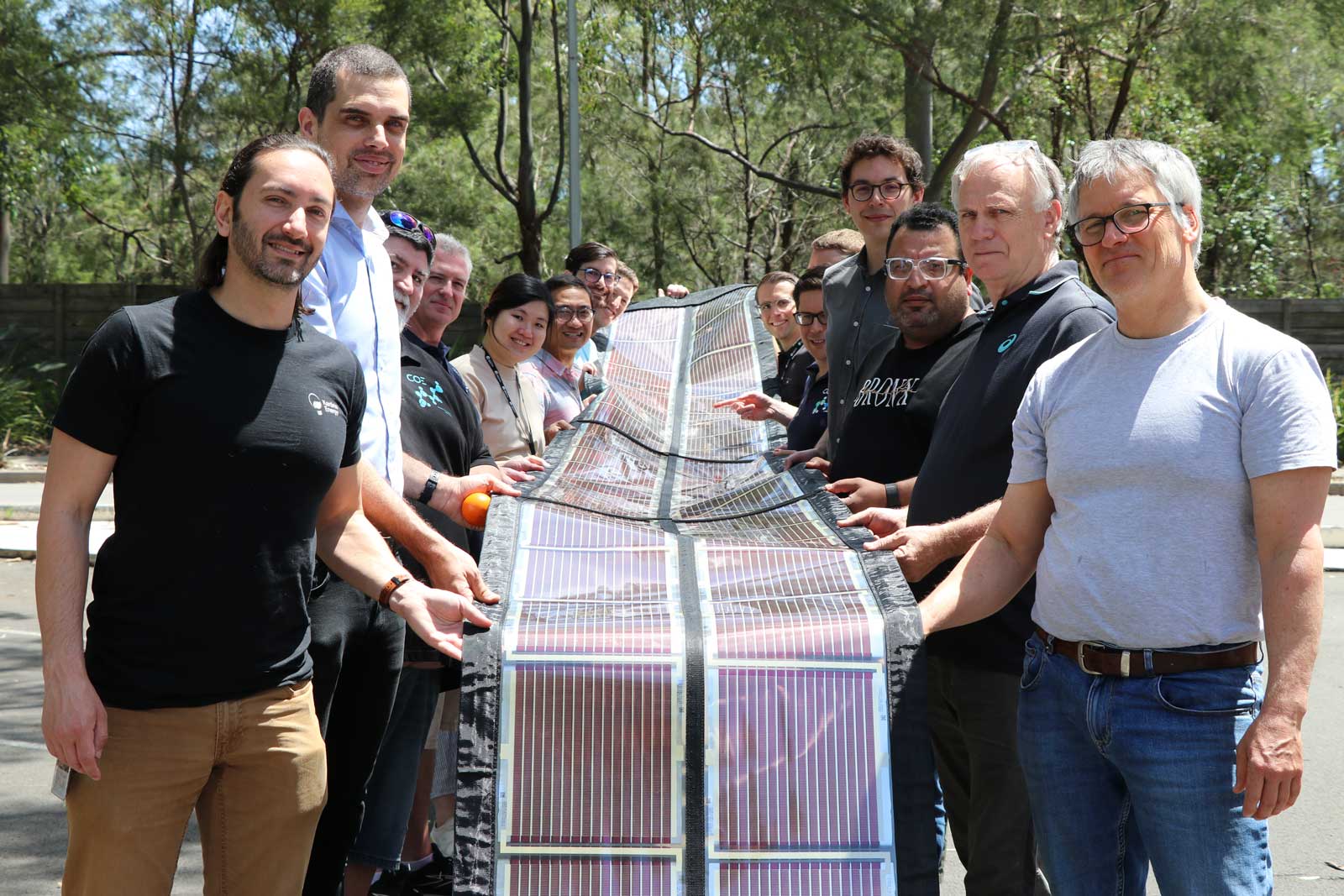
The COE team in Newcastle holding up a roll of Printed Solar designed for the Coldplay concert.
COE, the University of Newcastle Australia 5:43
Learn more

News • 16 Nov 2020
Aboriginal ear surgeon honoured with Menzies Medallion
Australia’s first Aboriginal surgeon, the highly acclaimed ear, nose and throat surgeon, Associate Professor Kelvin Kong has been awarded the prestigious Menzies Medallion.

News • 13 Nov 2020
University of Newcastle secures over $6 million in ARC funding
The Australian Research Council (ARC) has awarded the University of Newcastle more than $6 million in competitive research funding through its Discovery Projects and Linkage Projects schemes.

News • 12 Nov 2020
Inaugural employability excellence achievers unveiled
The students, staff, businesses and community partners who inspire the University of Newcastle’s reputation for producing work-ready graduates have been recognised in the institution’s inaugural Employability Excellence Awards.
News • 12 Nov 2020
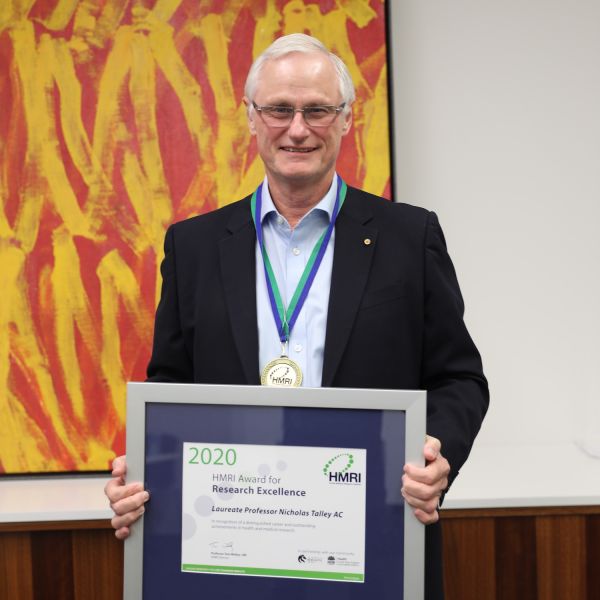
HMRI 2020 Awards celebrate medical research excellence
Medical research excellence was honoured at tonight’s annual HMRI Awards Night – HMRI 2020.

News • 10 Nov 2020
Virtual window into students’ creative minds: Festival X
A virtual gallery, live performances, short films, animation, documentaries and much more will light up the virtual world this weekend as Festival X brings together a digital celebration of student creativity.

News • 10 Nov 2020
Have a Hometown Holiday to support the Newcastle tourism industry
A new initiative aimed at boosting tourism in Newcastle will launch on Thursday.
News • 10 Nov 2020
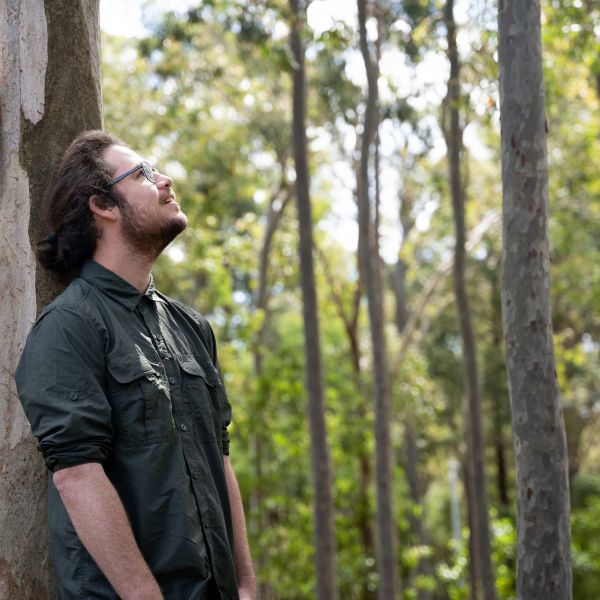
Researchers call on Port Stephens community to help save the koala
Port Stephens community members are working with scientists to collect information to help save koalas in the region.

News • 09 Nov 2020
The values of NAIDOC shouldn’t be confined to one week only
By Associate Professor Kathleen Butler, a proud Bundjalung and Worimi woman and Head of the Wollotuka Institute of Indigenous Research and Education at the University of Newcastle.
News • 09 Nov 2020
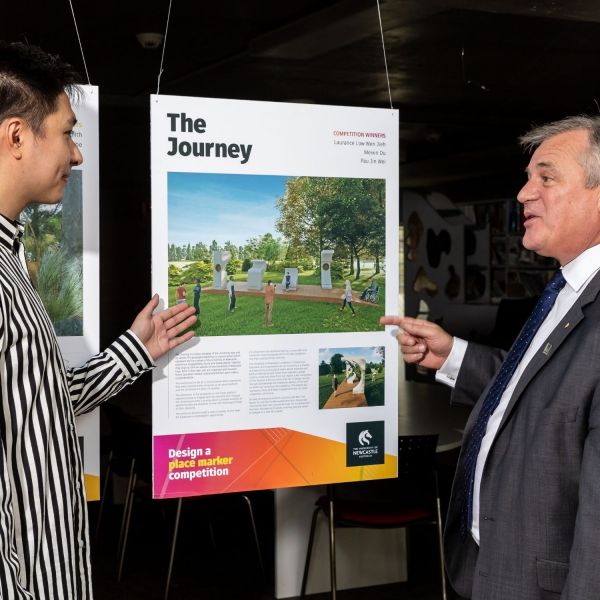
Students given the creative lead to reimagine uni campuses
The University of Newcastle has today announced the winning team and installation in its recently completed Design-a-Place Marker competition.

News • 05 Nov 2020
Uni backs promising ideas to buzz off mozzies
From a deodorant that repels mosquitoes to engineering a trap that disrupts mosquito breeding, nine innovative projects were awarded and have shared $45,000 in funding in the University of Newcastle’s 2020 Grand Challenge.

News • 04 Nov 2020
Launch event: Older Persons Legal Clinic
A free legal clinic to support some of the most vulnerable people in our society – older people – will officially launch at an event on Thursday with the NSW Attorney General, The Hon. Mark Speakman SC MP.

News • 04 Nov 2020
Global recognition for Newcastle climate scientist
University of Newcastle climate scientist Dr Andrew Magee has become the first Asia Pacific representative to be named a finalist in the history of the Allianz Climate Risk Research Award. The global award supports scientific research that improves our understanding of climate change-related risks.
The University of Newcastle acknowledges the traditional custodians of the lands within our footprint areas: Awabakal, Darkinjung, Biripai, Worimi, Wonnarua, and Eora Nations. We also pay respect to the wisdom of our Elders past and present.