
Hydro Harvester secures $1.9 million for WA farm trial
A University of Newcastle-led project that harvests water from the atmosphere has secured $1,904,166 funding through the Australian Government’s Future Drought Fund Drought Resilience Innovation Challenges Pilot Program.
Led by Laureate Professor Behdad Moghtaderi and Chief Investigator Dr Priscilla Tremain, the Hydro Harvester Pilot Program will upgrade and trial the University’s atmospheric water generation technology at an Indigenous-owned and operated farm in Western Australia.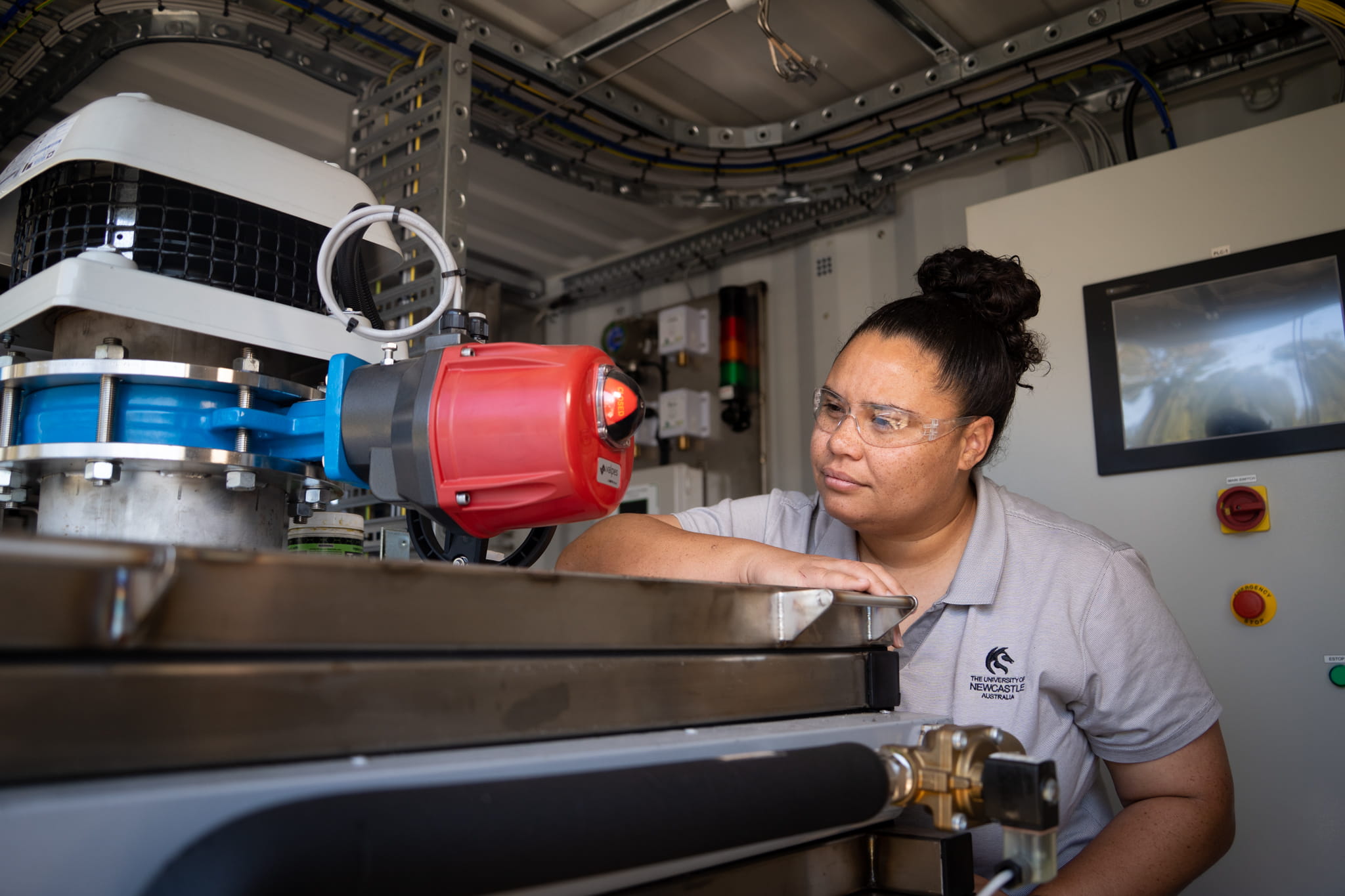
Water generated by the Hydro Harvester will support native seed production while helping rehydrate drought-affected land.
Currently located at the University’s Newcastle Institute for Energy and Resources (NIER) precinct, the Hydro Harvester captures moisture from the air to generate up to 1,000 litres of water per day.
The trial will take place in Beverley, Western Australia. The property is owned by Ballardong Noongar man and Chair of Yaraguia Incorporated, Mr Oral McGuire, who will help guide implementation through Indigenous knowledge systems and local land management practices.
The Drought Resilience Innovation Challenges Pilot Program supports projects that connect farmers, producers and regional and rural communities to evidence-based innovation, technology and tools that will help improve climate and drought resilience.
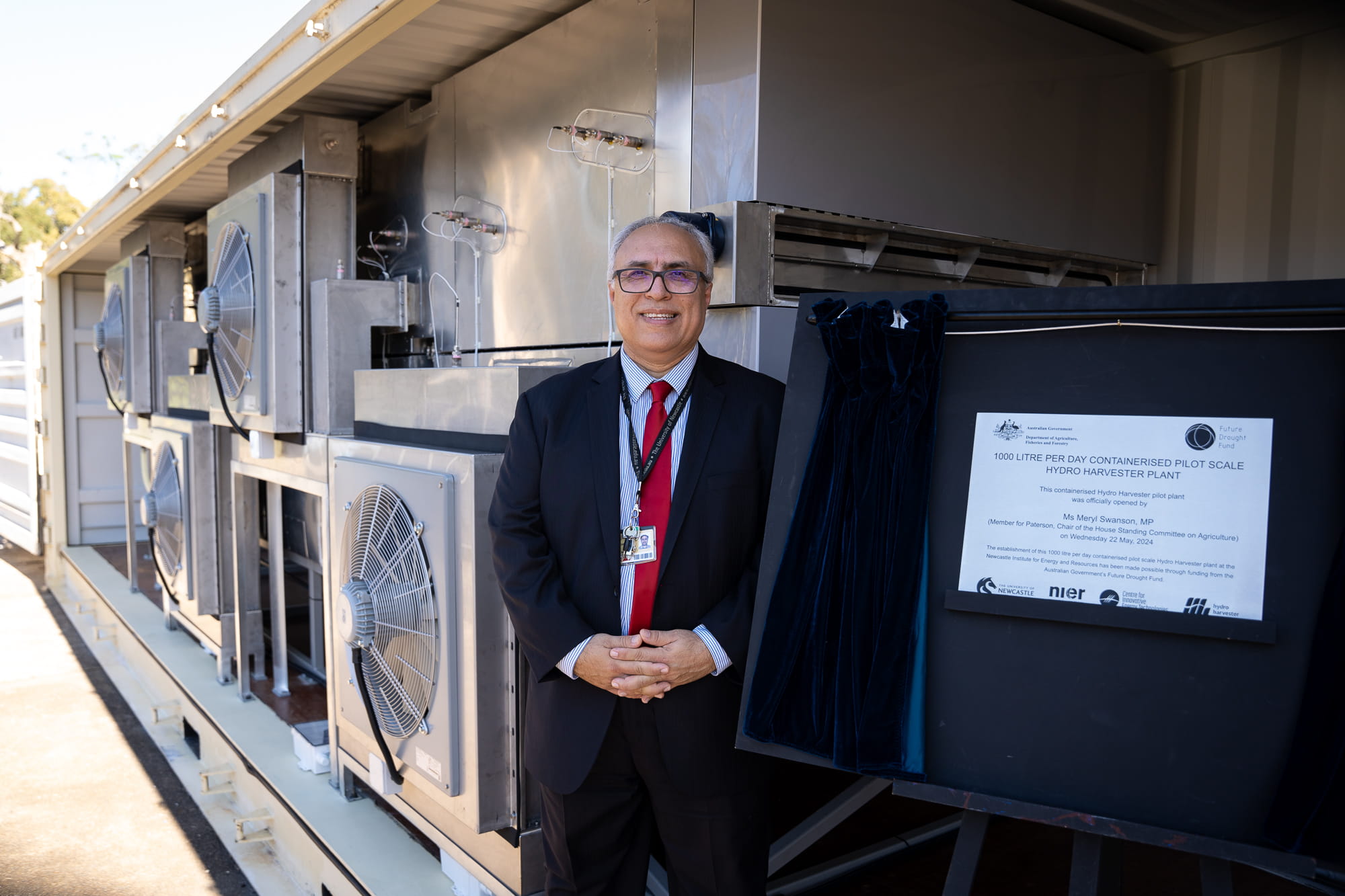
Laureate Professor Behdad Moghtaderi with the 1000L per day Hydro Harvester model at NIER
Contact
- Media & Communications Specialist, Penny Harnett
- Email: media@newcastle.edu.au
Related news
- Where Culture meets STEM: Empowering future leaders in Wadeye
- University of Newcastle engineering leader awarded prestigious Engineers Australia Fellowship
- Showing our support for the Koori Knockout
- Opinion: HSC students be ambitious, but also kind to yourself
- Vice-Chancellor Professor Alex Zelinsky to retire in February 2027
Aligned with the United Nations Sustainable Development Goals





The University of Newcastle acknowledges the traditional custodians of the lands within our footprint areas: Awabakal, Darkinjung, Biripai, Worimi, Wonnarua, and Eora Nations. We also pay respect to the wisdom of our Elders past and present.