PhD pays tribute to Aboriginal fathers
Grounded in culture, driven by research: Dr Jake MacDonald’s PhD is transforming the way we see fatherhood, health, and community strength.
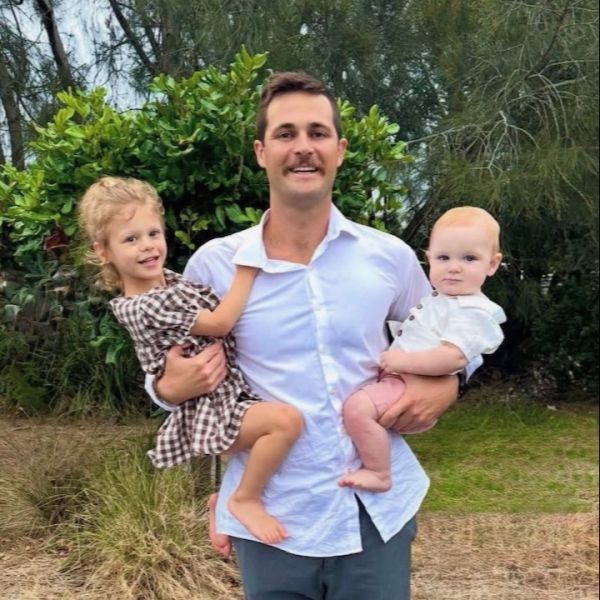
When proud Ngarabal man, Jake MacDonald, began his thesis based on Aboriginal fathers and the important role they play in the health of their families – he was living in a share house on Darby St in Newcastle’s CBD.
Now, proudly raising two children with his wife in their home, Dr MacDonald is set to graduate from the University of Newcastle with a PhD that is already making waves in the fields of parenting, cultural governance and public health.
“Growing up on Darkinjung Country, I knew our dads had cultural strengths that weren’t being recognised in mainstream parenting programs,” Dr MacDonald said.
“This research was about returning to those strengths—nurturing, caring, and being present—and building strong relationships with our kids.”
His research, ‘biya yadha gudjagang yadha: Healthy Dads, Healthy Mob’ centres on a strengths-based, co-designed parenting program in partnership with Eleanor Duncan Aboriginal Medical Service that reflects the lived experiences and cultural values of Aboriginal families on the Central Coast of New South Wales.
“There’s no better way to understand parenting than becoming a parent,” Dr MacDonald continued.
“It gave me a deeper connection to the research and made me even more committed to its success.”
The work builds on the internationally successful “Healthy Dads Healthy Kids” program, adapting it through a culturally responsive lense.
The nine-week program, developed in partnership with an Aboriginal-led cultural governance panel and community panel, included physical activity, weekly education sessions, and culturally relevant discussions. The results were promising: fathers lost weight, children became more physically active, and most importantly, father-child relationships were strengthened.
“The most powerful outcome wasn’t just physical health—it was the emotional connection between dads and their kids,” Dr MacDonald said. “That’s what makes this work so meaningful.”
The research also uncovered a significant gap in Australian parenting studies.
In a scoping review of 109 programs, only two were designed specifically for Aboriginal and Torres Strait Islander families.
None were targeted towards Aboriginal fathers.
“It was shocking to see how widely Aboriginal families—and especially fathers—had been left out,” he explained.
“If Aboriginal dads and their children are health priorities, then we need strategies that are culturally safe and inclusive.”
As graduation looms, Dr MacDonald is taking time to reflect and celebrate with his family and support networks.
“None of this would have been possible without the sacrifices of others—my wife, my kids, my mentors, and my community,” he said. “Now it’s my turn to give back.”
While Dr MacDonald is still figuring out what comes next, he’s certain there’s more work to be done.
The project is one example of improved outcomes for Aboriginal and Torres Strait Islander people when self-determination and co-design are at the centre of research, in line with the University’s ‘Research Our Way’ framework.
Contact
- Shahni Wellington
- Phone: 02 4921 7047
- Email: Shahni.Wellington@newcastle.edu.au
Related news
- Opinion: HSC students be ambitious, but also kind to yourself
- Vice-Chancellor Professor Alex Zelinsky to retire in February 2027
- Local sport gets a boost with new multisport facility honouring Mark and Kirralee Hughes
- Opinion: AI is our way back and investment's our future
- Every hour counts: Global study links assessment delays to higher risk of burst appendix
Aligned with the United Nations Sustainable Development Goals
The University of Newcastle acknowledges the traditional custodians of the lands within our footprint areas: Awabakal, Darkinjung, Biripai, Worimi, Wonnarua, and Eora Nations. We also pay respect to the wisdom of our Elders past and present.