
New method to thaw frozen frog sperm produces better swimmers
Scientists have uncovered a superior method of freezing and thawing frog sperm leading to improved sperm quality. Driven by mass declines of frogs worldwide, research into cryopreservation of amphibian sperm has expanded for the purposes of conservation.
The finding drastically alters scientific understanding of amphibian sperm cryobiology and has significant implications for the application of sperm cryopreservation to the management of genetic diversity within both captive and wild populations of threatened frogs worldwide.
Led by University of Newcastle reproductive biologist, Dr Rose Upton, the study finds using less sucrose – or sugar – in the freezing process facilitates much higher cell recovery resulting in more intact membranes and sperm motility to produce better swimmers.
Sperm was tested from six frog species, and in all cases the new preferred thawing method was found to be superior to the traditional cryopreservation method.
The research has been published in the world-renowned journal, Reproduction.
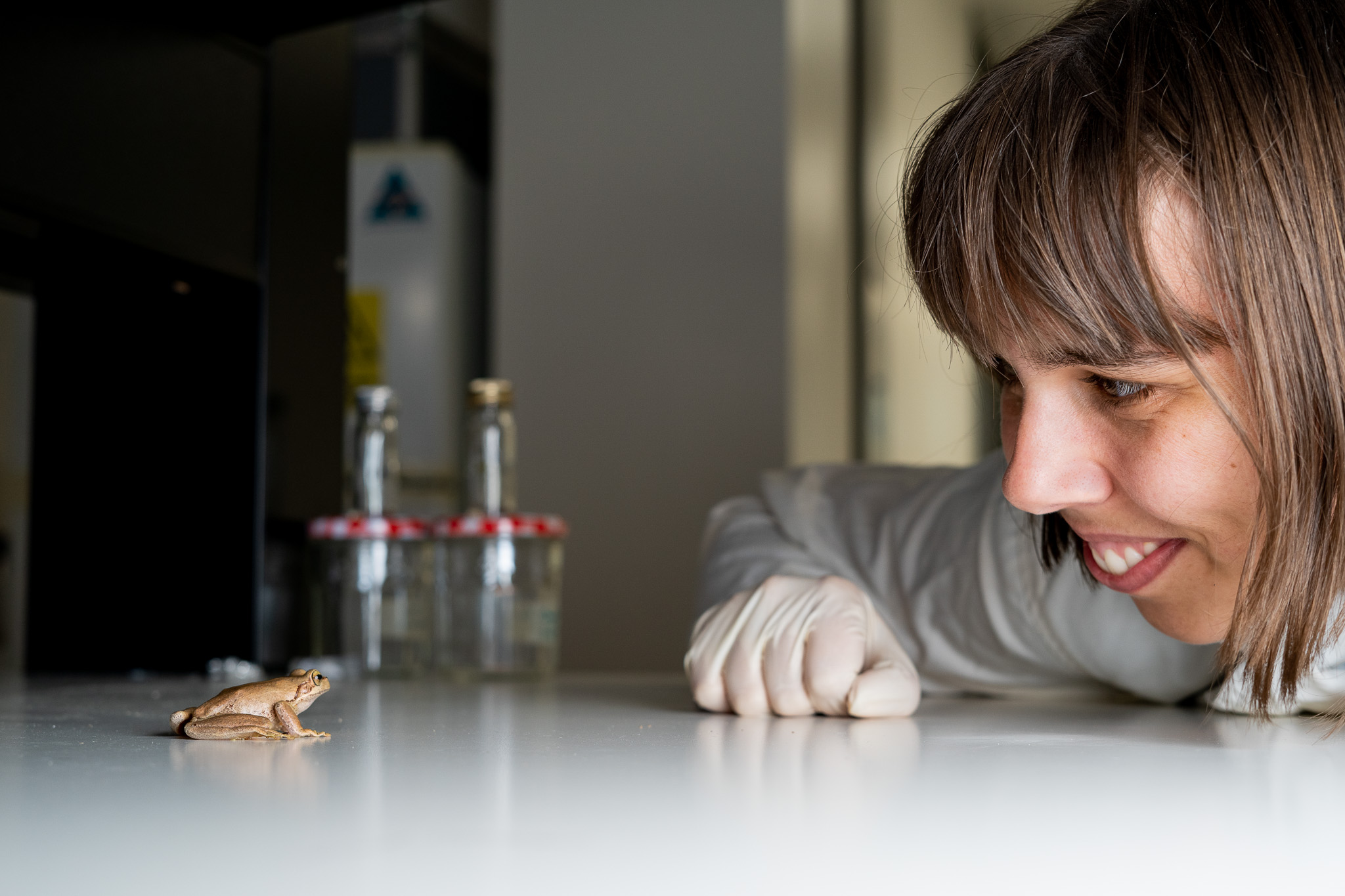
Dr Rose Upton in a University of Newcastle lab with a Littlejohn's Tree Frog
Contact
- Communications Coordinator, Penny Harnett
- Email: penny.harnett@newcastle.edu.au
Related news
- University of Newcastle’s Gosford Central Building achieves highest sustainability rating – first on Central Coast
- First Health Innovation Incubator cohort moves into Health Innovation Living Lab at John Hunter Hospital
- ATEC compact confirms University of Newcastle as leader in educational opportunity
- Harvesting the Future strengthens Australia-Indonesia collaboration in climate-resilient agriculture
- Invisible no more: national study reveals stark barriers facing university students living with hidden disability
The University of Newcastle acknowledges the traditional custodians of the lands within our footprint areas: Awabakal, Darkinjung, Biripai, Worimi, Wonnarua, and Eora Nations. We also pay respect to the wisdom of our Elders past and present.