
Disease and food availability in created habitats may affect frog reproduction
New research from the University of Newcastle (UON) has found food availability and disease in created habitats may affect the reproductive output of reintroduced frogs.
The findings, published by UON PhD candidate Kaya Klop-Toker and colleagues from the School of Environmental and Life Sciences, show released frog populations need to be monitored in order to ensure their survival in created habitats.
“Created ponds had greater disease burden, lower vegetation and invertebrate diversity compared to natural ponds,” said Miss Klop-Toker
Attempts to mitigate the impact of land development often involve the reintroduction of species and creation of habitats. However, previous research has found that captive-bred animal populations, when released into a created environment, may not breed successfully.
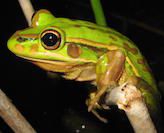
To investigate which factors potentially contribute to breeding failure within a created habitat, the researchers monitored a released population of endangered green and golden bell frogs, Litoria aurea, within created ponds on Kooragang Island in the New South Wales region of Australia. They then compared them to populations in natural breeding ponds as well as natural ponds where breeding did not occur.
The researchers discovered that the created habitat had lower diversity in vegetation and invertebrate species than the natural ponds, which may have resulted in fewer nutritional resources available to the frogs for breeding. Also, compared to the wild populations, a greater proportion of frogs in the created habitat were carrying the chytrid fungus, a pathogen previously shown to reduce reproductive functioning in male L. aurea.
"This study shows the benefit of monitoring released populations alongside a wild population so that we can understand how to improve conservation efforts," said Miss Klop-Toker
While their study was limited to one area in Australia, the authors suggest recommendations to improve likelihood of success when reintroducing frogs into created habitats, including planting a diversity of plant species to attract invertebrates and following recommendations to reduce disease within the frog population.
View the research paper here: http://dx.plos.org/10.1371/journal.pone.0159143
Related news
The University of Newcastle acknowledges the traditional custodians of the lands within our footprint areas: Awabakal, Darkinjung, Biripai, Worimi, Wonnarua, and Eora Nations. We also pay respect to the wisdom of our Elders past and present.