
Chinese Folk Instrument Ensemble: My Motherland and Welcome Music
Chinese Folk Instrument Ensemble: My Motherland and Welcome Music
Acknowledgment: all copyrights of the video and photo reserved to Central China Normal University (CCNU)
The students of the School of Music at Central China Normal University have seamlessly integrated two classic Chinese compositions from northern and southern China through their creative adaptation and performance, offering the audience a fresh and inspiring musical experience. The performance flows naturally between gentle, heartfelt passages and joyful, uplifting expressions, conveying deep love for the motherland as well as the warmth, friendliness, and sincerity of welcoming friends from around the world.
My Motherland (Chinese: 我的祖国; Pinyin: wǒ de zǔ guó)
Composed by Liu Chi (Chinese: 刘炽; Pinyin: liú chì)in 1956, My Motherland expresses the Chinese people's profound love for their homeland. In search of a melody that would resonate deeply with audiences, Liu studied ten popular Chinese songs from the 1940s and 1950s before drawing inspiration from the opening phrases of Lugou Dialogue, a work adapted from a folk melody from Hebei Province in northern China. He transformed this melody into the warm and memorable main theme of My Motherland, which has since become one of China's most beloved musical works.
On 19 January 2011, internationally acclaimed Chinese pianist Lang Lang performed My Motherland at the White House during a meeting between the leaders of China and the United States.
Liu Chi (10 March 1921 – 23 October 1998) was a renowned Chinese composer from Xi'an, Shaanxi Province. His most celebrated works include My Motherland and Let's Row Our Boat, while his notable operatic compositions include The White-Haired Girl and Ashima.
Welcome Music (Chinese: 迎宾曲; Pinyin: yíng bīn qǔ)
Welcome Music was composed by Gu Guanren (Chinese: 顾冠仁; Pinyin: gù guān rén)to celebrate the opening of the Shanghai World Expo in 2010. Featuring melodies inspired by the distinctive charm of the Jiangnan region (the area south of the lower Yangtze River) and lively, uplifting rhythms, the work expresses the warmth, hospitality, and sincerity of the people of Shanghai in welcoming visitors from across China and around the world.
Gu Guanren (born 1 January 1942) is a distinguished Chinese composer from Jiangsu Province in South China. His major works include the pipa concerto Mulan, the suite Spring, and the orchestral concerto Harmony of Eight Tones, among others.
Traditional Chinese Instruments
The performance features several traditional Chinese instruments, including the erhu (two-stringed bowed fiddle), guzheng (Chinese zither), pipa (four-stringed lute), sheng (Chinese mouth organ), and ruan (Chinese moon lute).
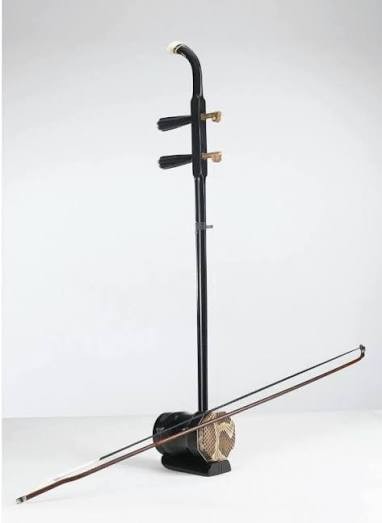
Erhu (Chinese: 二胡; Pinyin: èr hú)
(Image source: https://qingyunumich.org/instruments)
The erhu is a traditional Chinese two-stringed bowed instrument that originated from the huqin family, which traces its roots to the Western Regions (an area that includes present-day southern Xinjiang and parts of Central Asia) during the Tang Dynasty (618–907 CE). Its name comes from its two strings (er means "two" in Chinese). Renowned for its expressive and versatile sound, the erhu is a central instrument in Chinese orchestras, performing both solo and ensemble repertoire. Its rich tone can convey a wide range of emotions, from gentle and melancholic to lively and joyful.
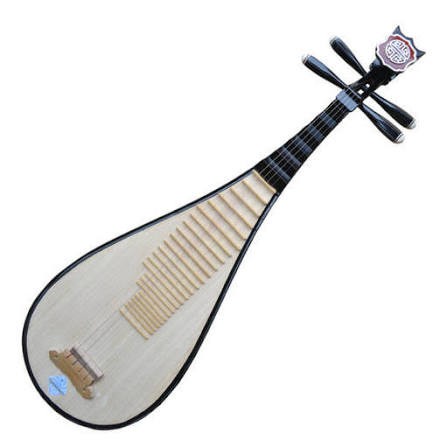
Pipa (Chinese: 琵琶; Pinyin: pí pá)
(Image source: https://www.uscycs.org/pipa.html)
The pipa is a versatile Chinese plucked string instrument known for its ability to express both passionate and sorrowful emotions. The performer holds the instrument vertically, using the left hand to press the frets while plucking the strings with the right hand. The instrument’s name reflects these playing techniques: pi (琵) refers to plucking the strings forward, while pa (琶) refers to plucking them backward.
With a history dating back more than 1,500 years, the pipa was introduced to China from Central Asia during the fifth century. Featuring a curved neck, pear-shaped body, and four strings, it resembles the Middle Eastern oud. The pipa became a prominent instrument in imperial court ensembles and contributed significantly to the flourishing musical culture of the Tang Dynasty (618–907 CE).
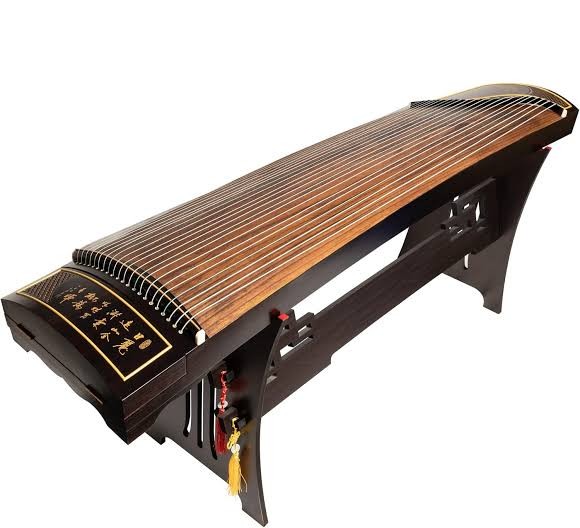
Guzheng (Chinese: 古筝; Pinyin: gǔ zhēng)
(Image source: https://organology.net/instrument/guzheng/)
The guzheng is a traditional Chinese plucked string instrument with a history of more than 2,500 years. Each string produces a single note, and the strings are arranged according to the pentatonic scale. The most commonly used guzheng today has 21 strings, with the higher-pitched strings positioned closer to the performer and the lower-pitched strings further away.
Players use the left hand to press the strings on the left side of the bridges to raise the pitch and create expressive variations in tone, adding depth and emotion to the performance.
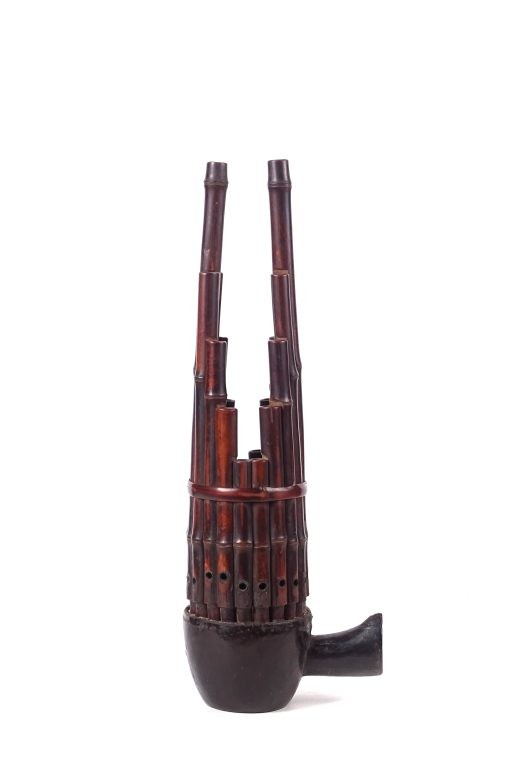
Sheng (Chinese: 笙; Pinyin: shēng)
(Image source: https://musicaparaver.org/instruments/type/reed/origin/china/3218)
The sheng is unique among Chinese wind instruments because it can produce sound through both inhaling and exhaling. It is also the only traditional Chinese wind instrument capable of producing chords and harmony. Invented in China, the sheng has a history spanning more than a thousand years and gradually spread throughout East Asia. In the 18th century, it was introduced to Europe by missionaries returning from China.
Ruan (Chinese: 阮; Pinyin: ruǎn)
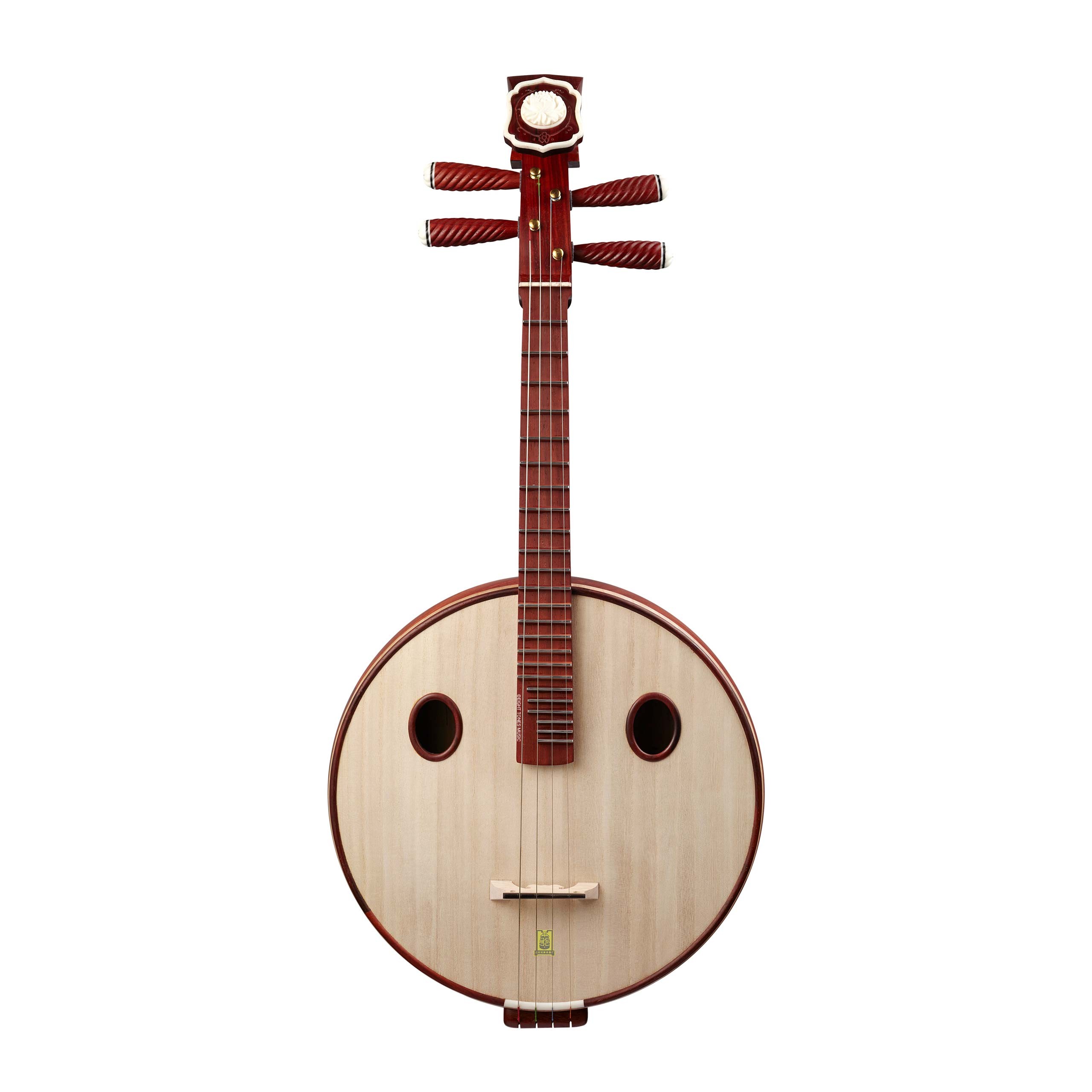
(Image source: https://wiki.y.qq.com/i/c8ab7re3dearnlrqju0g)
The ruan is a traditional Chinese plucked string instrument with a history of approximately 2,000 years. According to legend, the instrument was refined by the renowned scholar and musician Ruan Xian during the Wei and Jin dynasties (220–420 AD), and was therefore also known as the “Ruan Xian” or “Ruan Xian pipa” by later generations.
The ruan produces a warm, rounded tone with rich resonance and a wide range. As a middle-register instrument, the ruan is known for its gentle, mellow, and poetic sound quality, making it an important instrument in solo, ensemble, and chamber performances.
The University of Newcastle acknowledges the traditional custodians of the lands within our footprint areas: Awabakal, Darkinjung, Biripai, Worimi, Wonnarua, and Eora Nations. We also pay respect to the wisdom of our Elders past and present.