
Research Group Interdisciplinary Machine Learning
The Interdisciplinary Machine Learning Research Group (IMLRG) at the University of Newcastle conducts research at the intersection of machine learning, artificial intelligence (AI), pattern recognition, and topological data analysis (TDA), with a strong emphasis on interdisciplinary collaboration. The group works across both the conceptual foundations of learning and its real-world application, and develops methods and software for complex, high-dimensional, and topologically structured data.
Parties or individuals interested in exploratory projects, joint grant applications, consulting arrangements, or PhD (co-)supervision are warmly encouraged to make contact. Visitors and prospective Honours, Masters, and PhD students are also welcome.
Research focus
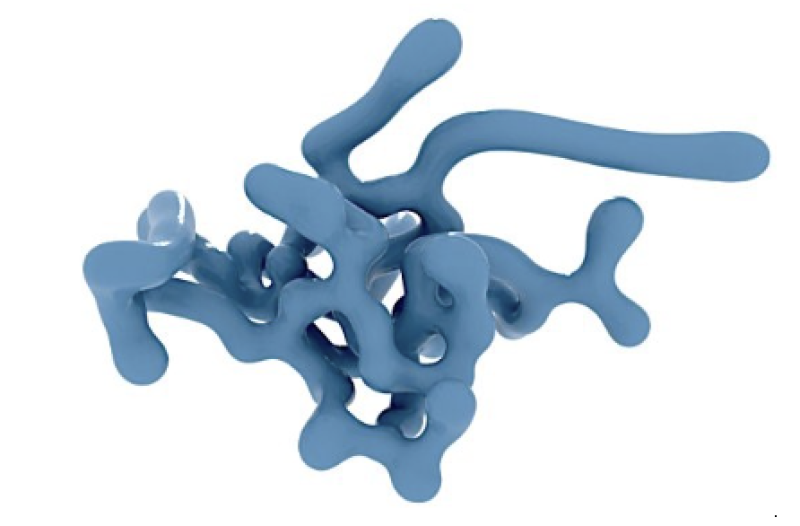
- Topological data analysis meets machine learning - combining persistent homology and related topological tools with deep learning, applied to 3D and 4D image analysis and to sparse, noisy imaging.
- Neural manifolds - exploring the geometry and topology of representations learned by neural networks, how these representations evolve during training, and what they imply for interpretability and generalisation in AI.
Projects
ARC Discovery Project - Estimating the Topology of Low-Dimensional Data Using Deep Neural Networks
Led by Professor Chalup as Chief Investigator, this project develops experimental tools that enable intuitive visualisation and analysis of complex 3D and 4D data, bridging deep learning and algebraic topology to tackle problems previously hard to solve.
Topological data analysis for deep learning
The group develops persistent-homology-based methods that make deep learning more robust and interpretable, with applications to 3D and 4D image analysis and to sparse, noisy imaging modalities.
Neural manifolds and representation learning
Research in this strand studies how neural networks learn manifold-structured representations, how these representations can be aligned across modalities, and how topological tools can quantify what a network has ctually learned.
Our Research Community and Networks
The IMLRG community has been fostered over more than two decades of research, teaching, and collaboration.
Alumni network. The group has trained more than 30 PhD graduates and many Honours students. They now hold positions in leading AI laboratories, research agencies, universities, and industry across Australia and around the world. Approximately 1,500 students have also passed through the undergraduate and Masters Machine Intelligence courses developed and taught by Professor Chalup, forming a broad community of graduates across data science, AI, and software engineering.
Industry and research partners. The IMLRG works closely with partners across science, engineering, and the humanities. Its work spans diverse fields: from medical imaging, environmental monitoring and radiation oncology to robotics and autonomous systems, as well as architecture and the built environment. Prospective collaborators are encouraged to get in touch.
The University of Newcastle acknowledges the traditional custodians of the lands within our footprint areas: Awabakal, Darkinjung, Biripai, Worimi, Wonnarua, and Eora Nations. We also pay respect to the wisdom of our Elders past and present.