

Past mathematics seminar
Seminar archive
2026 Mid year session
| Week | Date | Time | Speaker | Location |
|---|---|---|---|---|
| 1 | Friday 29 May 2026 | No seminar due to Honours presentations | ||
| 2 | Friday 5 June 2026 | No seminar due to AIM research week | ||
| 4 | Friday 19 June 2026 | 12:00-13:00 | Kwok Kun Kwong | SR202 |
Weighted Alexandrov-Fenchel and Minkowski inequalities in hyperbolic spaceAlexandrov-Fenchel and Minkowski inequalities are fundamental in differential geometry and convex geometry. In recent years, their weighted versions have attracted substantial attention, especially in the space forms setting. In this talk, I will first briefly survey weighted geometric inequalities in space forms. I will then present my recent joint work with Yong Wei on sharp weighted Minkowski and Alexandrov-Fenchel type inequalities for closed, static-convex hypersurfaces in hyperbolic space. These inequalities compare weighted curvature integrals with quermassintegrals and include weights such as $\Phi^k$ and $\cosh^k r$ for any $k\geq 1$, where $\Phi=\cosh r -1$. Our results unify and extend a number of previously known inequalities in the literature. This is joint work with Yong Wei. | ||||
| 5 | Friday 26 June 2026 | 12:00-13:00 | Mitchell Bonham | SR202 |
Boundary-forced linear systems in surface gravity wavesThis talk examines two types of boundary forcing in surface gravity waves. In the first, the forcing is prescribed: an atmospheric pressure disturbance moves across the ocean surface, and the water responds passively. In the second, the forcing is coupled: a floating elastic body interacts with the surrounding fluid, creating a two-way feedback between the wave field and the body motion. The prescribed framework is applied to the global tsunami generated by the 2022 Hunga Tonga eruption. The atmospheric disturbance is modelled as a simple, propagating pressure wave, which captures the leading behaviour of the tsunami with accuracy comparable to more complex numerical models. The results show that tsunami amplitudes far from the source are governed primarily by the instantaneous structure of the pressure disturbance, rather than its early-time evolution. The coupled framework is used to study interactions between ocean waves and floating icebergs. A numerical model is developed that combines fluid motion with the elastic response of the iceberg, allowing realistic geometries to be analysed. This approach is used to infer iceberg stiffness from observed vibrations, and to investigate how transient wave pulses generate flexural stresses. These stresses are found to be highly sensitive to both iceberg thickness and wave characteristics. Together, these examples show how linear wave models can describe phenomena ranging from basin-scale tsunamis to localised hydroelastic deformation, and highlight the contrast between one-way forcing and fully coupled interactions. | ||||
| Break 1 | Friday 10 July 2026 | 12:00-13:00 | Sean Gasiorek | SR202 |
Dynamics and Periodicity Conditions for the Integrable Boltzmann SystemConsider a simple mechanical system proposed by Boltzmann in the 1860's: a massive particle moves in a gravitational field with a linear boundary between the particle and the center of gravity. Reflections off the boundary are absolutely elastic and obey the billiard reflection law: angles of incidence and reflection are congruent. This system was recently shown by Gallavotti and Jauslin to have a second integral of motion. We study its dynamics and prove the existence of caustics, Cayley-type periodicity conditions, and more. This is joint work with Milena Radnović (University of Sydney). | ||||
| Grading 1 | Friday 31 July 2026 | 12:00-13:00 | Robert McCann | SR202 |
The monopolist's free boundary problem in the plane: an excursion into the economic value of private informationThe principal-agent problem is an important paradigm in economic theory for studying the value of private information: the nonlinear pricing problem faced by a monopolist is one example; others include optimal taxation and auction design. For multidimensional spaces of consumers (i.e. agents) and products, Rochet and Chone (1998) reformulated this problem as a concave maximization over the set of convex functions, by assuming agent preferences are bilinear in the product and agent parameters. This optimization corresponds mathematically to a convexity-constrained obstacle problem. The solution is divided into multiple regions, according to the rank of the Hessian of the optimizer. If the monopolists costs grow quadratically with the product type we show that a partially smooth free boundary delineates the region where it becomes efficient to customize products for individual buyers. We give the first complete solution of the problem on square domains, and discover new transitions from unbunched to targeted and from targeted to blunt bunching as market conditions become more and more favorable to the seller. Based on works with Kelvin Shuangjian Zhang, Cale Rankin, and Lucas O'Brien in various combinations: 1) Math. Models Methods Appl. Sci. 34 (2024) 2351-2394; 2) J. Convex Anal. (Rockafellar 90 Issue), 32 (2) (2025) 579-584; 3) arXiv 2303.04937; 4) arxiv 2412.15505; 5) arXiv 2603.14100. | ||||
| Break 4 | Friday 14 August 2026 | 12:00-13:00 | Travis Scrimshaw | SR202 |
Boxes and Balls and RSK, oh my!The Korteweg-de Vries (KdV) equation is a nonlinear PDE that reflects an integrable system. It has a ultradiscrete shadow called the box-ball system, which is a discrete dynamical system with a very simple (reversible) time evolution. Despite its simplicity, it has a very rich structure connected with quantum mechanics. In this talk, we will describe the box-ball system in two different ways: using its classical definition and a version of the Robinson-Shensted-Knuth (RSK) correspondence. We will describe how this relates to Kashiwara crystals and conclude with a generalization. This is based on joint work with Takashi Imamura, Matteo Mucciconi, and Tomohiro Sasamoto | ||||
2026 Semester 1
| Week | Date | Time | Speaker | Location |
|---|---|---|---|---|
| -1 | Friday 16 January 2026 | 12:00-13:00 | Faraj Alshahrani | SR202 |
Mathematical Model for Simulating Ice Shelf BreakupA mathematical model for simulating ice-shelf breakup under wave forcing is presented in three linked studies. The first derives a frequency-domain solution and applies a transfer-matrix method to handle connected ice–water segments efficiently. The second introduces a time-domain model for a bounded ice shelf and solves its eigenvalue problems numerically. The third develops the main result: a time-domain breakup model using a numerical multi-segment formulation and a breakup-threshold procedure that updates geometry as fractures occur. Together, these studies provide a coherent framework from frequency-domain analysis to numerical simulation of ice-shelf breakup. | ||||
| 0 | Friday 23 January 2026 | 13:30-14:30 | Priya Subramanian | SR202 |
Intra-disciplinary bridges for multi-dimensional patternsThe perspective of pattern formation has been successful in drawing from and helping advance multiple areas of mathematics, including dynamical systems, partial differential equations and numerical computing. Formal asymptotic and rigorous approaches such as spatial dynamics have been highly successful over the past years to study/prove the existence and stability of patterns in one spatial dimension. They have also been extended to higher dimensions under certain geometries: such as cylinderical, channel-like domains, etc. They are also useful in understanding invasion fronts, localised patterns, spiral waves and defects in 1D. However, the extension of the wealth of the above mentioned approaches to the analysis of patterns in 2D/3D is not straightforward. A non-exhaustive list of examples of situations that are resistant to analysis, and yet very relevant in diverse applications are: patterns formed with more than one preferred lengthscale, aperiodic patterns, multi-dimensional defects, spatial localisation without radial symmetry, patterns in heterogeneous domains, patterns in the presence of a dynamic bifurcation parameter, patterns in lattice systems and non-local systems. However in all of these examples, we are able to obtain numerical approximations to equilibria of the associated governing PDE, either through an initial-boundary value problem approach (time-stepping) or via a root-finding approach (numerical continuation). Since it is a non-objective function if numerical computability equals proof of existence :) I will talk about using the approach of computer assisted proofs, to prove the existence of a solution to the full PDE, in a small neighbourhood of a numerical computed solution, as a certification problem. If time permits, I want to also introduce a second bridge from pattern formation to the area of computational/numerical algebraic geometry, which allows us to obtain a complete set of equilibria (closed over the set of complex numbers) of all finite-equilibria for polynomial reductions of the PDEs that govern a specific pattern forming scenario. | ||||
| 1 | Friday 30 January 2026 | 11:30-13:00 | Undergraduate Research Symposium | SR202 |
SpeakersNoah Cresp, Joshua Knight, Samuel Walsh Noah Cresp: The Drug Diffusion Problem: Comparison of Analytic MethodsThis project will investigate the modelling of drug diffusion in layered biological tissue where separate media have distinct physical properties. This closely reflects a real-world drug delivery problem, where tissues such as muscle and fat will have different absorption characteristics. Classical techniques often struggle with interface conditions, so I will be comparing two methods of obtaining solutions. Namely: the Laplace transform, and the Unified Transform Method. The aim of the project is to assess their accuracy, computational efficiency, and practical applicability. Numerical tools will be used to visualise and benchmark solutions, enabling a comparison of each model’s strengths and limitations. This work will highlight both the potential and the challenges of applying analytic techniques to multilayer diffusion, and will identify open questions that can be pursued in future honours or PhD research. Joshua Knight: Finite Difference Time Domain Simulations For Maxwell's EquationsThe Finite Difference Time Domain (FDTD) Yee Algorithm is used to approximate solutions to Maxwell's equations in one and two dimensions. Problems in free space or with a region of higher electric permitivity and problems involving reflecting and absorbing boundary condition were also investigated. The one dimensional solution was compared to the D'Alembert solution in order to analyse the errors and their dependence on spatial grid size. Samuel Walsh: Solution of Interface Problems for The Linearised Benjamin-Bona-Mahony Equation on Star-Shaped NetworksThis talk will present the solution to the Linearised Benjamin-Bona-Mahony Equation (LBBM) applied to an arbitrary star shaped network of semi-infinite leads with appropriate interface conditions. The solution technique involving the Unified Transform Method (UTM) will be discussed and results for specific initial conditions visualised. Finally, we discuss an obstacle to both the numerical evaluation and asymptotic analysis of formulae obtained via UTM in earlier work on LBBM and present a novel resolution. | ||||
| 2 | Friday 06 February 2026 | 12:00-13:00 | Panayotis Kevrekidis | SR202 |
Teaching an old dog some new tricks: from discrete solitons and vortices, to rogue waves, flat bands and PINNs in variants of the discrete nonlinear Schrodinger modelIn this talk we will revisit nonlinear dynamical lattices, starting with an overview of their physical applications in atomic, optical, mechanical and metamaterial systems. Then we will focus most notably on the prototypical discrete nonlinear Schrodinger (DNLS) model, one of the countless areas where Mark Ablowitz's insights and contributions have shaped our understanding and produced numerous (with many still ongoing) research directions. We will explore at first some of its main features, including discrete solitons, discrete vortices and related structures in 1d, 2d and 3d, not only in square, but also in other lattice patterns (hexagonal, honeycomb, etc.). If time permits, motivated by recent experimental and mathematical developments, we will consider some interesting recent variants on the theme, such as, e.g., what happens in Kagome' lattices. This will motivate a discussion of the notion of so-called flat bands and compactly supported nonlinear states therein. We will discuss simple methods of producing lattices with flat bands, and some experimental implementations thereof in electrical circuits. Compactly supported nonlinear states will also be seen to arise from nonlinearly dispersive variants of the model recently proposed in the context of the mathematical analysis of turbulent cascades. We will also touch upon extreme events and so-called rogue waves in integrable and non-integrable variants of the model. We will end with some machine-learning inspired touches of how to "discover" such lattices from data, using Physics-Informed Neural Networks (PINNs) and how to improve PINNs using the symmetries of the lattice. | ||||
| 3 | Friday 13 February 2026 | No seminar due to ANZIAM conference | ||
| 4 | Friday 20 February 2026 | Postponed | ||
| 5 | Friday 27 February 2026 | 12:00-13:00 | Kamilla Rekvenyi | SR202 |
Symmetry: From Graphs to Groups and BackGroups arise naturally as symmetries of objects: for example symmetries of chemical molecules, polygons or the Rubik’s Cube. These objects can often be represented using graphs, which may also be viewed as networks encoding pairwise relationships. From a graph, it is straightforward to extract a group—its automorphism group, consisting of all symmetries of the graph. The reverse question is more subtle: given a finite group, can we associate a graph to it in a natural way? The answer is yes, and exploring this question reveals deep connections between algebra and combinatorics. Along the way, I will discuss graph-theoretic problems that lead to natural algebraic generalizations, highlighting the interplay between graph theory and group theory. | ||||
| 6 | Friday 6 March 2026 | 12:00-13:00 | Jakob Zech | SR202 |
Learning Theory for Neural OperatorsIn this talk, we present results on the approximability and data requirements necessary to learn surrogates of nonlinear mappings between infinite-dimensional spaces. Such surrogate models have a wide range of applications and can be used in uncertainty quantification and parameter estimation problems in fields such as classical mechanics, fluid mechanics, electrodynamics, and earth sciences. Our analysis shows that, for certain neural network architectures, empirical risk minimization based on noisy input-output pairs can overcome the curse of dimensionality. Additionally, we provide a numerical comparison to other approaches including classical constructive methods. | ||||
| Recess | Friday 13 March 2026 | 12:00-13:00 | Facundo Mémoli | SR202 |
The Gromov-Hausdorff distance between spheresThe Gromov-Hausdorff distance is a fundamental tool in Riemannian geometry (through the topology it generates) and is also utilized in Applied Geometry and Topological Data Analysis as a metric for expressing the stability of methods which process geometric data (e.g. hierarchical clustering and persistent homology barcodes via the Vietoris-Rips filtration). In fact, distances such as the Gromov-Hausdorff distance or its Optimal Transport variants (i.e. the so-called Gromov-Wasserstein distances) are nowadays often invoked in Machine Learning Applications. Whereas it is often easy to estimate the value of the Gromov-Hausdorff distance between two given metric spaces, its precise value is rarely easy to determine. Some of the best estimates follow from considerations related to both the stability of persistent homology features and to Gromov's filling radius. However, these turn out to be non-sharp. In this talk, I will describe these estimates and also results which permit calculating the precise value of the Gromov-Hausdorff between pairs of spheres (endowed with their usual geodesic distance). These results involve lower bounds which arise from a certain version of the Borsuk-Ulam theorem that is applicable to discontinuous maps, and also matching upper bounds which are induced from specialized constructions of (a posteriori optimal) "correspondences" between spheres. | ||||
| 7 | Friday 20 March 2026 | 12:00-13:00 | Peter Szmolyan | SR202 |
Hidden Multiple Time-Scales DynamicsMany biological and physical systems evolve on several disparate timescales, i.e. the observed dynamics have distinct temporal features that can be attributed to processes evolving on different timescales. In mathematical terms, such multi-time-scale models can be considered as singular perturbation problems. The powerful tools of Geometric Singular Perturbation Theory (GSPT) have been widely used to analyse complicated dynamical phenomena in many areas ranging from mathematical physiology and neuroscience and chemical reaction systems to mechanics, fluid dynamics and nonlinear wave problems. During the last years, the toolbox of GSPT has been adapted and extended to situations where the slow-fast structures and the resulting applicability of GSPT are somewhat hidden. Problems of this type include singularly perturbed systems in non-standard form, with different multi-time-scale structure in distinct regions of phase space, depending singularly on more than one parameter, and limiting on non-smooth systems as a parameter tends to zero. In situations where several distinct scalings must be used, the blow-up method has been established as a powerful tool for matching of the different scaling regimes. Roughly speaking, blow-up replaces a singular point by a higher-dimensional "sphere of directions." This resolves the local geometry and helps track how trajectories transition between different scaling regimes. In this talk I will survey some of these developments mostly in the context of specific models. | ||||
| 8 | Friday 27 March 2026 | 12:00-13:00 | John Voight | SR202 |
Ranks of elliptic curves—a computational and statistical perspectiveElliptic curves reside at the intersection of many areas of mathematics. The rank of an elliptic curve over the rational numbers measures the size of its group of rational points—intuitively, it counts the number of independent points needed to generate all rational solutions. A fundamental question remains: do curves of arbitrarily large rank exist? In this talk, we approach this question from a broad point of view. We present large-scale computations and compare the data to a heuristic linear algebra model inspired by what we know about the arithmetic of elliptic curves. | ||||
| 9 | Friday 3 April 2026 | No seminar due to public holiday | ||
| 10 | Wednesday 8 April 2026 | 10:00-11:00 | Alexander Fish | V101 |
A Dynamical Approach to Ramsey TheoryWe will present a dynamical approach, originating in work of Furstenberg, to classical recurrence problems in combinatorics. After introducing the correspondence principle, we show how certain combinatorial questions can be reformulated as problems in harmonic analysis and reduced to the study of exponential sums with polynomial phases. As an illustration, we outline a proof of the Furstenberg–Sárközy theorem and discuss more recent joint results with Björklund, Buliński and Skinner. | ||||
| 11 | Friday 17 April 2026 | 12:00-13:00 | Robert Marangell | SR202 |
An Evans function for the linearised 2D Euler equations using Hill's determinant.This talk looks at the point spectrum of the linearisation of Euler's equation for an ideal fluid on the torus, linearised about a so-called `shear flow'. By separation of variables the problem is reduced to the spectral theory of a complex Hill's equation. Using Hill's determinant an Evans function for the original linearised Euler equation is constructed. The Evans function allows one to completely characterise the point spectrum of the linearisation, and to count the isolated eigenvalues with non-zero real part. I will show that the number of discrete eigenvalues of the linearised operator for a specific shear flow is exactly twice the number of non-zero integer lattice points inside the so-called unstable disc. | ||||
| 12 | Friday 24 April 2026 | 12:00-13:00 | Patrice Koehl | SR202 |
Partial 3D shape comparisonsScientists have access to a wide range of digital sensors that allow them to report at multiple time and length scales on the subjects of their studies. Finding efficient algorithms to describe and compare the shapes included in those reports has become a central problem in data science. Those algorithms have gained from developments in computational geometry and in machine learning. In this talk I will present another source of support to further improve those algorithms. Using techniques from statistical physics, I show that we can define a possibly partial correspondence between 3D shapes, with a cost associated with this correspondence that serves as a measure of the similarity of the shapes. I will illustrate the effectiveness of this approach on synthetic data as well as on real anatomical data. This is joint work with Dr Henri Orland, IPHT, CEA, Saclay, France. | ||||
| Exam 1 | Friday 1 May 2026 | 12:00-13:00 | Alex Bishop | SR202 |
On groups with EDT0L word problemThe word problem is a fundamental concept in group theory that asks us to decide if a given product of elements evaluates to the group identity. In this talk, we are interested in finitely-generated groups, i.e. groups for which there exists a finite set of elements with which we can spell out any other element. A recurring theme in geometric group theory is to classify groups based on the computational difficulty of solving their word problems. For example, Anisimov showed in 1971 that a group is finite if and only if its word problem can be described by a machine known as a finite-state automaton. In this talk, we are interested in the class of groups whose word problem can be decided by an EDT0L system (which we will define and motivate within the talk). We note here that the class of EDT0L systems has gained much popularity in group theory within recent years, as they seem to provide the perfect descriptive complexity in several areas of research. In this talk, we begin by giving a background on the study of the word problem of groups, along with some motivation for why this problem is interesting. We will end this talk by giving an overview of our proof that all groups with EDT0L word problems are torsion. This talk will be aimed at a broad audience. This is joint work with Murray Elder, Alex Evetts, Paul Gallot, and Alex Levine. | ||||
| Exam 2 | Friday 8 May 2026 | 12:00-13:00 | Edward Bissaker | SR202 |
Generative digital coke microstructure methods and applications for sustainable steel makingMetallurgical coke is a porous carbon fuel used in blast furnaces for iron production. To operate efficiently, high-quality coke must balance strength and reactivity, which are influenced by its microstructure and composition. Although much research has focused on the relationship between coke properties and blast furnace performance, there is limited understanding of how optimal coke microstructures may differ from those produced by current methods, underscoring the need for further research. A considerable challenge in improving coke manufacture is that experimental methods are both time- and energy-intensive; thus, the development of computational algorithms to generate digital samples for simulating material properties is a crucial step to reduce iteration time (for industry testing) and enable rapid exploration of potential microstructure improvements. This talk outlines the microstructure classification and simulation techniques required to generate representative digital coke microstructures, and how both algorithmic and hardware acceleration strategies are utilised to enable these digital samples to be generated at sizes matching those of real coke samples. The current and potential future applications of this quantitative modelling methodology as an alternative to energy- and time-intensive experimental frameworks for improving coke quality, and the possible positive impacts for sustainable steelmaking, are explored. | ||||
| Grading 1 | Friday 15 May 2026 | 12:00-13:00 | Jens Christensen | SR202 |
Snapshot problems for the Euler-Poisson-Darboux equationExtending and reinterpreting work by Carlos Berenstein and collaborators on ball mean value operators, we explore the connection between snapshot problems for the Euler-Poisson-Darboux equation on Euclidean space and Liouville-type numbers related to the zeros of Bessel functions. Similar questions have been addressed for the wave equation on spheres and other manifolds. This is joint work with Fulton Gonzalez (Tufts University), Tomoyuki Kakehi (University of Tsukuba) and Jue Wang (North China Institute of Technology). | ||||
2025 Semester 2
| Week | Date | Time | Speaker | Location | ||
|---|---|---|---|---|---|---|
| 1 | Monday 21 July 2025 | 12:00-13:00 | Stephan Wagner | SR202 | ||
Strong components of random digraphsWe consider random digraphs in a directed version of the classical Erdős–Rényi model: given $n$ vertices, each possible directed edge is inserted with probability $p$, independently of the others. It turns out that these graphs undergo a phase transition when $p$ is about $1/n$, which can be seen in the answer to questions such as: what is the probability that there are no directed cycles (equivalently, that all strongly connected components are singletons)? Using methods from analytic combinatorics, we obtain very precise asymptotic answers to questions of this kind. | ||||||
| 1 | Thursday 24 July 2025 | 11:00-12:00 | Stephen Wilson | SR193 | ||
Mathematical Models for Evaporating Sessile DropletsThe evaporation of a sessile droplet is a multifaceted problem of enduring scientific interest that is key to a wide range of everyday and industrial situations, such as protein crystallography, surface patterning, ink-jet printing, and agrochemical spraying of plants. In this talk I shall review some of the recent developments in the study of evaporating droplets, focusing on situations in which relatively simple mathematical models can give new insights into this fascinating multidisciplinary problem, including the competitive evaporation of multiple droplets, the evaporation of a droplet on a non-planar substrate, the effect of the spatial distribution of the local evaporative flux on the final deposit left behind on the substrate after a particle-laden droplet has completely evaporated, the effect of gravity on the evaporation of a droplet, and (if time permits) the effect of particle-substrate adsorption on the final deposit. The results presented in this talk are the outcome of joint work with a large number of collaborators, including Drs Brian Duffy, David Pritchard and Alexander Wray (University of Strathclyde), Professor Khellil Sefiane (University of Edinburgh) and Professor Colin Bain (University of Durham), and past and present research students Gavin Dunn, Jutta Stauber, Feargus Schofield, Hannah-May D’Ambrosio, Laura Mills, David Craig and Henry Sharp, all of whose unique contributions are gratefully acknowledged. | ||||||
| 2 | Thursday 31 July 2025 | 11:00-12:00 | Wadim Zudilin | VG10 | ||
Arithmetic questions in the "poor man's adèle ring"The elements in the "poor man's adèle ring" are encoded by sequences $(t_p)_p$ indexed by prime numbers $p$, with each $t_p$ viewed as a residue modulo $p$. One can define rational and algebraic elements in this ring and then raise questions about transcendence. In the joint work with Florian Luca we prove the transcendence of the elements attached to Schur's $q$-Fibonacci numbers and to the Frobenius traces of non-CM elliptic curves. I will overview elementary aspects of these results and highlight some remaining arithmetic challenges. | ||||||
| 3 | Thursday 7 August 2025 | 11:00-12:00 | Andreas Heinecke | W202 | ||
Duality for FramesThe duality principle is a universal principle in frame theory which gives insight into many phenomena. Its original fiber matrix formulation for Gabor systems is the driving principle behind various seemingly different results and constructions. We discuss how the same duality principle—whose essence is the unitary equivalence of the frame operator and the Gramian of certain adjoint systems—holds in general Hilbert spaces. An immediate consequence is that, even on this level of generality, dual frames are characterized in terms of biorthogonality relations of adjoint systems which are easier to control. For instance, in the arena of multiresolution-analysis (MRA) wavelet frames, the unitary extension principle can be viewed as the duality principle in a sequence space. This perspective leads to a construction scheme for dual wavelet frames which is strikingly simple in the sense that it only requires the completion of an invertible constant matrix. Under minimal conditions on the MRA, this guarantees the existence and easy constructability of non-separable multivariate dual wavelet frames. | ||||||
| 4 | Thursday 14 August 2025 | 11:00-12:00 | Sergey Dolgov | W202 | ||
Tensor decompositions for multivariate function approximationsA ubiquitous task in much of (applied) mathematics is computations with functions of many variables. Particularly challenging is the integration, for example, the computation of posterior expectations in Bayesian inference. Standard quadratures may suffer from the curse of dimensionality, whereas Monte Carlo methods may suffer from a large variance. We consider low-rank decompositions of tensors of expansion coefficients of the sought function in order to approximate the function by a low-parametric representation, using a low number of function values. The unique strength of this approach is the multilinearity of the decomposition, enabling both efficient linear algebra construction methods surpassing a slow generic optimization often needed to compute other function approximations (such as neural networks), and efficient post-processing such as integration with the linear complexity in the number of variables. The fast integration enables also an efficient transformation of coordinates driven by an approximate function, which in turn simplifies the target function. | ||||||
| 5 | Thursday 21 August 2025 | 10:00-11:00 | Kirill Glavatskiy | SR202 | ||
Variational approach to parabolic PDEWe show that parabolic PDE can be derived from the variational principle. This is particularly relevant to irreversible evolution of thermodynamic and fluid dynamic systems with friction. Unlike conservative systems, the evolution of which is governed by the principle of least action within the classical field theory, the systems with friction are dissipative and do not imply such principle. The dissipative nature of such systems is equivalent to the parabolic structure of the corresponding parabolic PDE, which is not symmetric with respect to inversion of time. We propose a Lagrangian that allows to formalize such dissipative systems within the variational framework. This Lagrangian is related to one of the key concepts of irreversible evolution, entropy production, which must be non-negative, according to the second law of thermodynamics. The proposed Lagrangian is both, symmetric in time (and therefore compatible with “microscopic reversibility” which underlines the evolution of all physical systems) and generates two complementary PDE that are not time-symmetric. | ||||||
| 6 | Thursday 4 September 2025 | 11:00-12:00 | Polina Vytnova | W202 | ||
Apollonian gasket, old and newAround 200 B.C. Greek geometer Apollonius of Perga in his work Tangencies stated the problem of drawing circles that are simultaneously tangent to three lines, or two lines and a circle, or two circles and a line, or three circles. As the years past, the topic attracted attention of Descartes, Princess Elizabeth of Bohemia, Leibniz, Nobel laureate Frederick Soddy, researches from AT&T lab working on an early GPS system, and connected number theory, geometry, and dynamics. Many captivating questions are still open. 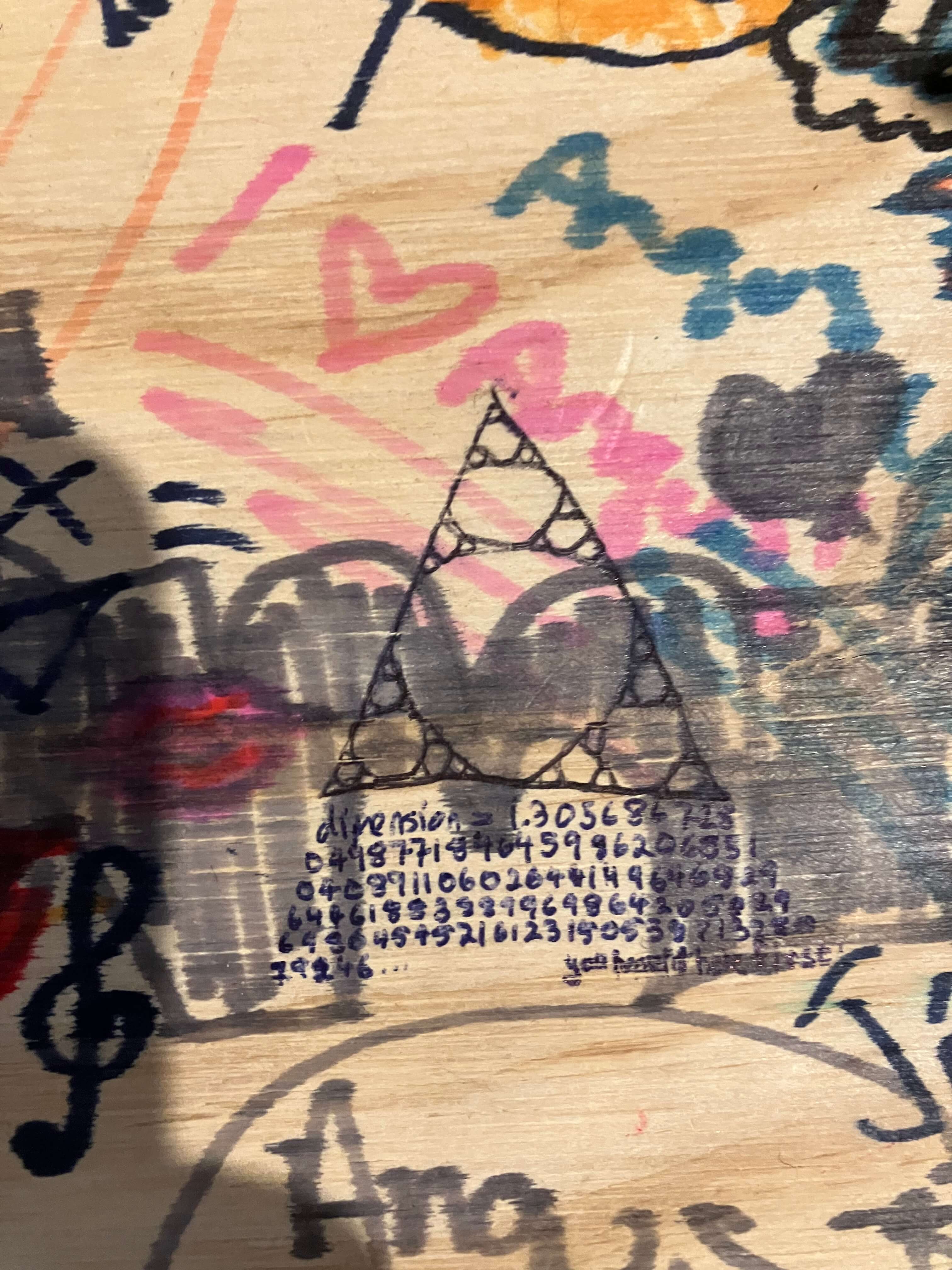 | ||||||
| 7 | Thursday 11 September 2025 | 11:00-12:00 | Barbara Brandolini | W202 | ||
Symmetrization for singular problemsWe discuss Talenti-type symmetrization results in the form of mass concentration (i.e. integral comparison) for both local and nonlocal singular problems, whose prototype is where is a bounded domain in , and , . The different approaches will be compared, highlighting the differences in the selection of the basic ingredients and in the outcomes. Then, the results will be extended from the elliptic setting to the parabolic one. The results are contained in some papers written in collaboration with F. Chiacchio, I. de Bonis, V. Ferone, C. Trombetti and B. Volzone. | ||||||
| 7 | Thursday 11 September 2025 | 14:00-15:00 | Mat Langford | SR202 | ||
Curve shortening flow with free boundaryI will present a comprehensive classification of the convex ancient solutions to the free boundary curve shortening flow in (bounded and unbounded) convex planar domains. This is joint work with Theodora Bourni and Nathan Burns. | ||||||
| 8 | Friday 19 September 2025 | 11:00-12:00 | Mariano Rodrigo | SR202 | ||
Bridging exact and approximate solutions to Itô stochastic differential equations: a recursive series approachThis talk lays out a single, systematic framework for obtaining exact and approximate analytical solutions to Itô stochastic differential equations (SDEs). By linking each SDE to a linear first‑order partial differential equation for a carefully constructed operator, we build a recursive series. The series converges under a natural, checkable condition on the terms. Classical closed forms for linear models pop out as special cases, and we also derive exact solutions for nonlinear SDEs like the stochastic logistic and Gompertz models. When a closed form isn’t available, short series truncations give practical implicit approximations, validated by numerical simulations that show their accuracy. The method handles time‑dependent coefficients and nonlinearities, offering a flexible tool for stochastic modelling in finance, biology and engineering. | ||||||
| 9 | Thursday 25 September 2025 | 11:00-12:00 | Noa Kraitzman | W202 | ||
Modelling sea ice at different scales: from microstructure to effective propertiesSea ice is a crucial component of the Earth’s climate system, affecting the ocean circulation, the atmospheric temperature, and marine ecosystems. However, sea ice is not a simple solid material; it is a complex mixture of ice crystals, brine pockets, and air bubbles, that changes its structure and properties depending on the environmental conditions. In this talk, I will explore how we can model and understand the behaviour of sea ice at different scales, from the microscopic interactions of ice and salt to the macroscopic effects of heat transfer and fluid flow. I will present two mathematical models: a thermodynamically consistent model for the liquid-solid phase change in sea ice that incorporates the effects of salt, using multiscale analysis to derive a quasi-equilibrium Stefan-type problem. And a new rigorous derivation of bounds on the sea ice effective thermal conductivity obtained through Padé approximates and using Stieltjes integrals. | ||||||
| 10 | Thursday 9 October 2025 | 11:00-12:00 | Oleh Omelchenko | W202 | ||
Inverse problems related to pattern formation on coupled oscillator networks, or where do chimeras liveMathematical models describing the collective behavior of large populations of coupled phase oscillators can be found in various fields of physics, chemistry, and biology. In the thermodynamic limit, when the number of oscillators tends to infinity and the distribution of oscillator parameters converges to some probability density, it is often observed that after a sufficiently long transient, the state of the population approaches some statistical equilibrium. In this talk, we describe how the properties of this equilibrium can be used to reconstruct system parameters of the underlying network. The effectiveness of the approach is demonstrated by its application to so-called chimera states in networks of phase oscillators with nonlocal coupling. | ||||||
| 11 | Thursday 16 October 2025 | 11:00-12:00 | Fakhteh Ghanbarnejad | W202 | ||
When Contagions Collide: Mathematics of Interacting Epidemics and BeyondMost mathematical models of contagion—whether for diseases, computer viruses, or ideas—focus on a single agent spreading in isolation. Reality is far more complex: pathogens interact within hosts, behaviors shape disease transmission, and multiple contagions often overlap in space and time. These interacting contagions can amplify, suppress, or fundamentally alter each other’s dynamics [1]. In this talk, I will introduce the idea of contagions as a unifying concept across biology and society [1], with examples from disease ecology and the One Health perspective, where human, animal, and environmental health are deeply interconnected. I will outline the first mathematical steps in modeling these interactions, beginning with extensions of classical epidemic models and network-based frameworks. Even simple models reveal surprising phenomena: shifts in epidemic thresholds, changes in persistence or/and the order of phase transitions, and unexpected outcomes when contagions couple together [1-15].
| ||||||
| 12 | Tuesday 21 October 2025 | 16:00-17:00 | R Pethiyagoda & D Smith | SR202 | ||
Ravi Pethiyagoda: Diagrammatic approach to dynamical systemsIn this talk I will introduce a way to construct and represent dynamical systems using a diagram (based on the causal loop diagram). I will then demo a program where we can construct these diagrams graphically and output the associated governing equations as well as solution realisations. The goal of this program is to give MATH1800 students a greater ability to construct and test mathematical models while not having the requisite knowledge to solve systems of ODEs. Dave Smith: Collaborative peer feedbackFeedback on assessed work is invaluable to student learning, but there is a limit to the amount of feedback an instructor may provide. Peer feedback increases the volume of feedback possible, but typically reduces the quality of the feedback. We describe a model of collaborative peer feedback designed to increase quality of feedback, and describe its implementation in an undergraduate Mathematics module at a small liberal arts college and reimplementation in MATH2350 at UoN. The implementations include bespoke software through which administrative tasks are automated. | ||||||
| 13 | Thursday 30 October 2025 | 11:00-12:00 | Daniel Daners | W202 | ||
Lebesgue's cusp and variational Solutions of the Dirichlet problemWe review various approaches to solving the Dirichlet problem for harmonic functions on domains with prescribed continuous boundary data. The aim is to show that a connection to the Poisson problem that allows to always solve the Dirichlet problem using variational methods. We also discuss Lebesgue's example of a domain where the Dirichlet problem does not have a classical solution. The talk is based on joint wok with Wolfgang Arendt, Tom ter Elst and Manfred Sauter. | ||||||
| Grading 2 | Tuesday 25 November 2025 | 11:00-12:00 | N Jothilakshmi | SR118 | ||
Embedding parameters in interconnection networkGraph embedding is a critical technique for mapping a guest graph into a host graph, applicable across many fields. For example, in architecture simulation, one architecture can be modeled and studied using another by embedding the guest graph into the host graph. Similarly, in parallel computing, large computational processes are often broken down into smaller sub-processes that execute in parallel, where communication among them can be represented as an embedding of the sub-processes into a computing system modeled as a graph. An embedding of a guest graph $G$ into a host graph $H$ refers to a one-to-one mapping of the vertices in $G$ to those in $H$. The quality of this embedding is evaluated using various criteria, including metrics like dilation, congestion, wirelength, load, and expansion. Dilation measures the efficiency of graph embeddings by evaluating the ratio of the longest path in an embedded graph to the shortest path in the original graph, thereby assessing the impact of routing on signal integrity. Congestion, on the other hand, reflects the degree of overcrowding in routing paths, indicating the maximum number of overlapping connections at any edge, which can lead to delays and increased power usage. Wirelength quantifies the total distance of interconnections required to link components, directly influencing signal delay, power consumption, and manufacturing costs. In this paper, we discuss the wirelength of an embedding into special types of line graphs. | ||||||
| 18 | Monday 1 December 2025 | 11:00-12:00 | Zach Wegert | SR202 | ||
Level-set topology optimisation with unfitted finite elements and automatic shape differentiationShape and topology optimisation are class of PDE-constrained optimisation that seeks to minimise functionals that depend on the underlying domain and the solutions to PDE constraints describing some physical phenomena. These computational techniques are relevant to a wide range of industrial applications and have a substantial mathematical foundation. Level set-based topology optimisation tracks and evolves the boundary of a domain using the zero isosurface of a level-set function and the Hamilton-Jacobi evolution equation. Typically, the underlying PDEs are solved over a domain that is immersed in a static computational domain by smoothing the boundary. This allows integration to be relaxed over the whole computational domain. While this is suitable for many level-set based topology optimisation problems, it can lead to undesirable computational artifacts particularly in the case of non-linear behaviour or solid-fluid interactions. In addition, differentiation in a smoothed-boundary regime is unable to fully capture the derivative of a functional under a perturbation of the boundary. Unfitted finite element methods, which enable integration over a sharp boundary without introducing additional degrees of freedom, improve model fidelity and are a promising way to address these problems. In the first part of the talk, I will introduce shape calculus and level set-based topology optimisation. Following this, I will discuss recent advances using unfitted finite elements and automatic shape differentiation. | ||||||
| 18 | Tuesday 2 December 2025 | 11:00-12:00 | Max Carter | SRG02 | ||
On the Fourier transform of a totally disconnected locally compact groupEvery locally compact group $G$ has a Fourier transform which acts on the convolution algebra of Haar integrable functions on $G$, denoted $L^1(G)$. In the case that $G$ is the group of real numbers or integers, this Fourier transform is the usual Fourier transform studied in undergraduate analysis. In a classical paper of Norbert Wiener from 1930, he shows that a proper ideal $I \subset L^1(\mathbb{R}^d)$ is dense if and only if the Fourier transform of every element of the ideal $I$ vanishes nowhere. It is a big question in Banach algebra theory to determine for which other locally compact groups $G$ does $L^1(G)$ have this property. Groups which do possess this property are called “Wiener” groups, and in some sense, their Fourier transform resembles the Fourier transform on $\mathbb{R}^d$. In this talk I will give an introduction to this topic, and report on recent work, where I show that many totally disconnected locally compact groups are not Wiener. | ||||||
2025 Semester 1
| Week | Date | Time | Speaker |
|---|---|---|---|
| 2 | Monday 3 March 2025 | 12:00-13:00 | Dmitry Pelinovsky |
Traveling waves and breathers in the nonlocal NLS modelsA nonlocal derivative nonlinear Schrodinger equation describes modulations of waves in a stratified fluid and a continuous limit of the Calogero-Moser-Sutherland system of particles. For the defocusing version of this equation, we prove the linear stability of the nonzero constant background for decaying and periodic perturbations and the nonlinear stability for periodic perturbations. For the focusing version of this equation, we prove linear and nonlinear stability of the nonzero constant background under some restrictions. For both versions, we characterize the traveling periodic wave solutions by using Hirota's bilinear method, both on the nonzero and zero backgrounds. For each family of traveling periodic waves, we construct families of breathers which describe solitary waves moving across the stable background. | |||
| 4 | Friday 21 March 2025 | 11:00-12:00 | Chien-Hua Chen |
Function field arithmetic and irreducibility of division polynomials associated to Drinfeld modules.In 1993, Masser and Wüstholz proved a famous result on existence of isogeny, with degree bounded by an explicit formula, between two isogenous Elliptic curves. Building upon this achievement, they subsequently employed the isogeny estimation to establish an explicit bound on the irreducibility of division polynomials associated to elliptic curves over a number field without complex multiplication (CM). This bound is then used to deduce a bound on the surjectivity of mod l Galois representation associated to elliptic curves over a number field without CM. Inspired by elliptic curve theory, David and Denis introduced an isogeny estimate applicable to Anderson t-modules, specifically deriving an isogeny estimate for Drinfeld modules over global function fields. This raises the question of whether the Masser-Wüstholz strategy can be adapted to obtain a similar bound on the irreducibility of division polynomials associated with Drinfeld modules without CM. However, the Masser-W\"ustholz strategy can not be applied directly to the context of Drinfeld modules. Thus we develop an alternative strategy, which involves heights of isogenous Drinfeld modules studied by Breuer, Pazuki, and Razafinjatovo, to deduce a function field analogue of Masser-W\"ustholz irreducibility bound. In this talk, I will begin by reviewing the theory of elliptic curves and the Masser-Wüstholz theorem. Then, I will compare classical elliptic curve theory with function field arithmetic and Drinfeld modules. Finally, I will explain how we adapt the Masser-Wüstholz strategy to the context of Drinfeld modules. | |||
| Break 1 | Monday 14 April 2025 | 11:00-12:00 | Yong Wei |
Curvature measures and volume preserving curvature flowsVolume preserving mean curvature flow was introduced by Huisken in 1987 and it was proved that the flow deforms convex initial hypersurface smoothly to a round sphere. This was generalized later by McCoy in 2005 and 2017 to volume preserving flows driven by a large class of 1-homogeneous curvature functions. In this talk, we discuss the flows with higher homogeneity and describe the convergence result for volume preserving curvature flows in Euclidean space by arbitrary positive powers of k-th mean curvature for all k=1,...,n. As a key step, the curvature measure theory will be used to prove the Hausdorff convergence to a sphere. We also discuss some generalizations including the flows in the hyperbolic setting and the flows in the anisotropic setting. | |||
| 8 | Friday 9 May 2025 | 11:00-12:00 | Florian Breuer |
Adventures in the Parallel Worlds of Number TheoryI will explain the parallel worlds of number fields and function fields, and my recent work on modular polynomials, modular forms as well as parity of quadratic units and the Cohen-Lenstra-Martinet heuristics. | |||
| 9 | Friday 9 May 2025 | 11:00-12:00 | Ji Li |
Flag Hardy space theory—an answer to a question by E.M. Stein.The theory of multi-parameter flag singular integral originates from the study of ¯∂-problem on the Heisenberg group by D. Phong and E.M. Stein. In 1999, E. M. Stein asked “What is the Hardy space theory in the flag setting?” in the conference at Washington University in Saint Louis to celebrate the 70th birthday of G. Weiss. In our recent work, we established a complete flag Hardy space theory on the Heisenberg group, including characterisations via Littlewood–Paley area function, square function, non-tangential and radial maximal functions, atoms, and the flag Riesz transforms. It provided a unified approach for proving the Lp boundedness of different types of singular integrals, and led to the endpoint L log(L) → L^{1,∞} estimates. The representations of flag BMO functions are also provided. | |||
| 10 | Friday 16 May 2025 | 10:30-11:30 | Josef Dick |
Quasi-Monte Carlo methods for PDEs with random coefficientsMathematical models often contain uncertainty in parameters and measurements. In this talk we focus on partial differential equations where some parameters are modelled by random variables. The main example comes for the diffusion equation where the diffusion parameters is modelled as a random field which randomly fluctuates around a given mean. To sample the random fluctuations we use quasi-Monte Carlo methods. We provide an elementary introduction to PDEs using the diffusion equation with random coefficients and discuss some of the newer methods towards the end. | |||
| 11 | Friday 23 May 2025 | 11:00-12:00 | Erik Neefjes |
A neural-network surrogate Bayesian algorithm for the Helmholtz inverse-shape problemWe present a novel approach to the classical inverse problem of reconstructing the shape of scatterers from noisy far-field data. The far-field data in our model is generated by multiple incident waves striking an impenetrable scatterer. This data can be mathematically modeled using the Helmholtz equation in the unbounded region outside the scatterer. For reconstruction, our method employs a Bayesian framework that incorporates data and utilizes Markov Chain Monte Carlo (MCMC) sampling. To address the computational challenges posed by the high-dimensional prior space, we introduce a physics-property informed (PPI) neural network (NN) surrogate model for the forward problem. The PPI component of the algorithm facilitates the training of the NN using far-field data from just one incident wave. Subsequently, the PPINN-surrogate model takes advantage of rotational symmetries in the prior space, allowing for efficient evaluation of the forward model across several incident wave directions. We showcase our method’s effectiveness by demonstrating excellent reconstruction for a range of test scatterer shapes. | |||
| 12 | Friday 30 May 2025 | 11:00-12:00 | Chris Lustri |
Stability of breather solutions to the discrete Nonlinear Schrodinger equationIn this talk, I will show how ideas from exponential asymptotics, resurgence, and complex analysis can be used to explain the stability properties of breathers (or stationary waves that are periodic in time) in discrete systems. I first introduce the history and ideas of exponential asymptotics and Stokes' phenomenon. I will then introduce the discrete analogue of the famous nonlinear Schrodinger equation explain why the only breather solutions that can exist are site-centered (on-site) or midpoint-centered (inter-site) solutions, before determining the asymptotic behaviour of the (exponentially) small eigenvalues to determine the stability of these breathers. Finally, I will explain why these methods break down once long-range interactions are introduced to the system, and how this can be resolved by using Borel transform theory and conformal mapping. | |||
The University of Newcastle acknowledges the traditional custodians of the lands within our footprint areas: Awabakal, Darkinjung, Biripai, Worimi, Wonnarua, and Eora Nations. We also pay respect to the wisdom of our Elders past and present.