
Centre for Environmental and Spatial Justice.
Research
We centre Country, community, and care in all aspects of our work. Our methodologies are participatory, place-based, and justice-oriented. This ensures that research is not only about communities, but with and for them.
Current research
Researching the Unions NSW implementation of their Gender Equity workplace training and development initiative. Running from 2025-2028, the research particularly focuses on the potential value of a work health and safety framework to create cultural change in male-dominated industries.
People: Chris Krough
Themes: Equity and Justice
Employing an Asia-Pacific perspective from Cambodia and India, this project aims to understand how homeless people, as the most vulnerable segment of society, have also been the hardest hit by ongoing climate disasters.
The research is significant for the comparative regional lens it will offer on the lived experiences of homeless people during times of acute and systemic vulnerability.
The study will explore how and why people continue to slip through the cracks, particularly during climate crisis scenarios, and into life on the streets as a result of inadequate social supports that could be afforded to secure livelihoods.
People: Simon Springer
Themes: Infrastructures of Care; Equity and Justice
Funding: ARC (Australian Research Council)
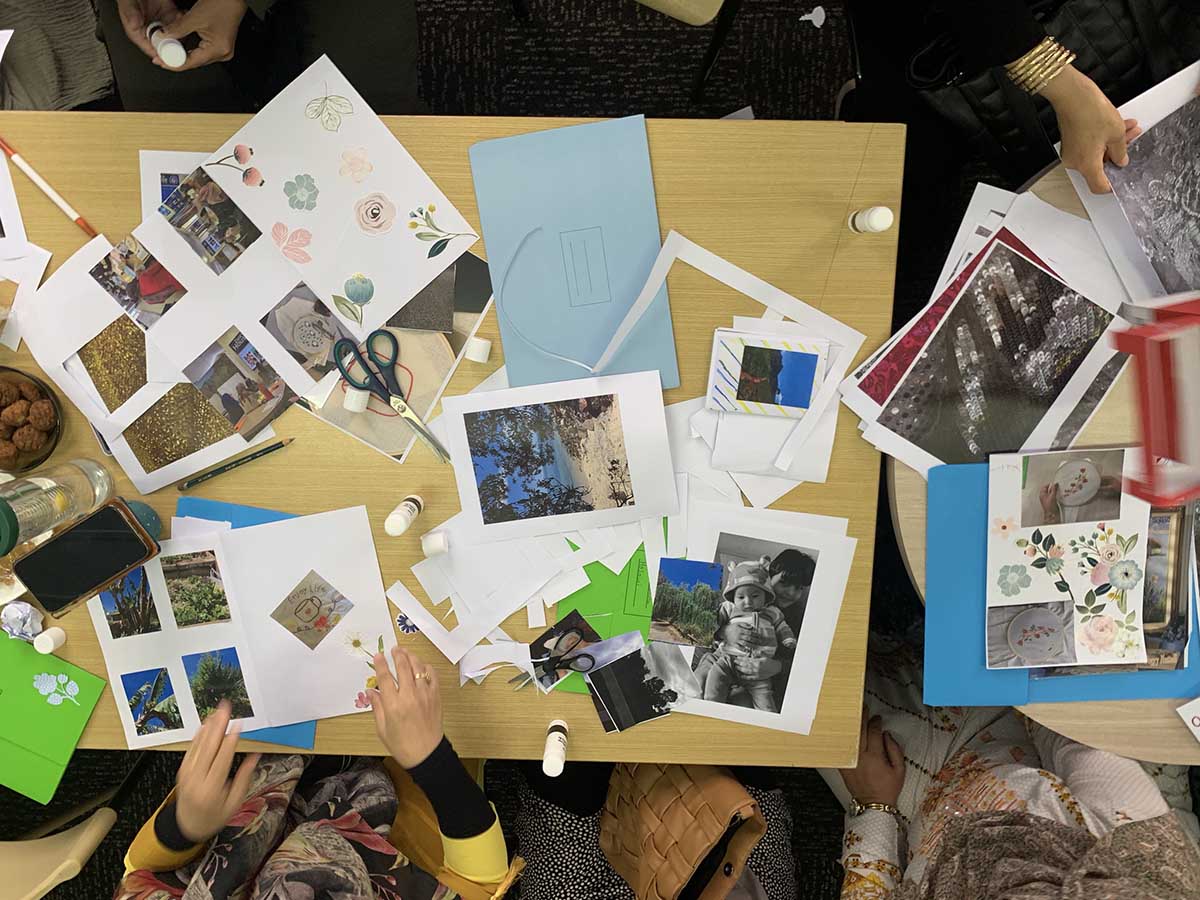
This PhD project research explores how women from refugee and migrant backgrounds in Muloobinba/Newcastle collectively organise and sustain shadow infrastructures of care beyond formal settlement services, through everyday relational and creative practices.
People: Jean-Louise Olivier
Themes: Infrastructures of Care; Equity and Justice
This PhD research is embedded within Yandaarra (Shifting Camp Together), a Gumbaynggirr‑led research and community collective on Gumbaynggirr Country (mid‑north coast NSW), led by Aunty Shaa Smith and Uncle Bud Marshall.
Through Yandaarra, the project explores relational and Country‑led accountability in research and natural resource management, with a particular emphasis on land relationships, responsibilities with and as Country, and the ongoing care of land and waterways.
This work is undertaken through our continuing relationships with Gumbaynggirr Country, Elders, community members and practitioners through story, ceremony, immersive learning and on‑Country engagement. It includes involvement in the Gumbaynggirr‑led learning experience, on-Country engagement and the annual Buluunggal (Mullet) Festival at Nambucca Heads, which strengthens relationships of care with the Nambucca River, Country, and its seasonal cycles.
People: Elizabeth Murphy-May
Themes: Country‑led research; Infrastructures of care.
The exhibition WaterTalks presents the Hunter River as a living entity, shedding light on the profound and pervasive impacts of the Anthropocene on the River.
Where the Coquun-Myan once ebbed and flowed under the will of nature and a collective stewardship, it is now controlled by anthropocentric conditions, interfering with lifeways and traditions founded on a relationship with water and interdependence with nature.
WaterTalks centres the Coquun-Myan as a vital character in the Hunter, with its history and stories, deserving of agency and protection, and a central place in future custodianship and conservation efforts. The selected artwork shares its stories and history, informed by a transdisciplinary collaboration between Indigenous, geospatial, environmental, and cultural research and practices, and observed through the artistic lens.
People: Dr Irene Perez Lopez; Maria Cano Dominguez; A/Prof Bonnie McBain; Shellie Smith; Prof. Glenn Albrecht; Mia Tulumovic; Ananya Khujneri
Themes: Sustainable Transitions.
Funded: University of Sydney, Tin Shed Gallery; Port of Newcastle.
The project is an Indigenous-led research project designed to foster cultural knowledge sharing and promote environmental stewardship. It intends to create a partnership with Dharug Dharawal and Gundungurra custodians to develop further knowledge and understanding of edible and medicinal plants that are continuing to be destroyed or under threat due to urban expansion and an absence/loss of knowledge.
People: CI: Liz Cameron – Associate Professor SABE-CESE-UoN; Co-CI: Dr Irene Perez Lopez – Senior Lecture SABE-CESE-UoN
Themes: Country-led Research; Equity and Justice.
Funded: NSW Department of Planning, Housing, and infrastructures
The intensification of climate events and rising sea levels exponentially increase estuaries’ risks through erosion and flooding. The escalating frequency and severity of climate-related events, coupled with rising sea levels, are dramatically amplifying the risks faced by Australia’s estuaries through accelerated erosion and increasingly frequent flooding, making coastal governance complex.
Estuary address existing gaps in implementation by developing a methodological approach and a digital decision support 3D modelling tool in close collaboration with a local council on the East Coast of New South Wales (NSW), Australia. Scenario development is one of the new anticipatory approaches to governance to help navigate such complexities and uncertainties.This research targets these vulnerabilities by developing a methodological framework resulting on a digital decision support 3D modelling tool to test and visualize multiple climate-resilient adaptive scenarios through time, prioritising equally the natural, the built environment and societal, cultural and economic strategic priorities.
People: Dr Irene Perez Lopez; A/Prof Bonnie McBain; A/Prof Michelle Duffy; Dr Melina Ey; Dr Alex Callem
Themes: Sustainable Transitions
This long-term research involves collaborative work with social movements in Asia, particularly in the Philippines and India, investigating the social, economic and environmental potentialities of agroecology.
People: Sarah Wright
Themes: Equity and Justice
Working as part of an international collective, storying geography considers how place and stories matter to each other. The group, with members in Australia, Aotearoa/New Zealand, the Philippines, Brazil, the UK and the Netherlands, approaches stories in ways attuned to their possibilities and affordances, while attending to the ways power is at work in stories, and the ethical responsibilities of storying place.
People: Sarah Wright
Themes: Sustainable Transitions; Equity and Justice
This project undertakes important groundwork for embedding Aboriginal and Torres Strait Islander knowledge in Australian space policy. The project is an intercultural collaboration guided by Yolngu (NE Arnhem Land) and Gumbaynggirr (mid north coast NSW) Custodians, songlines and creation stories, aiming to broaden understandings of outer space by identifying and supporting Aboriginal connections between space and life on earth.
Guided by these connections, the project aims to develop intercultural guidelines for sustainable human activity in outer space to educate the public, industry stakeholders and policy-makers, and to contribute to culturally respectful and environmentally responsible space exploration.
People: Lara Daley
Themes: Country-led research; Equity and Justice.
Funding: ARC (Australian Research Council)
In this Yolngu-led collaboration we are working as the Gay'wu Group of Women to continue supporting Country and community-wellbeing through spiralling onwards with Milkarri, yolngu womens ceremonial keening.
People: Merrkiyawuy Ganambarr-Stubbs, Rosealee Pearson-Grimes, Sarah Wright, Lara Daley, Kate Lloyd, and Sandie Suchet-Pearson.
Themes: Country-led research; Equity and Justice.
This project aims to develop & model Indigenous-led land practices, protocols & more-than-human agreements between Gumbaynggirr Custodians, non-Gumbaynggirr people & Country to enhance Australia’s capacity to respond to disruptive environmental change through Juungambala, setting things right.
This project expects to generate new knowledge in Indigenous-led, Country-led environmental practice by working with inter-species communications (koalas, whales, plants) & innovative songline mapping. Intended outcomes include enhanced stakeholder capacities, intercultural & intergenerational learnings. Benefits include enriched relationships with Country, nurturing of songlines & biodiversity corridors, & development of environmental best practice.
People: Aunty Shaa Smith, Uncle Bud Marshall, Neeyan Smith, Lara Daley, Sarah Wright, Paul Hodge, Elizabeth Murphy-May.
Themes: Country-led research; Equity & justice
The University of Newcastle acknowledges the traditional custodians of the lands within our footprint areas: Awabakal, Darkinjung, Biripai, Worimi, Wonnarua, and Eora Nations. We also pay respect to the wisdom of our Elders past and present.