
Zero Hunger
University Access to Local Farmers and Food Producers
At the University of Newcastle's Central Coast campus at Ourimbah, commercial-standard food science facilities are designed to connect University expertise with the region's food-production sector. The facilities include food laboratories, testing capability and an industrial-scale kitchen that local food enterprises can use to trial and develop food products.
Access to food innovation facilities for local producers
The University of Newcastle provides local food producers with opportunities to access industry-grade food science facilities at its Central Coast campus at Ourimbah. These facilities support local producers to trial and develop food products in collaboration with University academic staff and students, providing access to food-science expertise, technology and product-development capability. The Ourimbah facilities are designed to commercial food-preparation standards and include food laboratories, testing services and an industrial-scale kitchen. Researchers and manufacturers can work side by side and local food enterprises can use the facilities to trial and develop new product lines outside normal teaching times. These facilities remained part of the University’s food-science teaching, product-development and industry-engagement activities in 2025.
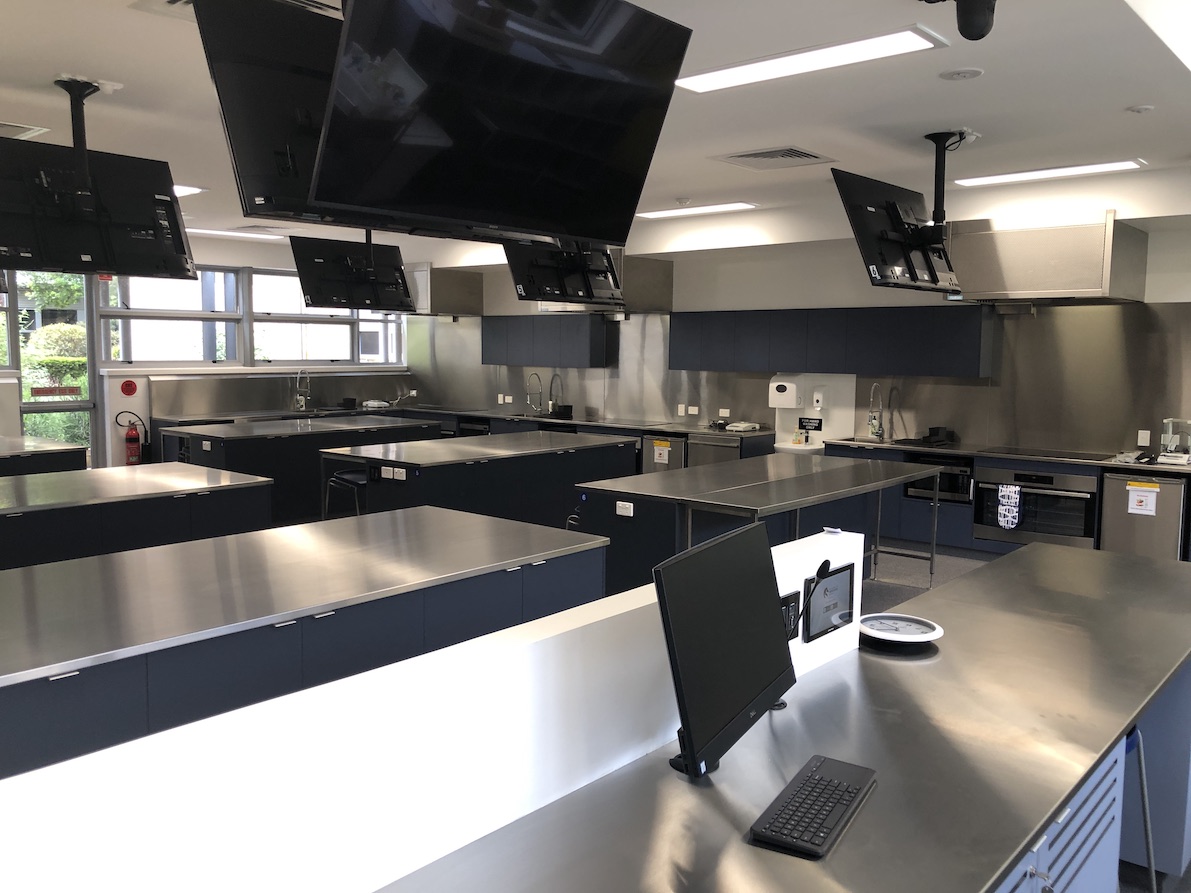
Industry-grade food science facilities at the University of Newcastle’s Ourimbah campus provide local food producers with opportunities to access specialised equipment and expertise.

Researchers and food manufacturers can work side by side to develop and test food products at the University of Newcastle’s food science laboratories at the Ourimbah campus. Image source: NBN news
Industry access to food-manufacturing technology
In 2025, the University continued to support practical access to food-manufacturing facilities and technology through the Central Coast Food Innovation Interim Skills Hub at its Ourimbah campus. Developed in partnership with Central Coast Industry Connect, the University sponsored premises for the Hub within the University's Food Science School, where industry-grade equipment supports hands-on training for food and beverage manufacturers, industry professionals and small business owners.
In April 2025, a fully government-funded Packaging Machine Operator Program was delivered at the Ourimbah campus, providing small manufacturers and industry participants with funded access to hands-on training and industry-grade equipment through the Interim Skills Hub. The program provided small manufacturers and industry participants with practical access to packaging and production technology and training in food-production specifications, good manufacturing practices, quality and production control, preventative maintenance and emerging manufacturing technologies.
Connecting food science with industry
The Ourimbah facilities sit within a strong regional food-manufacturing ecosystem. The University's current Master of Food Science and Technology information identifies more than 50 small, medium and large food companies located near the Ourimbah campus, creating opportunities for collaboration between food-science education, research and industry.
The annual Food Product Development Expo also provides a point of connection between students and the food industry. The University's 2025 Food Product Development course included the Expo as a formal assessment activity, giving students a platform to present and evaluate products developed through the University's laboratory and product-development facilities.
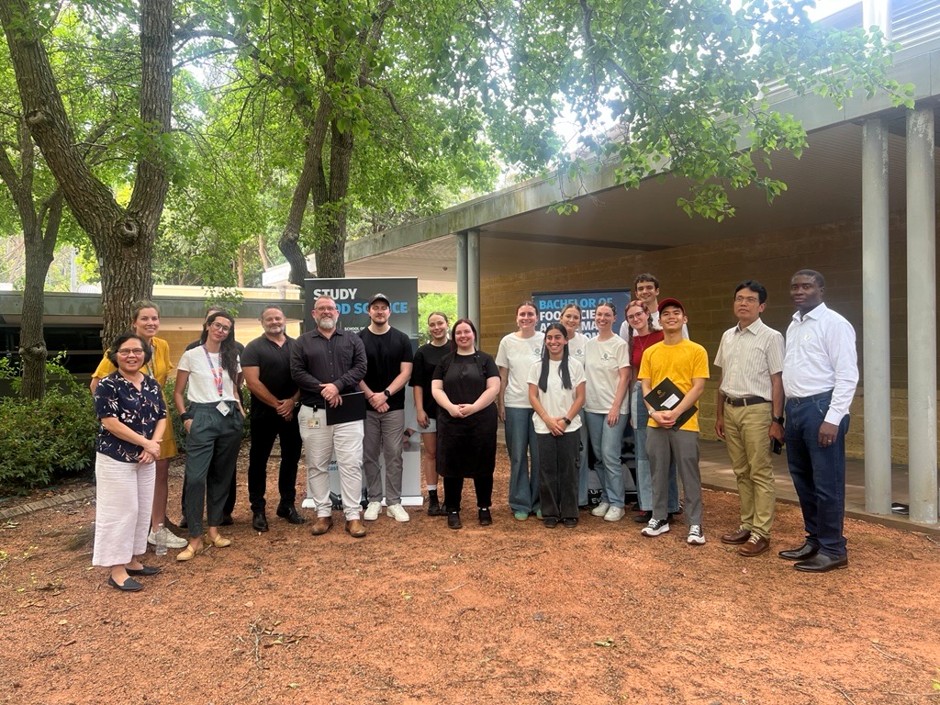
Attendees of the 2025 annual Food Product Development Expo
In 2025, the University’s Ourimbah facilities provided a practical pathway for local food producers and manufacturers to access food-science expertise, laboratories and industry-grade technology. Through product trial and development, hands-on technical training and collaboration with University staff and students, these facilities supported innovation and helped build capability for more effective and sustainable practices across the regional food-production sector.
Research Highlights of 2025:
1. Industry Collaboration: Unlocking the Circular Economy to Support Sustainable Agriculture
Soil is a vast and complex ecosystem that underpins agricultural productivity and global food security. Yet, ongoing soil degradation is threatening the long-term viability of farming systems. Generous donor funding is enabling the University of Newcastle to develop an integrated approach to restore soil health and support more sustainable agriculture.
In Australia, extensive land clearing over the past 250 years has contributed to the world’s third-highest loss of soil carbon. Climate change is now accelerating erosion and intensifying bushfires, increasing pressure on agricultural soils and the farmers who depend on them.
University of Newcastle researchers are partnering with BioCarbon Pty Ltd to develop an innovative approach that harnesses naturally occurring soil algae and byproducts from heating organic materials. By combining these resources, the team aims to improve soil health, increase soil carbon storage and reduce greenhouse gas emissions while supporting more sustainable agricultural practices. The approach supports a circular economy by turning agricultural and organic byproducts into valuable resources for soil restoration
Led by Professor Megh Mallavarapu and Dr Abinandan Sudharsanam, this interdisciplinary research has the potential to deliver practical, climate-smart solutions for farmers, enhance agricultural resilience and productivity, and contribute to long-term food security. The project demonstrates collaboration with an industry partner to develop technologies relevant to sustainable farming.
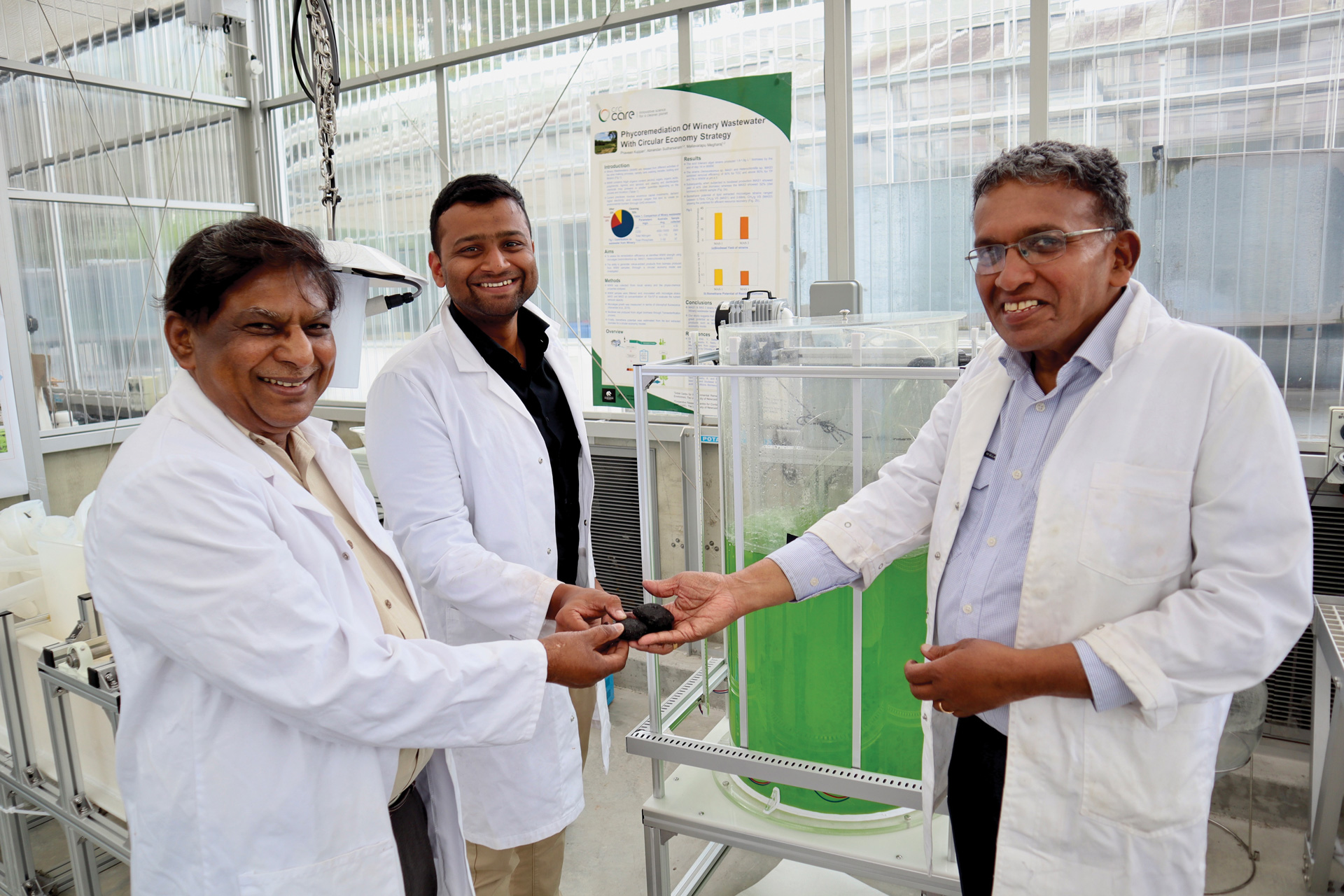
Above: Professor Mallavarapu, Dr Sudharsanam and BioCarbon representative, Dr Muk are developing practical solutions for soil health and sustainable agriculture. This important work to feed our planet is made possible with the support of generous donors.
2. Protecting Livestock, Food Security and Human Health
Animal-borne diseases threaten livestock productivity, food safety and human health. In Australia, 98% of commercial chicken flocks are infected with the parasite Eimeria, while Toxoplasma gondii increasingly affects ruminants and can cause severe illness in humans.
Collaborating with NEOCULI Pty Ltd and led by University of Newcastle Professor Adam McCluskey with Associate Professor Danny Wilson from the University of Adelaide, this project aims to develop new veterinary drugs to eliminate both parasites, reducing transmission through food and from animals to people.
The research aims to strengthen livestock health and productivity, improve food safety, and support Australia’s agricultural industries while delivering broader global health benefits.
3. Collaborative Research for Soil Health Improvement
- University researchers are working on a GRDC-funded project, “Unlocking Soil Potential (USP)”, through the Global Innovative Centre for Advanced Nanomaterials (GICAN).
- This initiative combines nanomaterials, engineered clays, and biochar-based amendments to enhance soil fertility, nutrient retention, and carbon sequestration.
- The project is a direct collaboration with the Grains Research & Development Corporation, aligning advanced University research with the practical needs of farmers.
4. Development of Eco-Friendly Fertiliser Technologies
Through GICAN, the University of Newcastle is advancing next-generation fertilisers using engineered polysaccharides and metal oxide composites that are:
- More targeted in nutrient delivery,
- Biodegradable,
- Environmentally safer alternatives to conventional fertilisers.
These technologies are being developed with commercial scalability and on-farm application in mind, making them relevant to future sustainable farming applications.
5. Field-Based Soil Testing for Farmers
Researchers from the Global Centre for Environmental Remediation (GCER) (with many of its functions absorbed into GICAN) developed an innovative testing kit designed to support on-farm soil monitoring, combining:
- Lab-on-a-chip technology,
- Smartphone integration, and
- On-site analysis of pH, moisture, nutrients, and microbial activity.
This affordable and rapid soil health monitoring tool is designed for direct use by farmers, providing real-time data that can support better land management.
Highlights Summary
The University of Newcastle continued to develop research partnerships and technologies aimed at improving sustainable farming practices throughout 2025. Through targeted research projects, advanced technological development, and collaboration with growers and industry groups, the University is developing expertise and resources relevant to address critical challenges in soil health and food security.
Farmers and agricultural industry partners are not only beneficiaries but are increasingly becoming co-researchers and collaborators in the journey towards sustainable agriculture.
Supporting excellent industry collaboration
Jackson Lee, a PhD candidate in the Energy Doctoral Training Centre, is researching electrochemical methods for recycling solar panels with CSIRO and PV Industries under the supervision of Dr Jessica Allen.
80 million tonnes of solar panels are expected to go to waste by 2050. Jackson's research is vital for ensuring critical materials like copper, silver, and silicon are recovered.
Supported with professional training opportunities and industry site visits facilitated by the DTC, his excellent industry collaboration earned him the Higher Degree by Research Student Excellence award in the 2024 NIER Research Collaboration Awards.
Watch the video above to learn more about his work.
Case studies
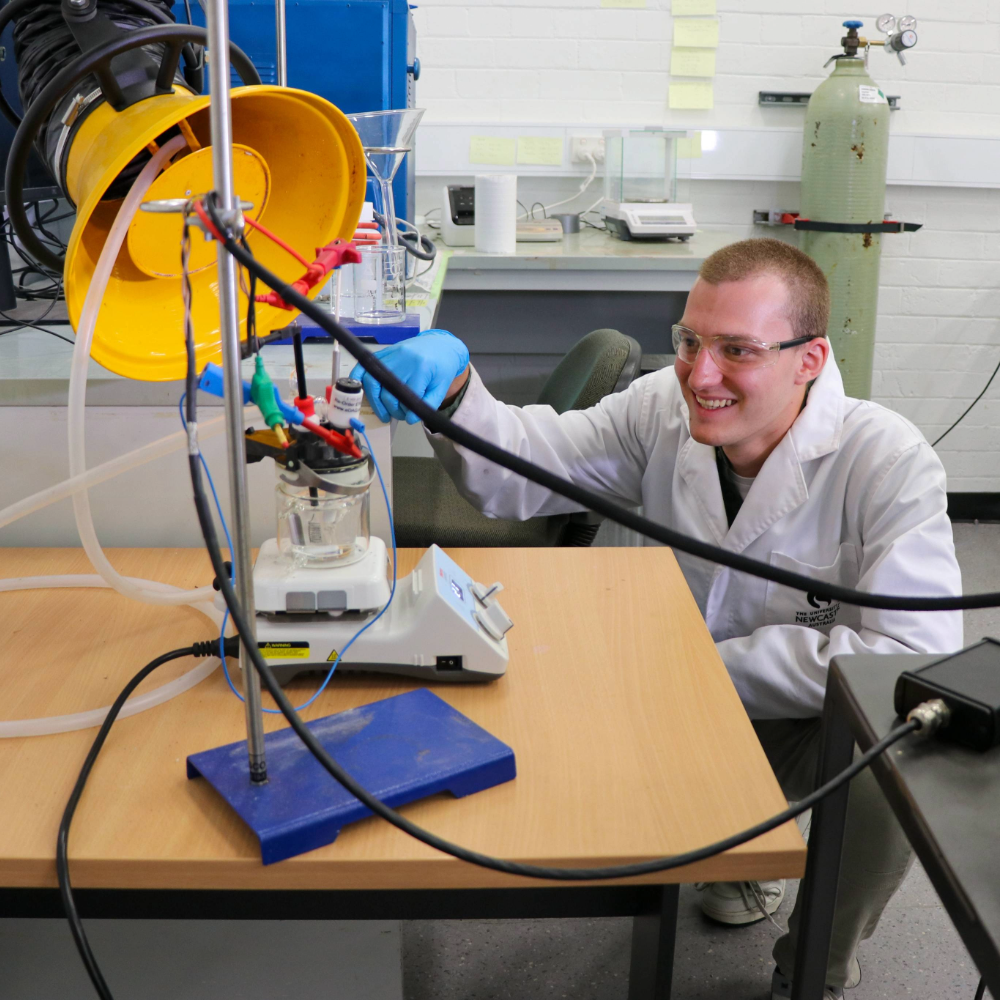
Advanced electrochemical treatment of recycled silicon for upgraded applications
Read more
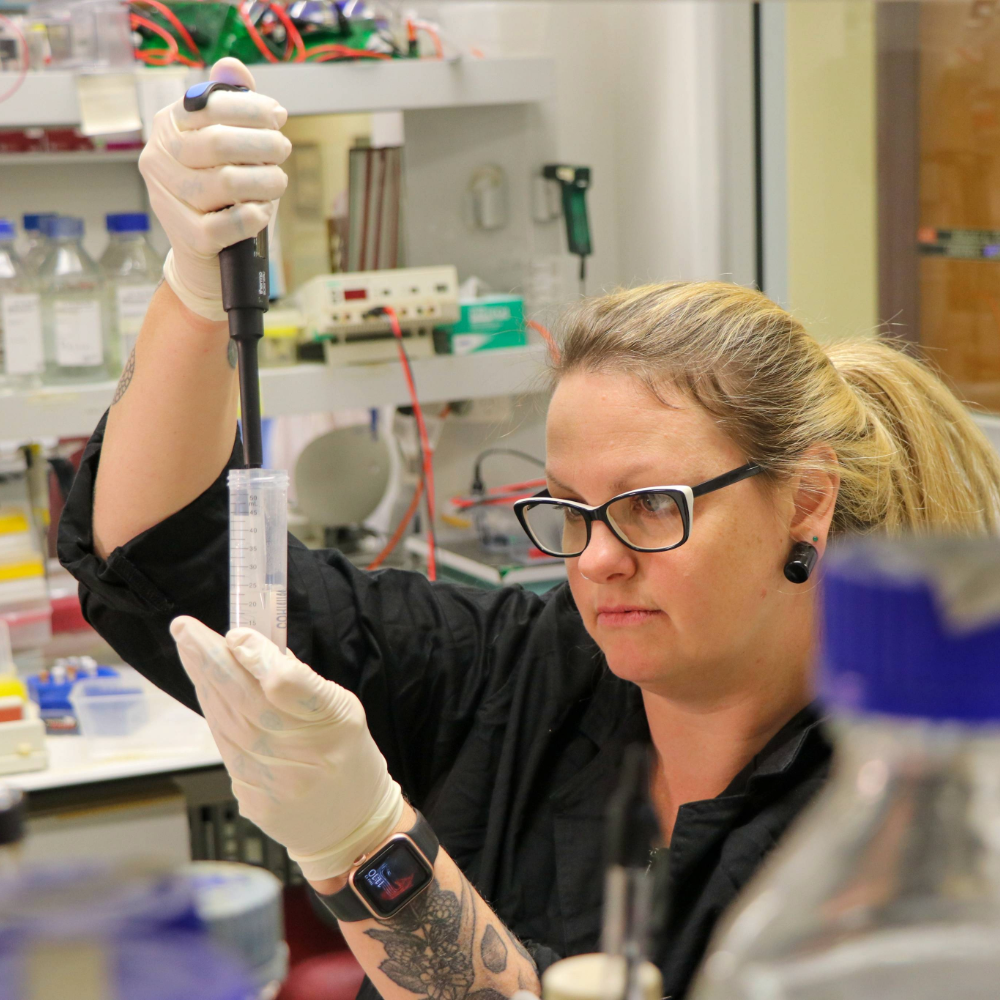
Engineering yeast strains for enhanced cellulosic bioethanol production and high-value chemical synthesis
Read more
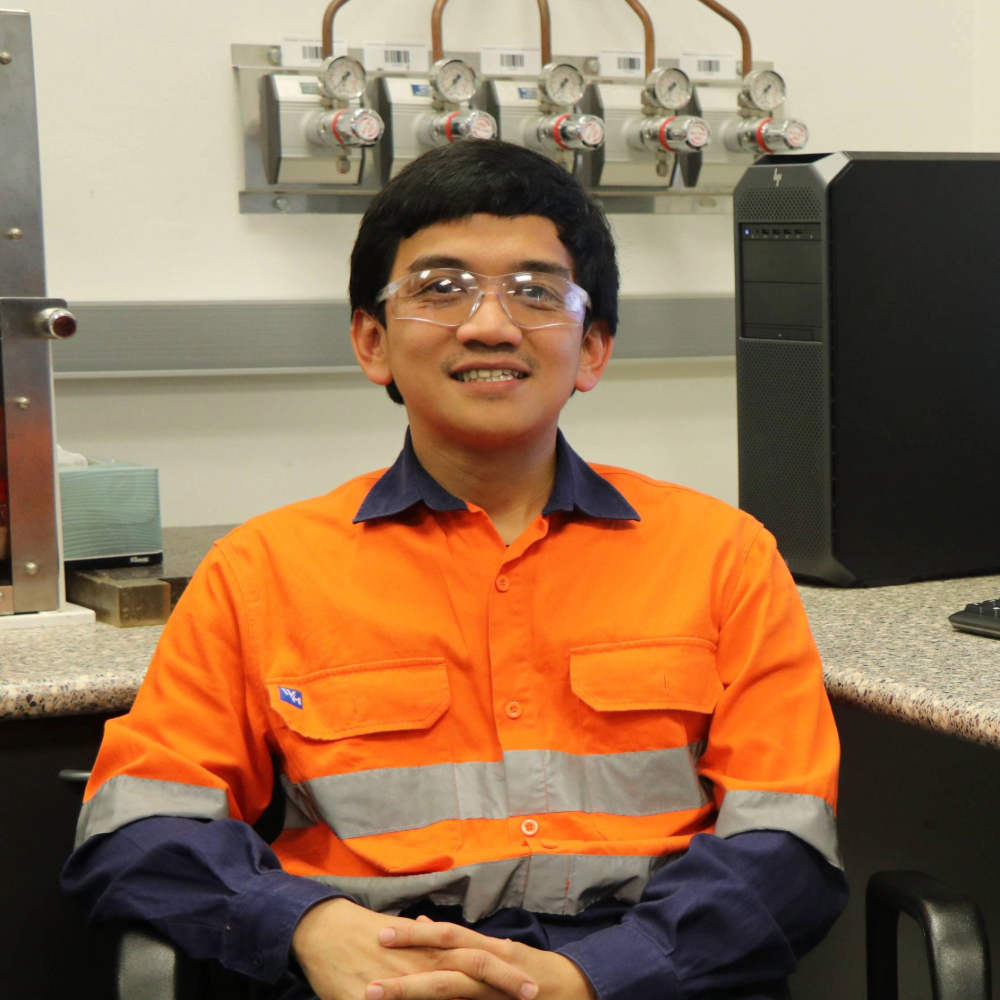
Iron ore sinter quality for blast furnace ironmaking under hydrogen operation
Read more

Legacy, stewardship and place attachment: Elder land and landscape protection at the mine frontier
Read more
The University of Newcastle acknowledges the traditional custodians of the lands within our footprint areas: Awabakal, Darkinjung, Biripai, Worimi, Wonnarua, and Eora Nations. We also pay respect to the wisdom of our Elders past and present.