Partnerships for the Goals
SDG 17 Partnerships for the Goals
2025 Report
7th in Australia
Research and Innovation
Astronomers gain unprecedented insight into the formation of a planet 850 lightyears away
University of Newcastle astronomer Dr Tom Evans-Soma has led an international team in uncovering the chemical composition of exoplanet WASP-121b, also known as Tylos, located 850 lightyears from Earth. Using the NASA James Webb Space Telescope, the team conducted a continuous 40-hour observation to analyse the planet’s atmosphere in unprecedented detail.
The study revealed silicon monoxide gas, a first in any planetary atmosphere, alongside water vapor, carbon monoxide, and methane, challenging existing models of atmospheric dynamics and planetary formation. These findings suggest Tylos formed further from its star in colder conditions, accumulating carbon-rich gas and rocky material that later vaporised as the planet migrated inward.
This research demonstrates the University of Newcastle’s contribution to advancing global understanding of planet formation and exoplanetary atmospheres. By combining cutting-edge space observation with international collaboration, the work enhances knowledge of planetary origins, informs future searches for Earth-like planets, and strengthens the University’s reputation as a leader in astronomy and astrophysics research.

Dr Evans-Soma pictured with an artist impression of "Tylos" by Patricia Klein.

An artistic impression shows the stage at which "Tylos" or WASP-121b accumulated most of its gas. Credit: T. Müller (Max Planck Institute for Astronomy).
Teaching and Learning
I2N connects students with international startups thanks to $572,000 NCP grant
A $572,000 New Colombo Plan grant is helping University of Newcastle students build international connections and entrepreneurial skills through the Integrated Innovation Network (I2N) and Newcastle Business School.
As part of the initiative, 32 students travelled to Hong Kong to complete startup placements at the Hong Kong Science and Technology Park, a leading innovation hub supporting more than a dozen billion-dollar companies. Working on projects in areas such as artificial intelligence, circular economy technologies, and digital health, students gained hands-on experience within a thriving international innovation ecosystem.
Through programs like these, the University of Newcastle is expanding global partnerships, and is proud to empower students to apply their learning beyond the classroom and preparing the next generation of innovators to lead solutions for a connected and sustainable future.

Students taking part in the two-week Hong Kong tour were immersed in the Hong Kong Science and Technology Park (HKSTP), the largest innovation and technology ecosystem in the Special Administrative Region.
Operations
Indigenous-led quit smoking program upscales nationally to help close the gap
Smoking and vaping remain the leading preventable cause of chronic disease and early death among Aboriginal and Torres Strait Islander people, contributing significantly to the health gap. Associate Professor Michelle Kennedy (Wiradjuri) of the University of Newcastle’s HMRI Equity in Health and Wellbeing program is leading the national expansion of the Which Way? Quit Pack program, an Indigenous-led initiative supporting culturally safe smoking cessation.
Building on pilot programs in NSW, Victoria, and the ACT that have already helped more than 1,000 participants, the program combines Indigenous knowledges with evidence-based interventions, including mailed resources, Nicotine Replacement Therapy, and phone and text-based support. Designed with input from Aboriginal and Torres Strait Islander communities, the program addresses barriers to quitting by delivering accessible, culturally responsive support directly to participants’ homes.
The national trial, funded through a $4.7 million MRFF Indigenous Health Research grant, will evaluate both effectiveness and sustainability, providing critical insights for public health policy and practice. The University of Newcastle is proud to facilitate this work, empowering communities to improve health outcomes and reduce the intergenerational impacts of smoking.
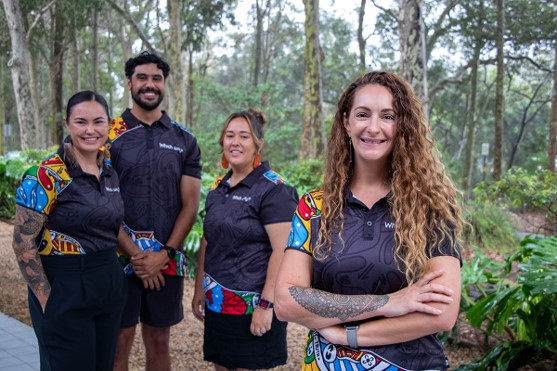
Which Way? Quit Pack research team members (L-R) Felicity Collis (Gomeroi), Kayden Roberts-Barker (Wiradjuri), Jessica Bennett (Gamilaroi) and lead researcher Associate Professor Michelle Kennedy (Wiradjuri).
Community Outreach
SMS4dads set to expand to support more rural and remote fathers
New fathers in rural and remote communities often face significant barriers in accessing parenting and mental health support. Associate Professor Richard Fletcher of the University of Newcastle is leading research into the SMS4dads program, a digital initiative designed to engage, support, and monitor the wellbeing of expectant and new fathers through tailored text messages. The program addresses challenges such as sleep routines, toddler management, work-life balance, and co-parenting, aiming to strengthen family relationships and foster mental health during the transition to fatherhood.
In partnership with organisations including Red Nose Australia, Defence Health, Awabakal Medical Service, and community groups in Central Australia, the program delivers culturally and contextually appropriate support to diverse groups, including First Nations fathers, teenage dads, and bereaved fathers. Using a stepped care model, messages connect men to tailored support based on their individual needs, ensuring that fathers in even the most remote locations receive timely and relevant assistance.
The University of Newcastle facilitates this research to expand access to parenting support and improve family wellbeing. By leveraging digital technology and community partnerships, the program empowers fathers to navigate early parenthood with confidence, contributing to stronger, healthier communities across rural and remote Australia.
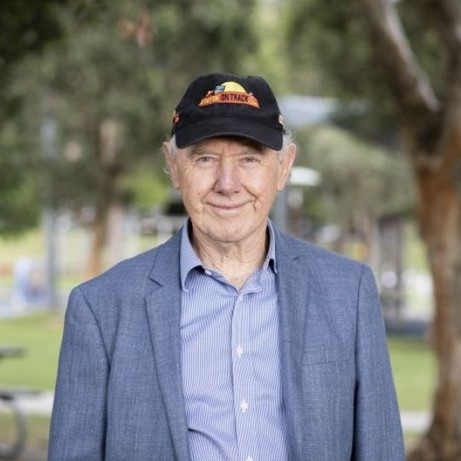
Associate Professor Richard Fletcher leads the Fathers and Families Research Program (FFRP).
The University of Newcastle acknowledges the traditional custodians of the lands within our footprint areas: Awabakal, Darkinjung, Biripai, Worimi, Wonnarua, and Eora Nations. We also pay respect to the wisdom of our Elders past and present.