Partnerships for the Goals
SDG 16 Peace, Justice and Strong Institutions
2025 Report
12th in Australia
Research and Innovation
Jenny’s Place leads early intervention response to DFV
Australia is facing a domestic and family violence (DFV) crisis, and a new University of Newcastle study highlights the vital role of early intervention in reducing risk. The research evaluated Jenny’s Place Domestic Violence Resource Centre (NDVRC) in Newcastle, finding it provides a pioneering model of accessible, client-focused support.
Unlike many programs that only assist women after leaving violence, the NDVRC removes entry barriers and offers specialist casework support earlier, helping to reduce the likelihood of physical harm, homelessness, and domestic homicide. The study found this proactive approach not only protects women and children but may also ease pressure on emergency services such as police, ambulance, and hospitals.
Between 2021 and 2022, NSW recorded more than 31,000 DFV-related assaults, with the Hunter region accounting for nearly 10%. Early intervention models, like the NDVRC, are essential to addressing such alarming statistics and preventing violence from escalating.
The evaluation also emphasised the urgent need for secure, long-term funding to sustain and expand these services. Jenny’s Place has been providing life-saving support for over 16 years, and continued investment will ensure it can remain a leader in prevention, protection, and advocacy for those most at risk.
Anyone seeking information or support can contact the Newcastle Domestic Violence Resource Centre on (02) 4927 6289 or via the contact page at jennysplace.org.

Teaching and Learning
From boots to books, Ellie strives to make sports and law accessible to all
Beyond courtrooms and corporate offices, Ellie Jones has always believed that advocacy begins in the community.
Graduating with a Bachelor of Laws/Bachelor of Arts from the University of Newcastle, Ellie combined the structure of legal studies with the creativity of the humanities. This balance allowed her to explore both her passion for justice and her love for football, including her work as a facilitator in the University’s award-winning Daughters & Dads program. As part of her degree, Ellie acted as a Daughters & Dads facilitator alongside her dad, Brad. Working with local families, the program encourages fathers to support their young daughters’ passion for sport, with the aim of improving female participation at a grassroots level.
For Ellie, the program offered more than just joy, it reinforced the idea that inclusion matters in every sphere, whether in sport or in the legal system. She is committed to breaking down barriers, ensuring both fields are accessible and welcoming to all.
Supported by her family and fiancée Brendan at graduation, Ellie celebrated not only her academic achievement but also the beginning of her professional career. Having worked as a Legal Assistant with Rankin Ellison, she has now stepped into her role as a solicitor, determined to make the law less daunting and more equitable for the communities it serves.
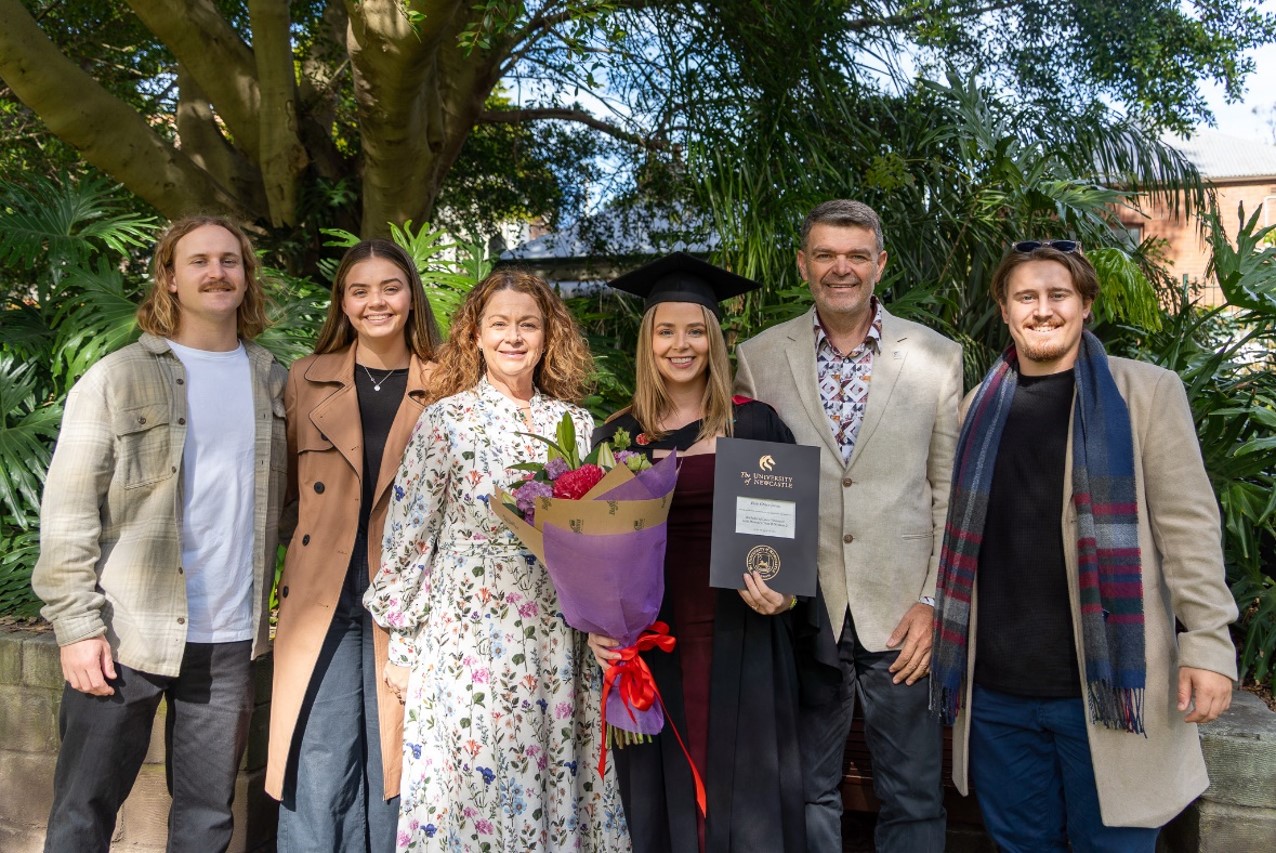
Ellie celebrated graduation with the whole family.
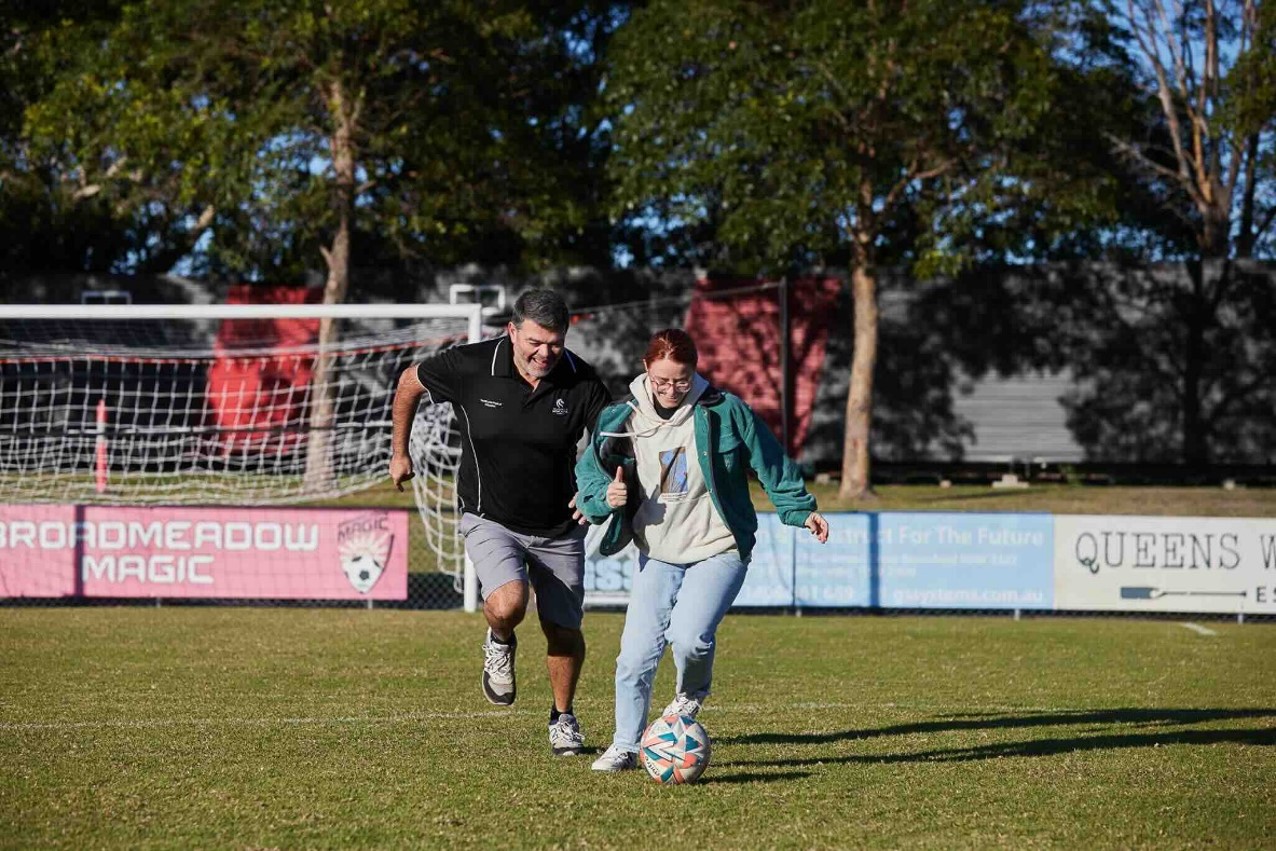
Ellie and her father Brad participated in the Dads and Daughters program together.
Operations
Building Stronger Communities Through Education on Darkinjung Country
Wiradjuri and Gomeroi twins Bailey and Leigtham Carney are transforming their passion for community into purpose through study at the University of Newcastle. Both work with Eleanor Duncan Aboriginal Services on Darkinjung Country, supporting the health and wellbeing of Aboriginal and Torres Strait Islander peoples on the Central Coast.
With guidance from the University’s Wollotuka Institute, Bailey entered through the Aboriginal and Torres Strait Islander Admission Scheme to study Psychological Science, while Leigtham soon followed to study Social Work. Their story proves that a high school ATAR doesn’t define potential and with the right support, there are many pathways to university and beyond. The University’s Wollotuka Institute provides culturally safe pathways and ongoing support, ensuring more Aboriginal and Torres Strait Islander students can access and thrive in higher education.
Their message to young mob is clear: take every opportunity, believe in your potential, and use education to give back to community.
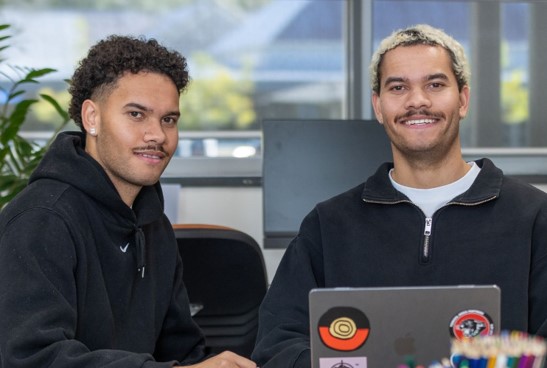
Bailey and Leigtham Carney (L-R) both continue to thrive at the University of Newcastle.
University pays tribute to founding figure with building renaming
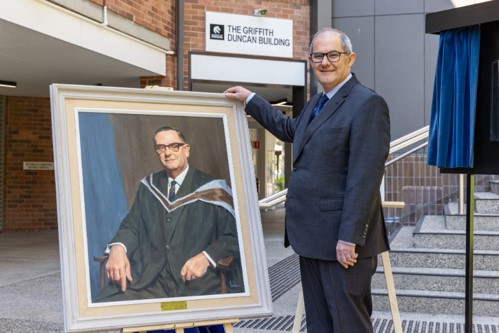
The University of Newcastle has honoured founding Principal of the Newcastle Teachers College, Mr Griffith Hammond Duncan, by renaming the School of Education building in his memory. Together with the University’s first Vice-Chancellor, Professor James Auchmuty, Mr Duncan is recognised as a key figure in shaping the foundations of the institution.
Vice-Chancellor Professor Alex Zelinsky AO said the tribute, unveiled during the University’s 60th anniversary, acknowledges leaders whose vision opened doors to higher education for thousands. Mr Duncan’s great-nephew, Professor Alan Broadfoot, Executive Director of NIER, said the family was proud his contribution would continue to inspire future generations.
This recognition reflects Sustainable Development Goal 16 by strengthening inclusive institutions and celebrating education as a pathway to justice, opportunity, and peace.
Community Outreach
Ngarrama Lights Up King Edward Park Newcastle
The University of Newcastle proudly hosted Ngarrama at King Edward Park on Saturday 25 January, inviting the community to come together for an evening of truth-telling, cultural sharing and reflection.
Led by the University’s Wollotuka Institute in partnership with Awabakal Ltd, Awabakal Local Aboriginal Land Council, City of Newcastle, NGM Group and Port Waratah Coal Services, the free event highlighted the University’s commitment to reconciliation and celebrating Aboriginal and Torres Strait Islander culture.
Ngarrama, meaning ‘to sit, listen and know’, provides a safe space for the community to connect to Country and engage with more than 60,000 years of history and culture. The evening program included dance, storytelling, music, and knowledge sharing, alongside the much-loved illuminated puppets and a new lantern parade.
The University of Newcastle’s ongoing role in Ngarrama reflects its broader commitment to advancing Aboriginal and Torres Strait Islander excellence, strengthening cultural connections, and fostering meaningful dialogue across the region.
Running annually from 7–9pm, the event is family-friendly and alcohol-free, with attendees encouraged to bring a picnic and enjoy a night of reflection and celebration under the stars.

The University of Newcastle acknowledges the traditional custodians of the lands within our footprint areas: Awabakal, Darkinjung, Biripai, Worimi, Wonnarua, and Eora Nations. We also pay respect to the wisdom of our Elders past and present.