Partnerships for the Goals
SDG 11 Sustainable Cities and Communities
2025 Report
8th in Australia
Research and Innovation
Global experts unite in Newcastle to decarbonise steelmaking
The City of Newcastle hosted the International Conference on Sustainable Cokemaking and Ironmaking 2025, bringing together global experts to tackle one of the world’s toughest industrial challenges – reducing carbon emissions in steel production, which currently contributes 7% of global CO₂ emissions.
The event was facilitated by the University of Newcastle’s BHP Centre for Sustainable Steelmaking Research (SSR), a hub for innovation in low-carbon steel technologies. Co-Directors Dr Arash Tahmasebi and Associate Professor Tom Honeyands said the conference offers critical opportunities for global knowledge-sharing, as each country faces unique challenges in transitioning to net-zero steelmaking.
Key speakers included Dr Jian Li from China Baowu Steel Group, the world’s largest steel producer, and Jan van der Stel from Tata Steel Europe. The SSR is advancing research into low-emission processes, such as the direct reduced iron–electric smelting furnace route, powered by renewable electricity and hydrogen, as well as short-term improvements to existing blast furnace methods. The conference also highlights the next generation of researchers, with University of Newcastle PhD students presenting projects shaped in collaboration with the industry.
Held over the 16–19th of March at Newcastle City Hall, the event highlighted the University’s commitment to sustainability as it celebrated its 60th anniversary.
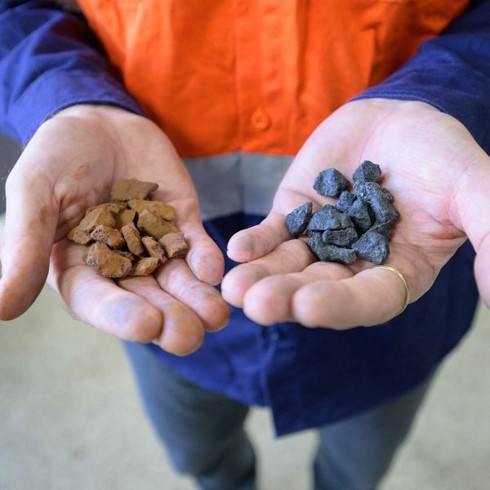
Materials for low carbon ironmaking.
Teaching and Learning
Record number of New Colombo Scholars for University of Newcastle
The University of Newcastle has secured more than $1.9 million to support 334 students through 23 New Colombo Plan (NCP) Mobility projects in 14 Indo-Pacific countries over the next two years. In addition, 11 outstanding students have been named NCP Scholars for 2025, the University’s highest number since the program began.
Among the recipients is Bachelor of Arts/Bachelor of Science and Diploma in Languages student Madeleine Lock, who will undertake her Honours study in the Solomon Islands. Her research project aims to improve accessibility and inclusivity for Solomon Islanders who are deaf or hard-of-hearing by producing a community profile and conducting linguistic analysis of Solomon Islands Sign Language. Other scholars will travel across the region, focusing on areas such as sustainable architecture, fisheries management, aerospace, civil engineering, human rights, and education.
This funding places the University first nationally for the number of awarded projects and third for total funding, with an additional $150,000 secured for consortium projects. Since 2014, the University has received $17.6 million, enabling almost 4,300 students to gain global experience.

11 outstanding University students have been named NCP Scholars for 2025.
Community Outreach
Legacy supports conservation research
Australia is home to around 700,000 native species, many unique to the country. Thanks to a generous bequest from alumnus Gregory Knibb, vital research is underway to help protect threatened frog populations and their habitats.
Frogs are essential to healthy ecosystems, but populations are declining globally due to disease, habitat destruction and climate change. Scholarship recipient and PhD candidate Nadine Nolan is researching conservation strategies for two threatened species: the Littlejohn’s Tree Frog and the Giant Burrowing Frog. She emphasises that a multi-pronged approach is needed to address the complex challenges facing amphibians.
Fellow recipient Oliver Kelly is investigating frog decline in NSW National Park reserves and leading Frog Find, a community science project that uses acoustic monitoring to detect frog calls. Each device can capture more than 100 hours of data, with volunteers helping researchers identify species and track environmental health.
Gregory Knibb, remembered for his passion for fieldwork and conservation, often volunteered with the University’s Conservation Biology Research Group. His bequest continues his legacy, empowering researchers and communities to work together to safeguard frogs and other threatened species for future generations.
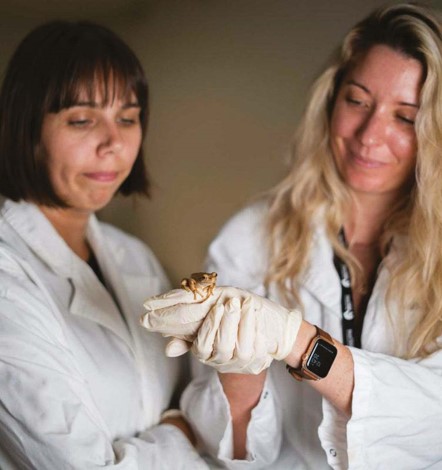
Littlejohn’s Tree Frog (Litoria littlejohni).
Operations
Central Coast Campus reaches topping out milestone
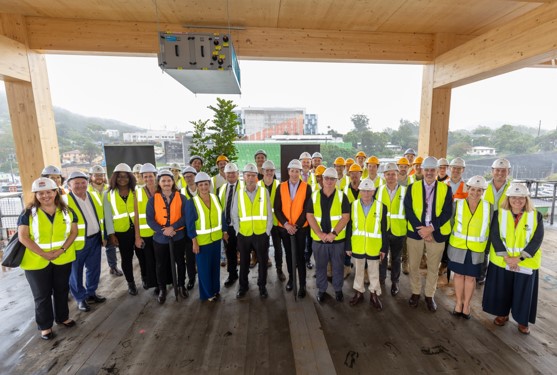
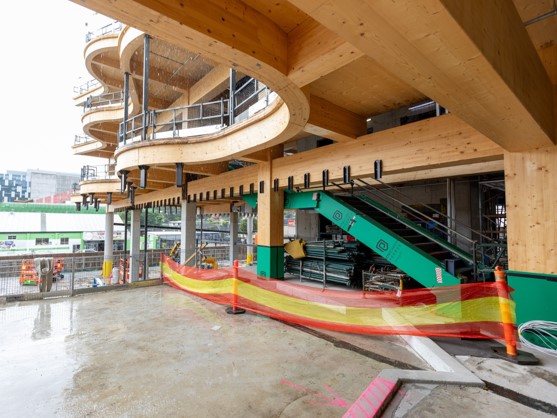
The University of Newcastle has celebrated the structural completion of its new Central Coast Campus in Gosford, marking a major step towards its opening in 2026. A topping out ceremony at the Mann Street site brought together government officials, university leaders, community members, and contractors to acknowledge the project’s progress. Vice-Chancellor Professor Alex Zelinsky AO described the campus as a “game-changer” that will expand access to higher education, boost regional growth, and stand as the University’s largest investment since NUspace in 2017.
Funded by the University ($31.3m), the Australian Government ($18m) and the NSW Government ($18m), the campus will serve as a hub for education, connection and innovation in the heart of Gosford. Local, state and federal representatives hailed the milestone as a catalyst for jobs, investment, and new opportunities for Central Coast residents.
Completion was scheduled for late 2025, with the first students expected in 2026.
The Go Green Gosford recycling pilot saves 3,600kg in CO2 emissions
In 2025, some lateral thinking by Central Coast Clinical School Sim Lab staff has seen the University make significant strides in reducing plastic waste and landfill costs. Whilst important in maintaining hygiene in medical use settings, single use plastics are a significant source of waste across the sector.
As part of their training, medical staff need access to these tools to simulate situations that allow them to build core competencies they will rely on in the workplace. However, the amount of waste generated by simulation alone was well in excess of 900 cubic litres each teaching day. Through a combination of recycling, reusing, and donation, the SimLab team at Central Coast Clinical School has saved more than 3,500kg of carbon emissions from entering the atmosphere, this included saving 728kg of new plastic consumables from being needed by students, all while maintaining a fantastic learning environment.
The success of this project is in no small part due to the willingness to work collaboratively and see a bigger picture, with support for the project coming from a variety of university sources including the College of Health, Medicine and Wellbeing; Gosford Hospital; Biobanks; and the Hunter Medical Research Institute. The project also supports the new recycling economy that is growing in the central coast area through its engagement with local Terracycle facilities and infrastructure. Supporting local communities to build new capacity in recycling and sustainability is just one more way the University is working with local initiatives like Go Green Gosford to make real change in our region.
The University of Newcastle acknowledges the traditional custodians of the lands within our footprint areas: Awabakal, Darkinjung, Biripai, Worimi, Wonnarua, and Eora Nations. We also pay respect to the wisdom of our Elders past and present.