Partnerships for the Goals
SDG 09: Industry, Innovation, Infrastructure
2025 Report
4th in Australia
Research and Innovation
$1.5m grant to boost world-leading mineral processing technology
Laureate Professor Kevin Galvin was awarded an Australian Economic Accelerator (AEA) Innovation grant of more than $1.5m to advance home-grown technology that is critical to the mining and mineral processing industry globally. In collaboration with industry partner FLSmidth, this project will see the design and manufacture of a full-scale prototype for a slow-moving rake addition to Professor Galvin’s patented, industry enhancing invention: the Reflux Classifier. This two-year project focusses on slow-moving rake enhancement and will improve both recovery rate and the concentration of recovered ores by minimising mixing and gently moving the denser solids across the lower section of the separator.
Minister for Education Jason Clare MP has announced Professor Galvin’s funding as part of the National AEA Innovate program. AEA grants are designed to enhance the ability of Australian research and innovation to reach market readiness and form the basis of new businesses, products and services. This AEA Innovation grant will fund the proof-of-scale required to speed the new, enhanced Reflux Classifier’s path to market, contributing directly to realising outcomes of SDG 9.
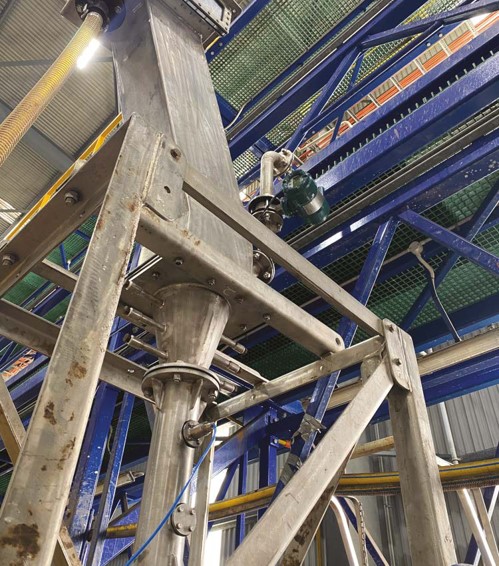
The Reflux Classifier
Teaching and Learning
Get a university degree at the Sydney Cricket Ground
University students working towards a future career in sport now have the opportunity to complete postgraduate programs at Sydney’s iconic Cricket Ground – Allianz Stadium. The University of Newcastle and the Global Institute of Sport (GIS) have formed a landmark partnership to launch a new sports-focused campus in Sydney, aimed at guiding talent and supporting Australia’s growing sports industry in the lead-up to the 2032 Olympic and Paralympic Games.
The two master’s degrees now open for enrolment by the University of Newcastle new Sydney CBD campus will be: a Master of International Sports Business and a Master of Sports Analytics, along with a Graduate Certificate of Sports Analytics. The Master of International Sports Business covers areas such as sports marketing, sponsorship, economics, sustainability, leadership, integrity and athlete management, which provides students with a comprehensive understanding of the global sports landscape. The Master of Sports Analytics and Graduate Certificate of Sports Analytics will prepare and educate students to use data to enhance sporting performance, fan engagement, and business decisions, an area rapidly expanding in the sports industry.
These programs are the first Australian university degrees with teaching from inside stadiums and are open to both domestic Australian and international students from January 2026. The unique ‘stadium-based’ campus model of learning is based on GIS success of campuses including Wembley Stadium in London and Inter Miami’s Chase Stadium in the USA.
In addition to GIS professional sports facilities Wembley and Chase Stadium, the iconic Melbourne Cricket Ground, RSC Anderlecht’s Lotto Park in Brussels, Maple Leaf Sports & Entertainment’s BMO Field in Toronto, and football academies in Dubai and Jamaica will also be locations/options for Sydney-based students to learn.
This initiative grants students exposure to the inner workings of major sporting venues and events, offering a practical perspective that extends well beyond theoretical study. Through direct engagement, students connect with an impressive network of industry professionals and guest speakers. Notable figures such as Socceroo and Liverpool legend Harry Kewell, former Wallabies captain James Horwill, and senior executives from leading organisations including Cricket Australia, Tennis Australia, AFL clubs, and A-League clubs have already participated. This access serves to bridge the gap between academic learning and the realities of the sports industry, enhancing both professional development and industry understanding.
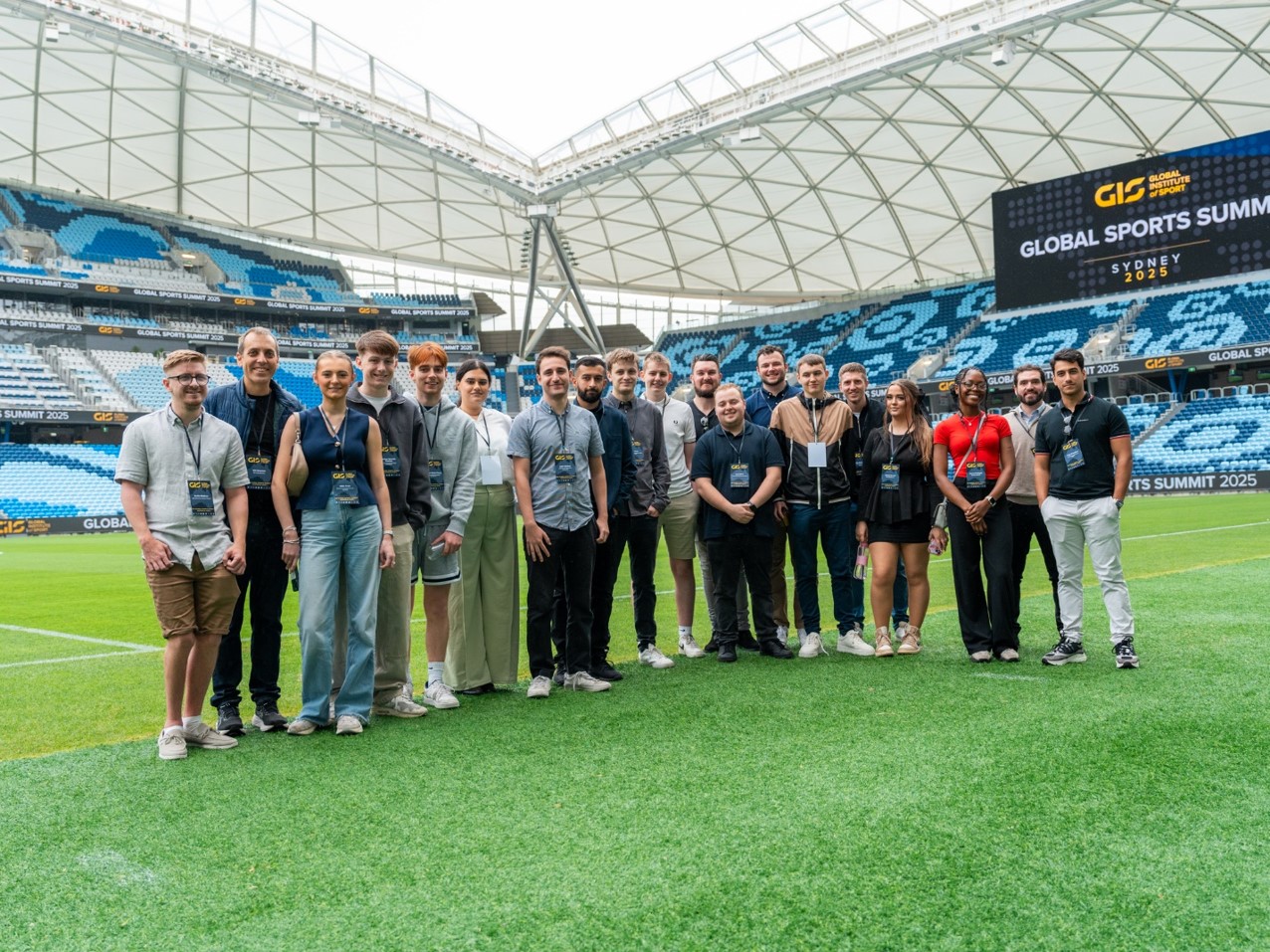
GIS students at Allianz Stadium
Community Outreach
Construction begins on University of Newcastle’s new City Campus Student Accommodation
The University of Newcastle has officially commenced construction on its new City Campus Student Accommodation, marking a major milestone in the Honeysuckle site development. Located on the corner of Civic Lane and Worth Place, the nine-storey building will deliver 445 student beds in a mix of micro studios, studios, twin rooms, and six-bed shared apartments, all designed to foster community living with shared dining, living, and outdoor spaces.
The project represents a significant investment in infrastructure that supports both education and urban renewal. By delivering high-quality, purpose-built housing in the heart of Newcastle, the development addresses the growing demand for student accommodation while easing pressure on the city’s rental market.
Beyond housing, the facility is designed to enhance the student experience by creating vibrant and supportive spaces for domestic and international students. The project will also generate local jobs throughout construction, delivered by Hansen Yuncken with design by Architectus.
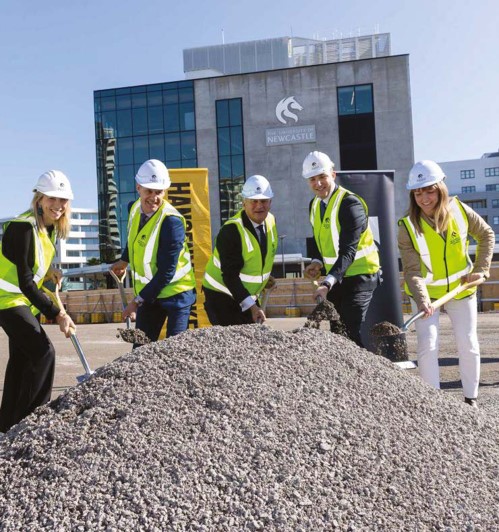
The City Campus Student Accommodation building is expected to be completed in early 2027.
Operations
University experts part of new network to reduce reliance on animals in research
Researchers from the University of Newcastle and the Hunter Medical Research Institute (HMRI) have joined a new statewide Non-Animal Technologies Network, supporting innovative approaches to reduce reliance on animals in medical research.
The $4.5 million initiative, announced by the NSW Government, will focus on developing advanced alternatives that uphold the 3Rs of animal research: Replace, Reduce and Refine. The University of Newcastle’s Dr Gerard Kaiko and HMRI’s Professor Simon Keely will contribute their expertise alongside researchers from institutions including UNSW, the University of Wollongong, the University of Technology Sydney, the University of Sydney, the Victor Chang Cardiac Research Institute and the Children’s Medical Research Institute.
Animal models remain an important part of medical research, helping scientists develop better treatments for serious conditions such as cancer, dementia, lung disease, and COVID-19. However, the University of Newcastle and HMRI have emphasised their commitment to the ethical treatment of animals and to advancing new technologies that reduce their use. Through collaboration across leading universities and research centres, the Non-Animal Technologies Network will foster infrastructure, research programs and regulatory pathways that drive innovation while strengthening ethical standards in health and medical research.
The University of Newcastle acknowledges the traditional custodians of the lands within our footprint areas: Awabakal, Darkinjung, Biripai, Worimi, Wonnarua, and Eora Nations. We also pay respect to the wisdom of our Elders past and present.