Partnerships for the Goals
SDG 06 Clean Water
2025 Report
35th in the world
Research and Innovation
Researchers undertake groundbreaking analysis of groundwater in Bangladesh
Dr Rafiquel Islam and Sazal Kumar from the University of Newcastle’s School of Environmental and Life Sciences have led research analysing the impact of iron and arsenic in Bangladeshi tubewells, focusing on the health of school children. Their study found that deeper bores are essential to reduce the risk of arsenic-related illnesses.
The analysis revealed that 68% of water samples exceeded safe iron levels, and 48% exceeded arsenic limits set by the World Health Organization, with national standards also frequently breached. Contamination arises from rock erosion, sewage, and industrial waste, posing serious health risks including respiratory issues, digestive illnesses, anaemia, kidney stones, and prenatal complications.
The research highlights the need for region-specific strategies for safe tubewell construction and management, supporting Sustainable Development Goal 6 by ensuring equitable access to safe, clean drinking water for vulnerable communities in Bangladesh.
Teaching and Learning
AMMONIAC produces ammonia with less carbon release
The Laureate Professor Behdad Moghtaderi and his team at the University of Newcastle’s Centre for Innovative Energy Technologies have partnered with Element One to develop AMMONIAC, an innovative technology designed to significantly reduce emissions from ammonia production.
Ammonia – an essential component of agricultural fertiliser – is projected to see a 40% increase in demand by 2050. Yet traditional production methods account for 2% of global emissions worldwide, releasing over 450 million tonnes of carbon dioxide each year. AMMONIAC offers a more sustainable alternative by using a simplified process that “breathes in” hydrogen and, under shifting but ambient conditions, “breathes out” ammonia.
Not only does this method reduce production costs from roughly USD $800 to about USD $200, but it also generates pure, clean water as a by-product instead of carbon dioxide. Professor Moghtaderi anticipates that AMMONIAC could eventually be used directly by farmers, requiring only air and water, transforming the future of sustainable ammonia production.
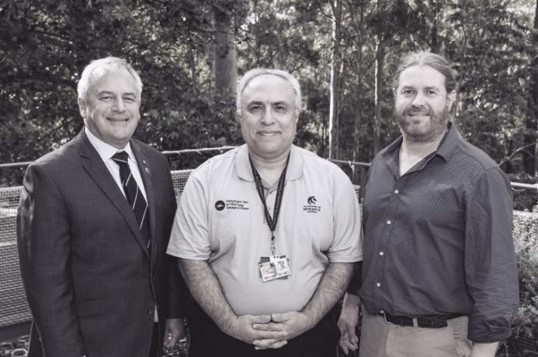
(L-R) University of Newcastle Vice Chancellor Alex Zelinsky, Laureate Professor Behdad Moghtaderi, and Element One founder and Managing Director Phil Matthews
Operations
Smarter water use helping the University save water
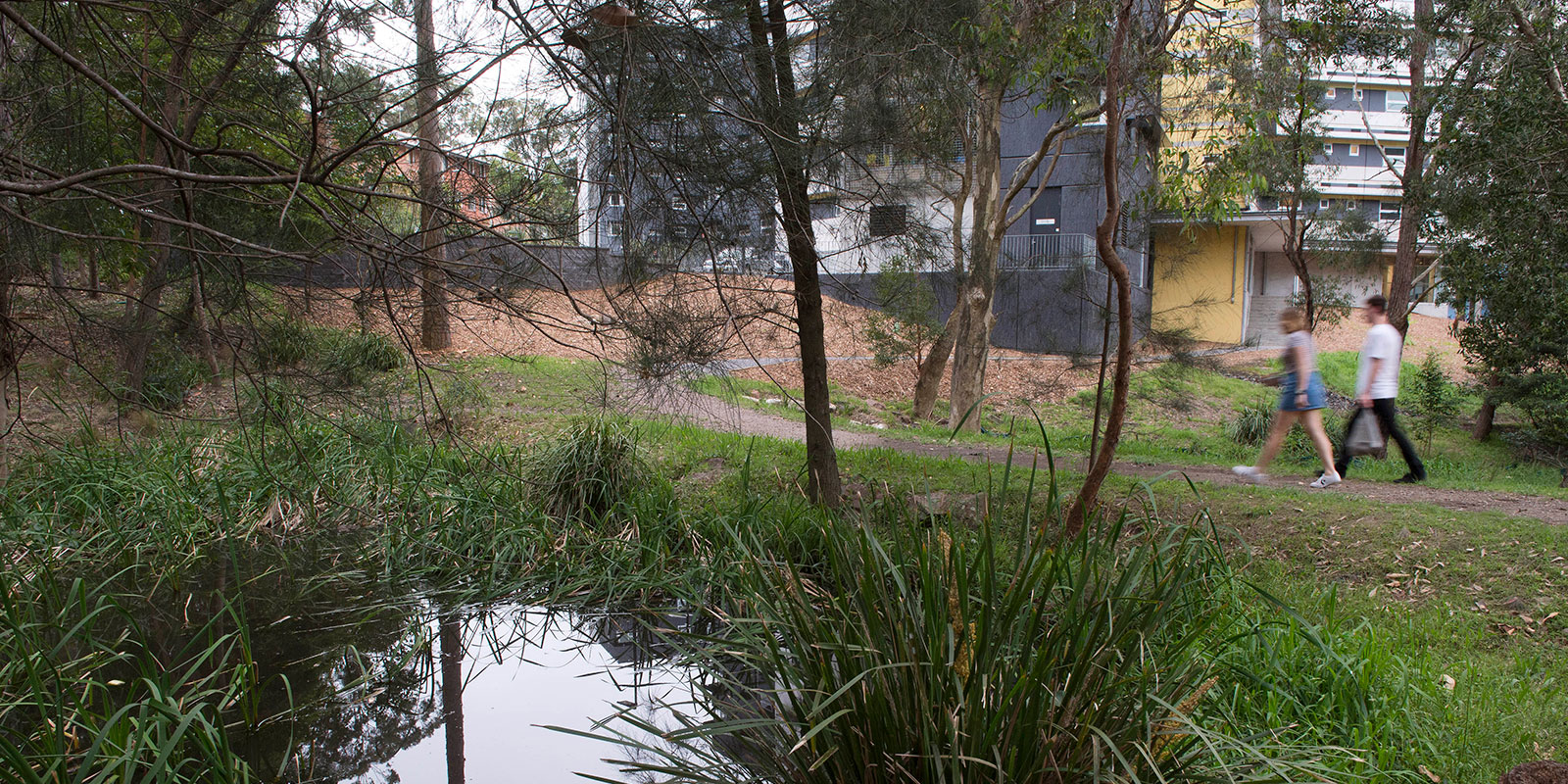
Every Australian knows it is part of our national responsibility to save water, and to use the little we have wisely. In 2025, we achieved a 15% reduction in water use on campus (on our benchmark 2015 levels) through careful planning that included the installation of large-scale, on-site tanks and stormwater retention dams that prioritise the use of captured rainwater for irrigation. The systems are designed to automatically draw from stored rainwater, switching to potable water only when necessary. This dramatically reduces reliance on drinking water for outdoor use.
Currently, the University captures and stores approximately 2.7 million litres of water in rainwater tanks, much of which irrigates the playing fields.
The University is also rolling out Hunter Hydrawise smart irrigation controllers across sporting fields. These advanced systems offer live weather integration and leak detection, allowing us to monitor use and prevent waste.
By avoiding unnecessary watering, these smart irrigation systems are expected to save up to 50,000 litres of water*, contributing significantly to the University’s conservation efforts.
These upgrades are part of a broader commitment to sustainable campus operations and delivering better environmental outcomes for the University and wider community.
*Every time a cycle is cancelled due to rain or wind in the forecast

Smart Water Usage at the University of Newcastle
15% Total water reduction
Community Outreach
Restoring Indonesia’s peatlands to protect clean water
Associate Professor Dr Charles Lee, from the Newcastle Australia Institute of Higher Education and the Centre for Sustainable Development in Singapore, is leading a pioneering initiative to restore parts of Indonesia’s 15 million hectares of degraded peatlands. These ancient carbon-rich ecosystems naturally filter drinking water and reduce flood risk, yet widespread land clearing and fires across South-East Asia now contribute 6% of global annual emissions and heighten water and food insecurity for billions.
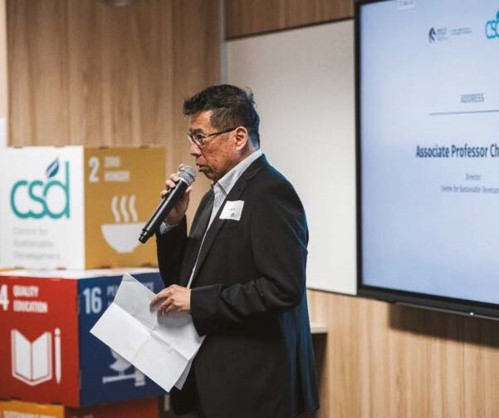
Charles Lee delivering a speech at the cocktail launch of the Centre for Sustainable Development (CSD).
Dr Lee’s research demonstrates that Peatland restoration directly improves waterway health, water quality, and access to clean water. The team’s method involves rewetting drained peatlands through a series of artificial dams, followed by revegetation to stabilise the landscape and revive ecosystem functions. Once restored, these landscapes can again support local livelihoods and long-term community stewardship.
A successful pilot in Sungai Tohor, Sumatra, has already shown promising results, with rewetted and replanted peatlands fostering the return of wildlife and the natural filtration of clean water. With ongoing monitoring and evaluation, Dr Lee believes this scalable model can be expanded across Indonesia, offering a transformative pathway for environmental recovery and water security.
The University of Newcastle acknowledges the traditional custodians of the lands within our footprint areas: Awabakal, Darkinjung, Biripai, Worimi, Wonnarua, and Eora Nations. We also pay respect to the wisdom of our Elders past and present.