
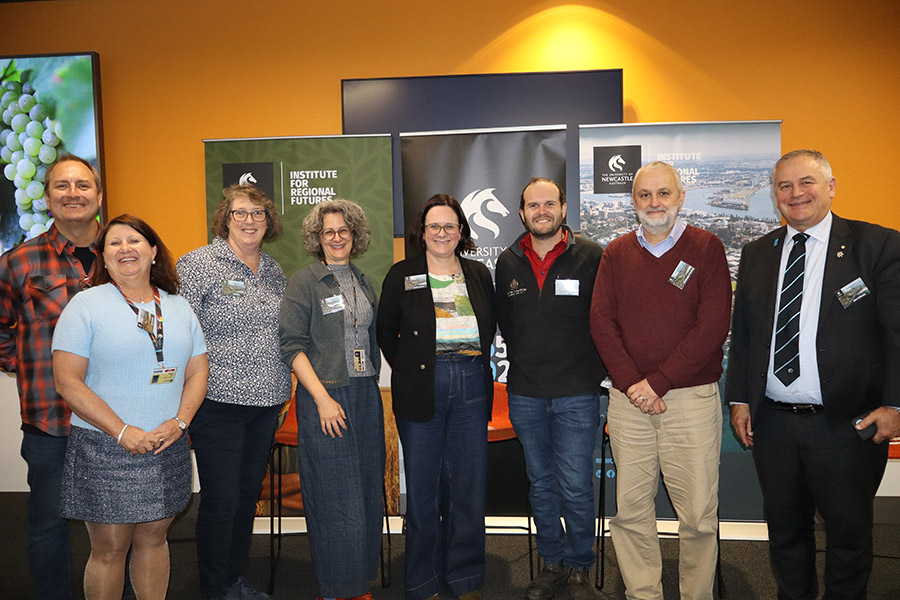
 L-R Michael de Iuliis, Professor Kate Senior, Liz Riley, Dr Julie McIntyre, Jennie Curran, Alisdair Tulloch, Dr Christophe Tourenq, University of Newcastle Vice-Chancellor Professor Alex Zelinsky
2024 supporting context
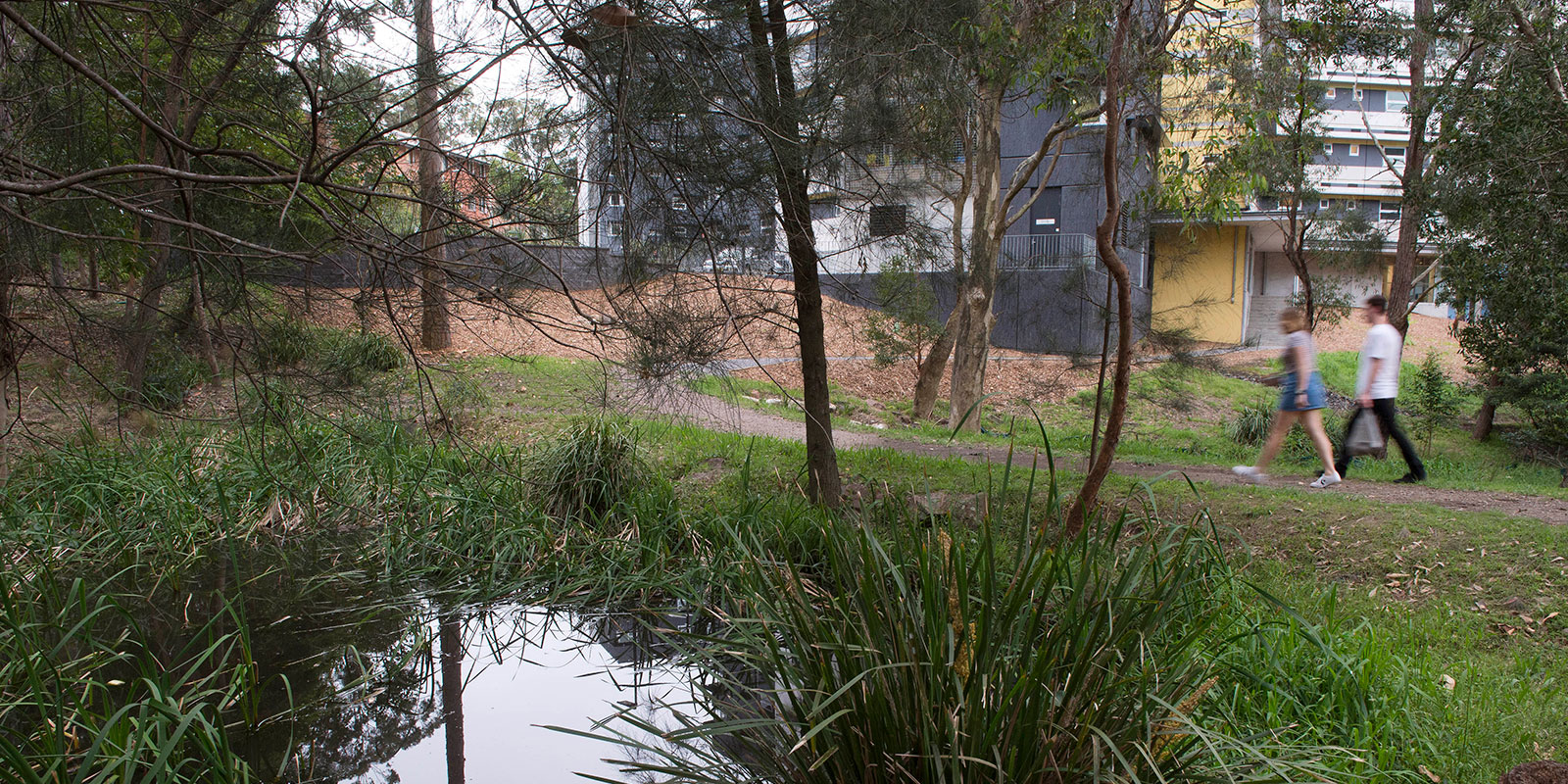
The Delprat Garden: a living laboratory for regenerative land use
- The Delprat Garden explores phytoremediation - an ecologically sustainable approach that uses plants to absorb, contain or neutralise pollutants in contaminated soil.
- The University of Newcastle’s School of Architecture and Built Environment plays a lead role in the design and research components, in partnership with:
- University of Technology Sydney (School of Life Sciences),
- Landcom,
- Newcastle Industrial Heritage Association, and
- Local community stakeholders.
- The garden is both scientific and performative, exploring new aesthetic, social, and ecological relationships to industrial heritage land through experimental design and public engagement.
» Learn more about the Delprat Garden

Events and Activities Promoting Land Stewardship
- Delprat Garden Open Day
The University supported and co-hosted this public event to showcase the garden’s ecological function, design innovations, and research outcomes. It included:- Guided tours,
- Talks on urban regeneration, soil health, and phytoremediation,
- Community art and student-led installations.
- 2024 Programming Highlights
In 2024, the Delprat Garden continued to support sustainability-focused learning and engagement through:- Workshops on regenerative planting and soil monitoring,
- Field visits for students and community groups exploring sustainable land reuse,
- Participation in National Science Week (2024) with a focus on "Land Futures in a Changing Climate."
- Collaborative design studios involving architecture and environmental science students to create new interventions in degraded landscapes.
Regenerating post-industrial land
- The Delprat Garden is linked to the University's broader urban ecology and landscape regeneration research, supporting the conservation of urban wildlands and the integration of green infrastructure in post-industrial environments.
- It provides a practical example of how degraded industrial land can be reimagined through ecological restoration, public engagement and sustainable landscape design.
These activities connect sustainable land management with regional industries, farming communities and public learning, supporting healthier soils, more resilient landscapes and better long-term stewardship of land.