
Life Below Water
Overfishing (Community Outreach)
The University of Newcastle contributes to community education on overfishing, destructive fishing practices and responsible harvesting. In 2025, researchers shared fisheries science directly with public audiences, collaborated with commercial and recreational fishers, and supported community activities that explain how healthy habitats, reliable stock information and careful fishing practices protect aquatic ecosystems. These activities also build understanding of the responsible fisheries management needed to address risks associated with illegal, unreported and unregulated fishing.
Working with fishers to support sustainable sea-cucumber harvesting
University of Newcastle marine researcher Kristen McSpadden works with the Queensland Sea Cucumber Fishery on the Great Barrier Reef, bringing together scientific information and fishers’ local knowledge. The University profile of Kristen McSpadden describes how this collaboration helps address gaps in fisheries data and improves understanding of commercially harvested sea-cucumber populations. Sharing research with fishing communities supports informed harvesting decisions and awareness of the risks of overfishing.
On 12 July 2025, McSpadden gave a free community-facing Marine Technologies talk in North Bondi on sea-cucumber research. She explained how remotely operated vehicles and other marine remote-sensing tools can improve ecological surveys, reveal the distribution of seafloor species and support sustainable fisheries. Using sea cucumbers as a case study, she described how species-distribution models and habitat information can help estimate fishery biomass more reliably, accounting for the patchy distribution of animals across reef habitats. The public event placed applied fisheries-monitoring science within a wider discussion of marine conservation.
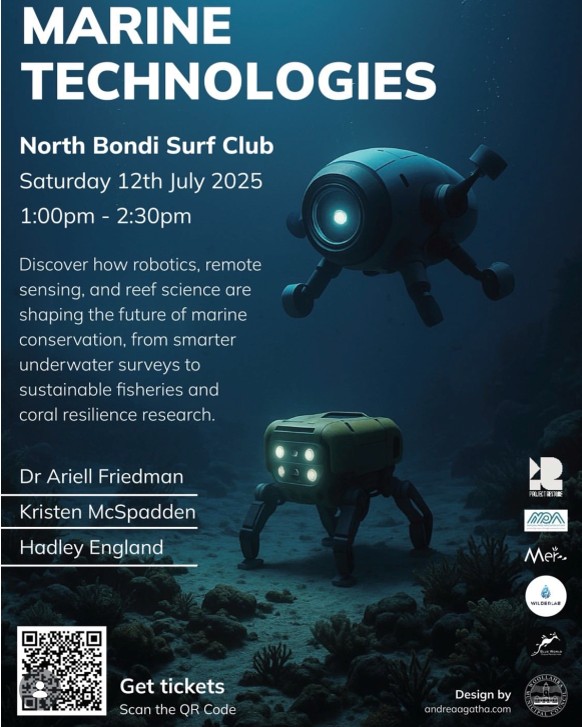
Marine Technologies community presentation, 12 July 2025, featuring Kristen McSpadden.
In October 2025, University researchers Troy Gaston and Kristen McSpadden co-authored a peer-reviewed study comparing remotely operated underwater vehicles and aerial drones with traditional sea-cucumber surveys on the Great Barrier Reef. Underwater vehicle surveys showed promise for efficient, broad-area assessments; drone surveys were most effective in suitable shallow-water and weather conditions. These findings provide accessible scientific information that fisheries practitioners and managers can use when considering stock monitoring, avoiding depletion and improving sustainable harvesting.
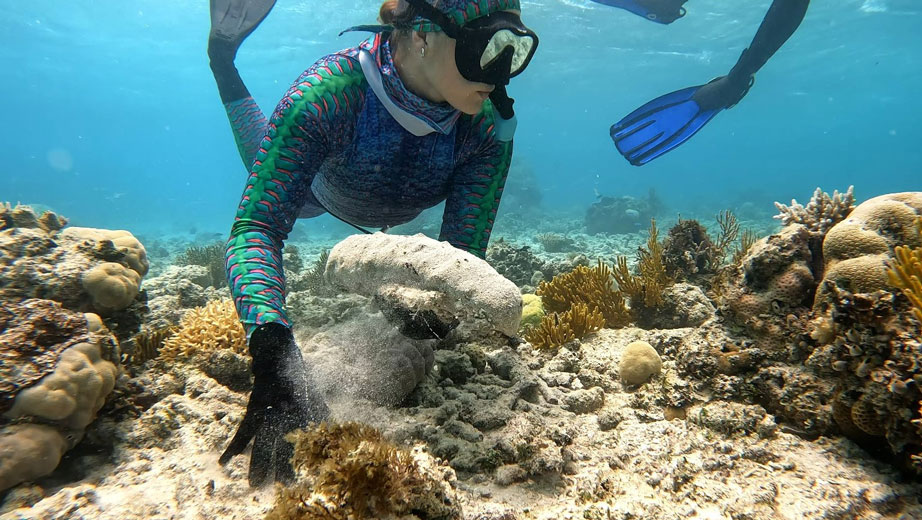
University of Newcastle marine researcher Kristen McSpadden undertaking coral-reef fieldwork. Image credit: Dr Vincent Raoult.
Sharing evidence with the public about reef food webs
In April 2025, the University shared research led by PhD candidate Jeremy Day on blue groper, pink snapper and long-spined sea urchins in the Great Southern Reef. The University’s April 2025 report explained that the large fish studied rarely consumed long-spined urchins, challenging assumptions about predator loss and the spread of urchin barrens. This public communication helps fishers and coastal communities understand why fisheries and ecosystem management should be based on tested evidence.
Recreational fishers supplied specimens for the study, which examined 39 blue groper and 111 pink snapper. Long-spined urchins were detected in 5.1% of the blue groper and 2.7% of the pink snapper examined. The study did not establish overfishing as the cause of urchin barrens; instead, it showed the importance of understanding complex food webs before making assumptions about the effects of fishing on reef health.
The research also involved OzFish Unlimited and the NSW DPI Representative Anglers Program, connecting scientists with recreational fishing communities. The original collaboration included industry-matched funding facilitated through OzFish and the University. These partnerships demonstrate how fishers can contribute specimens and practical knowledge to research that informs sustainable reef and fisheries management.
On 15 April 2025, Jeremy Day discussed the findings with a wider audience in an episode of The Ocean News Podcast titled “What’s Eating the Urchins?”. The interview explained why the low occurrence of long-spined urchins in the fish diets challenges a common assumption about reef ecology and why scientifically informed responses are important for managing ecosystems affected by urchin barrens. Day also appeared on the Citizen Science Show on 14 February 2026, providing additional, later public outreach about sea urchins and kelp forests.

A blue groper eating a long-spined sea urchin fed to it by a diver. Photograph: Dr John Turnbull.
Community awareness and responsible fishing on the Central Coast
In April–May 2025, University of Newcastle students supported Central Coast Council’s Carp to Croc initiative, a free community fishing programme with educational activities about invasive European carp and sustainable fishing practices. The Council-led programme involved 101 local participants, who removed 296 carp from Central Coast waterways. University students helped collect tissue samples from 40 fish for food-web research to inform future waterway management.
The community event combined responsible fishing with practical environmental learning: participants learned why invasive carp can damage native aquatic habitats and how targeted removal of a harmful species can support healthier waterways. The University’s research contribution complemented Council-led public education and illustrates how community fishing, scientific monitoring and ecosystem stewardship can reinforce one another.
Earlier partnerships reducing harmful fishing impacts
Prior to 2025, research at Wallis Lake brought University researchers together with NSW fisheries researchers, Hunter Local Land Services and commercial fishers to improve fishing practices. The work investigated escape gaps in crab traps to allow undersized blue swimmer and mud crabs to escape, reducing unintended catches of juvenile animals and protecting future stocks.
Commercial and recreational fishers at Wallis Lake adopted escape panels, with the approach also taken up in other regions and states, as recorded in the University’s earlier project material. This practical knowledge exchange shows how selective fishing gear can help reduce harmful bycatch and encourage less destructive fishing practices.
At the free Fishers for Fish Habitat Forum on 25–26 November 2022, University researcher Associate Professor Troy Gaston joined fishing and conservation stakeholders to share research and practical experience about habitat protection and sustainable fishing. The University’s account of the forum describes the opportunity for fishers and researchers to exchange knowledge relevant to reducing harmful fishing impacts.
Additional public outreach across years
In May 2024, Jeremy Day spoke at Nowra Library about sea-urchin research, bringing marine-ecosystem science to community audiences. Later, on 30 June 2026, Kristen McSpadden presented sea-cucumber monitoring research through the Central Coast Marine Discovery Centre’s Science in the Suburbs programme. These dated examples demonstrate continuing outreach beyond the 2025 reporting year.
By sharing fisheries research with community audiences, collaborating with fishers and supporting hands-on environmental education, the University helps raise awareness of overfishing risks, responsible harvesting and practices that protect aquatic ecosystems.
Juvenile Crab Protection
In partnership with Hunter LLS, commercial crab fisherman have been working with NSW DPI Fisheries and the University of Newcastle to develop an effective crab trap design that reduced juvenile catches of blue swimmer and mud crabs.

The University of Newcastle acknowledges the traditional custodians of the lands within our footprint areas: Awabakal, Darkinjung, Biripai, Worimi, Wonnarua, and Eora Nations. We also pay respect to the wisdom of our Elders past and present.