

Clean Water and Sanitation
Sustainable Water Extraction on Campus

In 2025, the University of Newcastle directly employed sustainable water extraction, capture and reuse technologies across its associated grounds, with practical emphasis on reducing reliance on potable water and enhancing environmental resilience. These systems include rainwater harvesting tanks, stormwater retention dams and automated irrigation infrastructure that draws on stored water before switching to mains supplies when necessary. By capturing and extracting water from these alternative sources, the University reduces its reliance on potable water while supporting the sustainable management of campus sporting fields and landscaped environments.
Capturing and using water sustainably
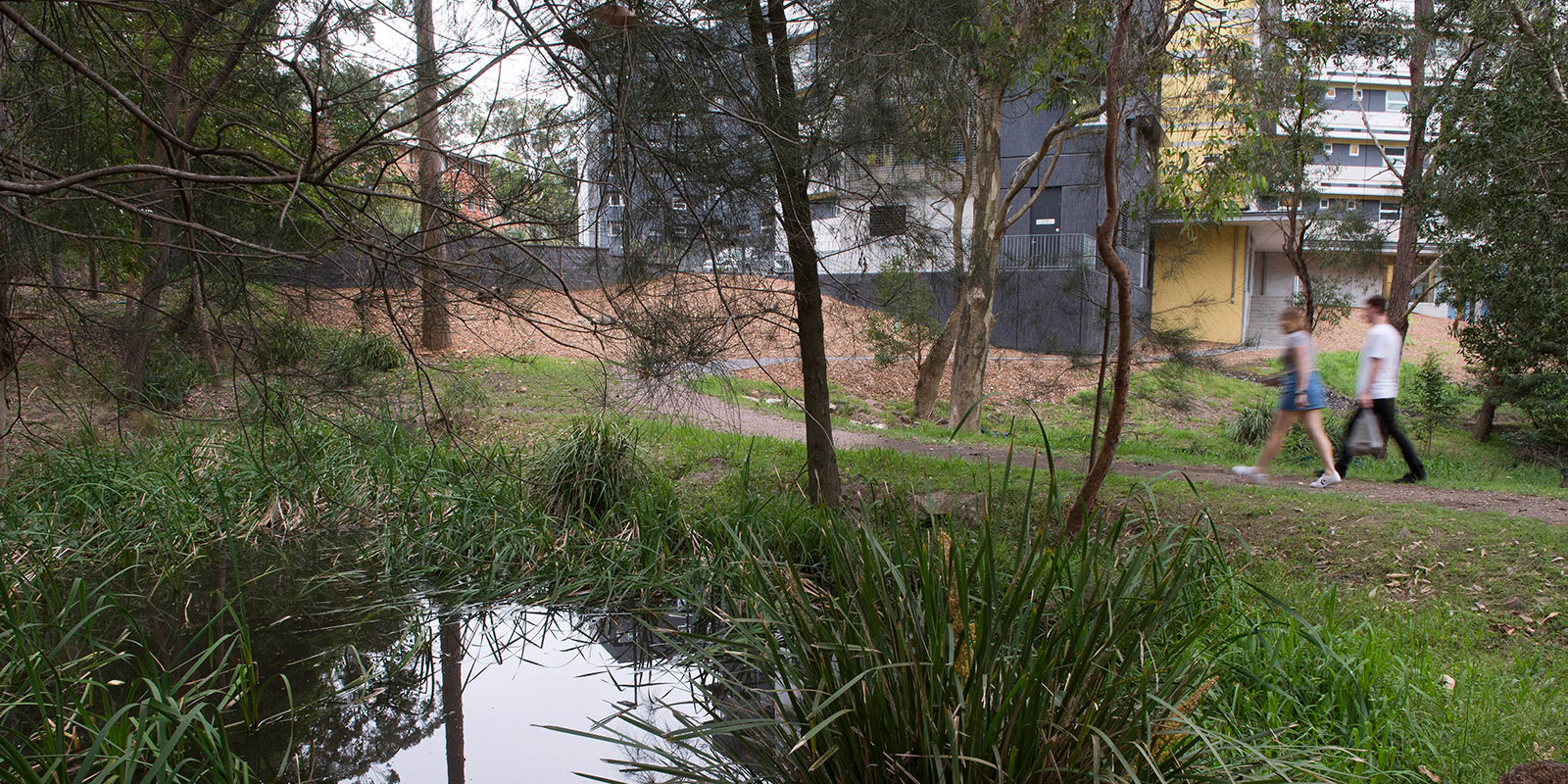
At Callaghan campus, the University uses rainwater harvesting systems and stormwater retention dams to capture and store water for irrigation. These systems provide an alternative to mains drinking water, helping conserve potable water supplies while maintaining campus green spaces.
Automated irrigation systems prioritise stored rainwater and switch to mains water only when captured supplies are insufficient. This approach allows the University to make efficient use of available rainfall and reduce its dependence on potable water for outdoor irrigation.
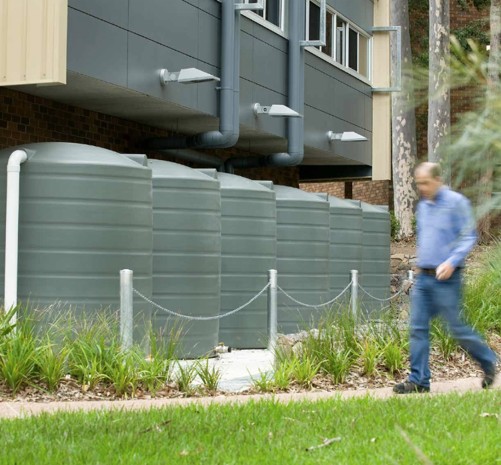
A July 2025 University update highlighted the University's capacity to capture and store approximately 2.7 million litres of rainwater in on-site tanks. This harvested water is used to irrigate sporting fields at Callaghan, with Oval 3 irrigated almost entirely using captured rainwater.
Established water capture infrastructure
The University's Water Management Solutions program outlines the infrastructure supporting sustainable water capture and irrigation across campus.
This includes:
- Rainwater storage tanks: Two 1.1 million-litre tanks that collect and store rainwater for sporting-field irrigation.
- Stormwater retention ponds: Approximately 2 million litres of storage capacity for captured stormwater.
- Irrigation dams: Three dams, each with a capacity of 1,000 kilolitres, that provide additional water storage for campus irrigation.
- These systems enable the University to collect and use water from rainfall and stormwater runoff rather than relying exclusively on mains supplies.
Using captured water efficiently
The University is also improving irrigation efficiency through the rollout of Hunter Hydrawise smart irrigation controllers across its sporting fields. These systems use real-time weather information and leak detection to help optimise watering schedules, reduce unnecessary water use and identify potential water losses.
By adjusting irrigation to changing weather conditions, the technology supports more efficient use of both harvested rainwater and mains water, helping the University maintain its sporting fields while minimising water consumption.
Combined with rainwater harvesting, stormwater storage and automated irrigation systems, these technologies support a more sustainable approach to managing water resources across University grounds.
The Hydro Harvester Launch
“It’s [Hydro Harvester] a phenomenal idea brought to life by the University of Newcastle, and I couldn’t be prouder to be supporting this as a member of the Federal Government.”
The University of Newcastle acknowledges the traditional custodians of the lands within our footprint areas: Awabakal, Darkinjung, Biripai, Worimi, Wonnarua, and Eora Nations. We also pay respect to the wisdom of our Elders past and present.