
Police Commissioner Karen Webb says officers shouldn't be first responders to some mental health incidents
The NSW Police chief says officers should not attend mental health incidents where there is no immediate risk to people's safety.
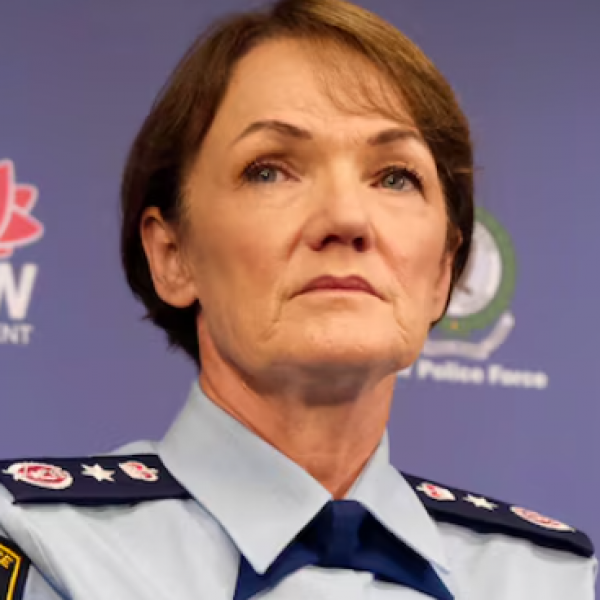
The New South Wales police commissioner has called for officers to not be the first responders in mental health incidents where there are no immediate risks to safety. Karen Webb's comments, made during a NSW Budget Estimates inquiry in Sydney today, comes ahead of the release of a review into how police respond to mental health crises which was initially expected at the start of this year.
The review was prompted by the death of Newcastle woman Krista Kach in September 2023 who was hit by a beanbag round fired by police following a 10-hour stand-off. NSW Police Minister Yasmin Catley confirmed that an update to the review is expected to be submitted by the end of the year, and is currently being worked through by a senior steering committee which includes the police commissioner. Commissioner Webb told the inquiry on Friday the review is currently with NSW Health. "What I want to do and what we agree on might be different things," she told the Budget Estimates inquiry. But ultimately, what we need to do is remove police from attending to mental health concerns where there is no immediate risk to the safety of people."
Commissioner Webb said most of the calls around mental health emergencies are not in a dangerous setting. "We are working towards what we see as the best response, emergency response, for people with mental health [issues]," she said."Obviously, police will continue to provide that safety mechanism."If the community, or indeed the person themselves, are at risk, the police will continue to be there. But it is often the case that it will be better suited [to] a health response."
University of Newcastle criminologist Xanthe Mallet said more early intervention services and resources were needed. "For years now there's been less resources in the community to assist those with mental health problems, and ultimately the burden has fallen on police," Dr Mallett said."I think we really do have to recognise the difficulty in which they find themselves, dealing with some of these highly volatile situations without the adequate psychological support to assist those they're attending."
This article was written by Jasmin Cheong and was originally published by ABC News, read the full article here.
Contact
- Xanthe Mallett
- Email: xanthe.mallett@newcastle.edu.au
Related news
- Gift or loan? The legal grey area of the ‘bank of mum and dad’
- ‘Outed’ by the algorithm – how social media is revealing queer identity ahead of self-disclosure
- Unity Works to Unlock Talent and Build Belonging
- Honouring a trailblazer: New lecture series celebrates Professor Bob Morgan’s legacy
- From boots to books, Ellie strives to make sports and law accessible to all
The University of Newcastle acknowledges the traditional custodians of the lands within our footprint areas: Awabakal, Darkinjung, Biripai, Worimi, Wonnarua, and Eora Nations. We also pay respect to the wisdom of our Elders past and present.