
Threatened coral puts entire coastal ecosystems at risk
Huge declines of soft coral habitats off the NSW coast are a major cause for concern, putting entire food webs at risk, according to a study led by researchers at the University of Newcastle.
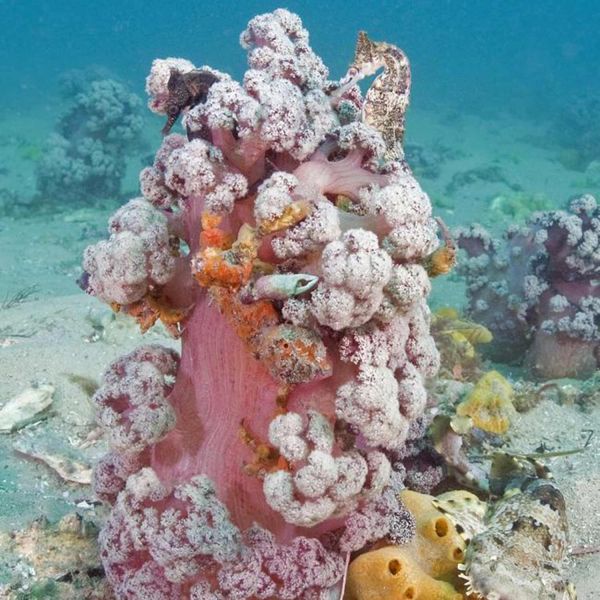
On the Central Coast and in Port Stephens, some soft coral habitats have declined by up to 90 per cent, leading to the species Dendronephthya australis to become the first soft coral in Australian history to be listed as ‘Threatened’.
The decline is largely attributed to human interference such as boat anchoring, poorly installed boat moorings and entanglement by fishing line, as well as sand movement.
While previous work found that large fish don’t directly feed on these corals, researchers found that small invertebrates relied on the corals as part of their diet – these invertebrates are important food sources for fish further up in the food web, signalling that a loss of these soft coral habitats could have broad, negative effects on our waterways.
The paper concludes by calling for remediation and management actions to ensure Dendronephthya australis does not become extinct in the region.
Related news
- University celebrates graduates making an impact in media, literature and health
- University of Newcastle appoints contractor for Hunter Building demolition
- Global evidence reveals the scale of humanity’s imprint in Earth’s geology
- Where Culture meets STEM: Empowering future leaders in Wadeye
- Showing our support for the Koori Knockout
The University of Newcastle acknowledges the traditional custodians of the lands within our footprint areas: Awabakal, Darkinjung, Biripai, Worimi, Wonnarua, and Eora Nations. We also pay respect to the wisdom of our Elders past and present.