
Sugarloaf koalas show no evidence of chlamydia as population exceeds expectations
A new report has revealed the Sugarloaf-Stockrington koala population is far larger than previously understood and, encouragingly, found no evidence of chlamydia in any of the wild koalas tested.
The University of Newcastle-led research estimates the broader western Lower Hunter landscape supports approximately 2,337 koalas and suggests Sugarloaf-Stockrington may be one of only a small number of known koala populations in New South Wales where chlamydia has not been detected.
Researchers found no evidence of active chlamydia in samples from 27 wild koalas. A review of wildlife rescue and clinical records also found no confirmed cases among a further 27 koalas from within 30 kilometres of the population.
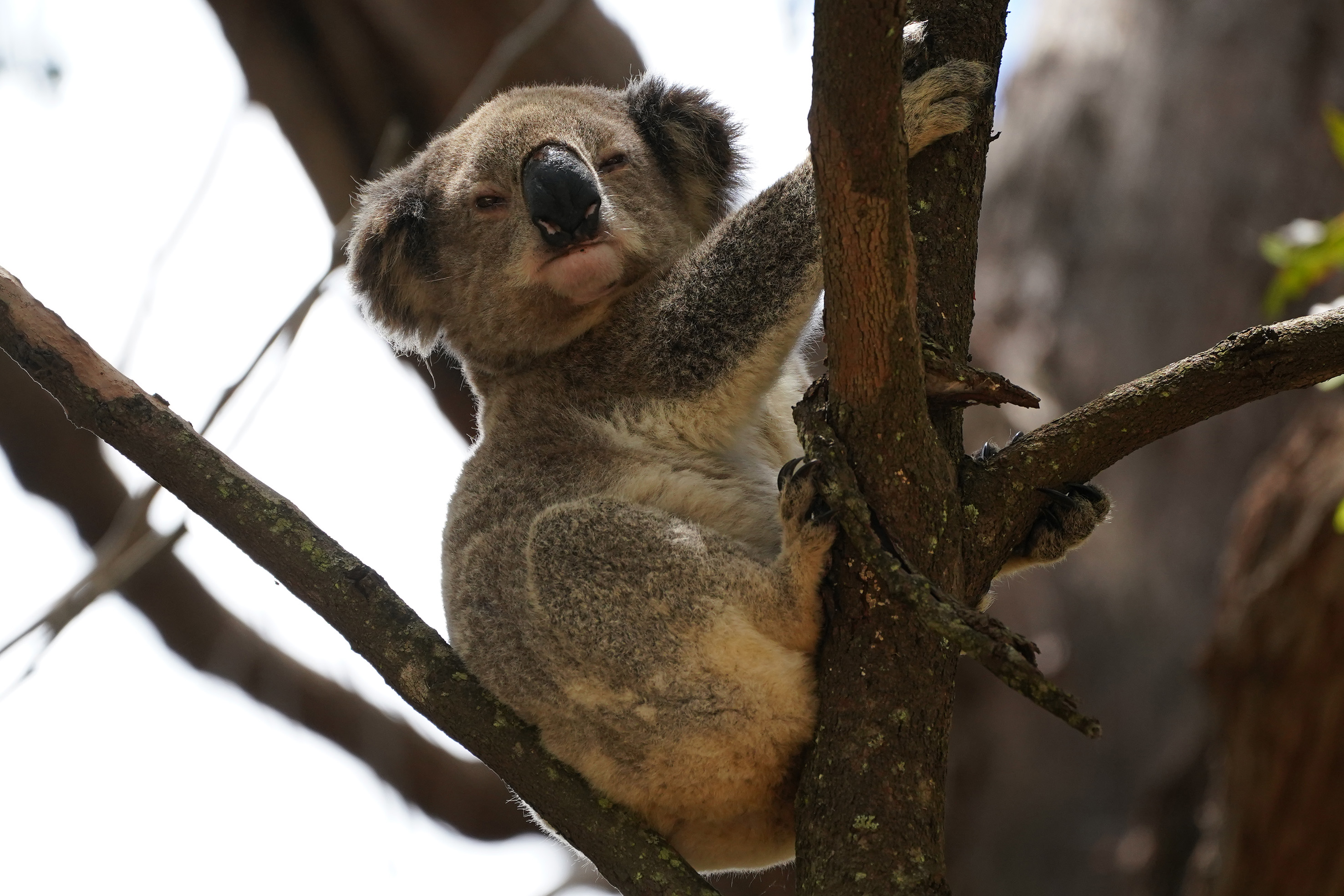
Koala at Sugarloaf State Conservation Area. Credit Daryn McKenny
Lead researcher and University of Newcastle conservation scientist Dr Ryan Witt said the findings highlight the significance of the population and the importance of protecting healthy koala strongholds before they decline.
“Finding no evidence of chlamydia in the koalas we tested is an extraordinary result,” Dr Witt said.
“While it’s impossible to prove that every koala in the population is disease-free, our results suggest chlamydia is either absent or occurring at very low levels.
“When you combine a substantial population with extremely low disease prevalence, the conservation value of these koalas becomes even more significant,” Dr Witt said.
Chlamydia is one of the most serious diseases affecting koalas and can cause blindness, infertility, and death. The disease occurs across many koala populations in eastern Australia and has been confirmed in koala populations neighbouring the Lower Hunter.
To test for chlamydia, researchers used thermal-imaging drones to locate koalas before collecting fresh scats. The koala scat, or poo, was preserved on dry ice and transported to specialist laboratories at the University of Sunshine Coast for genetic and disease testing.
The findings build on University of Newcastle research published in 2025 that confirmed a significant koala population in Sugarloaf-Stockrington using thermal drone surveys. The team worked in collaboration with local Aboriginal man, Daryn McKenny, who had spent years prior sighting and monitoring koalas in the area. The latest report expands that work, using updated modelling to reveal a substantially larger population estimate of 2,337 koalas across a 23,900-hectare study area.
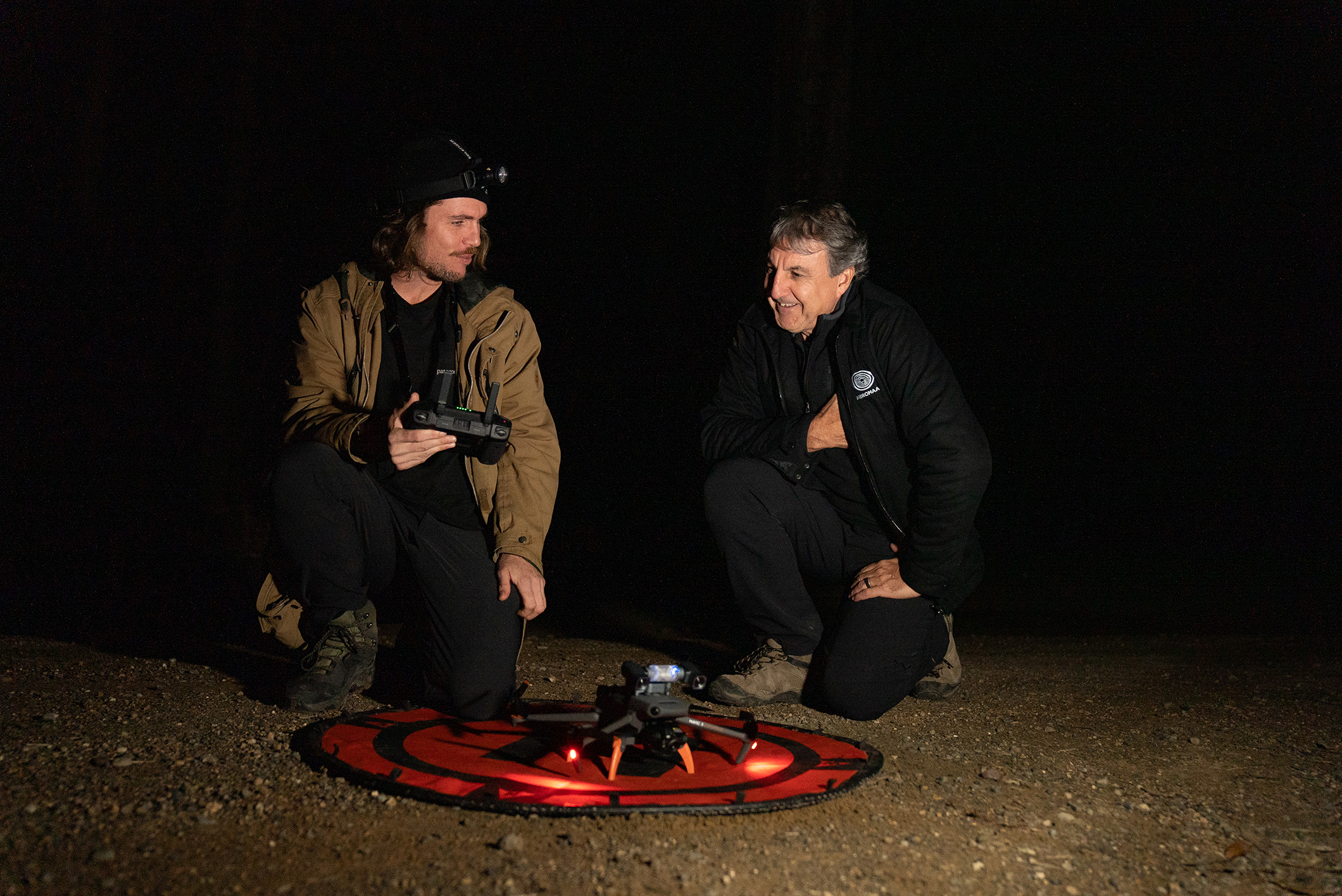
Dr Ryan Witt and Daryn McKenny doing a thermal drone survey at Sugarloaf State Conservation Area
“This report shows the population is even larger than our earlier estimates suggested,” Dr Witt said.
“At the same time, we’ve been able to build a much clearer picture of the population’s health and long-term outlook.
While the findings are encouraging, the research also identified signs that the population has been isolated for an extended period.
“The genetic results tell us these koalas have likely been isolated for quite some time. There’s low genetic diversity and high levels of relatedness,” Dr Witt said.
“The isolation may have helped limit the spread of chlamydia into the population, but it has also reduced genetic diversity.
“Maintaining connections between habitat areas will be important to support the populations long-term resilience,” Dr Witt said.
A review of rescue data from Hunter Wildlife Rescue and Port Stephens Koala Hospital identified road accidents as the leading cause of trauma for koalas in the area, accounting for 38 out of 61 documented rescues.
“This is a population that appears healthy today, but many of the threats it faces are preventable,” Dr Witt said.
“Reducing road trauma through better planning, wildlife fencing and safe crossing structures could make a real difference,” Dr Witt said.
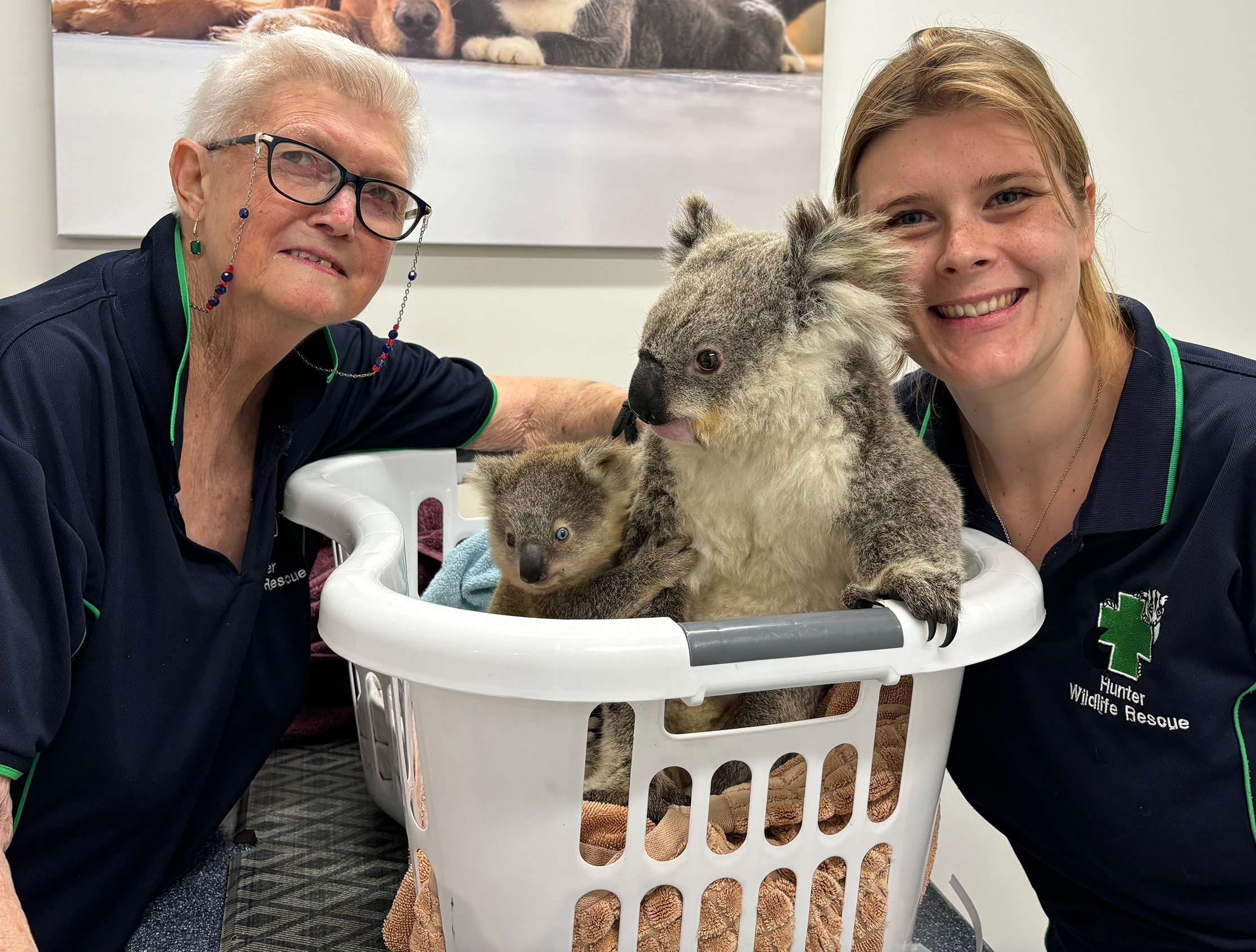
Audrey and Alexis - Hunter Wildlife Rescue
The project was funded by WIRES, and NSW Department of Climate Change, Energy, the Environment and Water; with in-kind support from NSW National Parks and Wildlife Service.
The report recommends three key management strategies:
- Habitat protection: Consolidate the core habitat into the formal protected-area network.
- Infrastructure mitigation: Install wildlife exclusion fencing and safe connectivity structures across transport corridors.
- Ongoing surveillance: Establish long-term, detection-corrected monitoring, non-invasive longitudinal disease screening, and movement studies.
Quick facts on Sugarloaf-Stockrington koala population:
- Estimated population: Approximately 2,337 koalas across the broader western Lower Hunter landscape.
- Study area: More than 23,900 hectares encompassing Sugarloaf and Stockrington State Conservation Areas, Watagans National Park, adjoining State Forests and surrounding habitat.
- Chlamydia testing: No evidence of active chlamydia detected in 27 wild koalas tested.
- Additional evidence: No confirmed cases of chlamydia identified among a further 27 koalas recorded through wildlife rescue and clinical records within 30km of the population.
- Total koalas assessed: 54 koalas examined through testing and supporting rescue and clinical records.
- Genetic finding: Researchers found low genetic diversity and high levels of relatedness, suggesting the population has been isolated for an extended period.
- Largest identified threat: Vehicle strikes were the leading cause of trauma, accounting for 38 of 61 documented koala rescues.
Contact
- Media & Communications Specialist Penny Harnett
- Email: media@newcastle.edu.au
Related news
Aligned with the United Nations Sustainable Development Goals



The University of Newcastle acknowledges the traditional custodians of the lands within our footprint areas: Awabakal, Darkinjung, Biripai, Worimi, Wonnarua, and Eora Nations. We also pay respect to the wisdom of our Elders past and present.