Tiny ocean microbe unlocks new clue to Earth's carbon cycle
Researchers from the University of Newcastle and Australian National University have uncovered a key mechanism that helps one of the world's most abundant marine organisms capture carbon, providing new insights into the ocean's role in regulating Earth's climate.
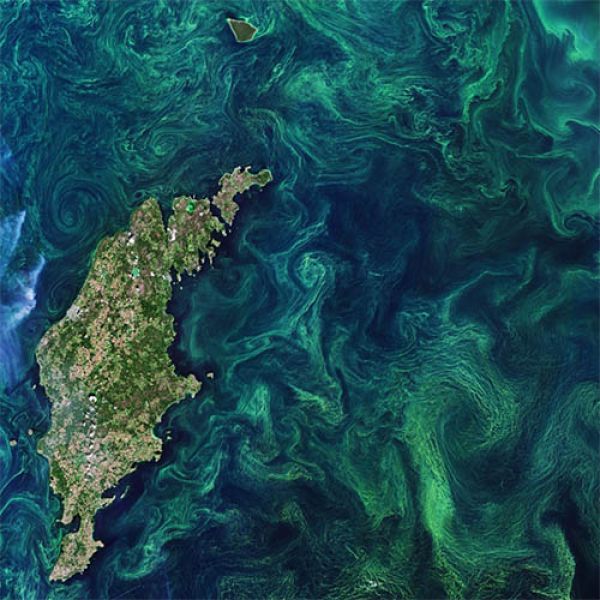
The study has identified a protein called BicA2 that enables Prochlorococcus to take up bicarbonate, the most common form of inorganic carbon in seawater. Often described as the most abundant photosynthetic organism on Earth, Prochlorococcus plays a major role in global carbon capture.
Lead author Dr Loraine Rourke from Australian National University said the discovery helps answer a longstanding question about how these microscopic ocean organisms acquire the carbon they need for photosynthesis.
"Prochlorococcus is almost unimaginably small, but collectively these organisms have a huge influence on the planet" Dr Rourke said.
"Photosynthetic organisms in the ocean are responsible for roughly half of global carbon capture through photosynthesis, and Prochlorococcus alone accounts for around 8.5 per cent of marine carbon uptake. What we have identified is a molecular gateway that provides a route for that carbon to enter these organisms."
Found throughout the world's oceans, Prochlorococcus uses sunlight to convert inorganic carbon into organic matter, helping transfer carbon through the marine food web and supporting the global carbon cycle.
While scientists have long suspected how the organism acquires bicarbonate, direct evidence had been lacking. The research demonstrates that BicA2 functions as a transporter that moves bicarbonate into cells, where it can be used in photosynthesis.
The researchers note that while BicA2 has been shown to transport bicarbonate, further studies are needed to determine its precise role in living Prochlorococcus cells. The findings nevertheless provide strong evidence that the protein contributes to the organism's ability to capture carbon.
University of Newcastle researcher Dr Ben Long said understanding the molecular processes behind carbon uptake is important for improving knowledge of how carbon moves between the atmosphere, oceans and biosphere.
"If we want to understand how changes in the ocean environment affect global carbon flows – including processes relevant to climate change – we need to understand what these organisms are actually doing at the molecular level” Dr Long said.
Beyond its relevance to marine science, the discovery could also inform future efforts to improve photosynthesis in crops. Researchers are investigating whether biological mechanisms used by microbes to concentrate carbon could help plants use carbon dioxide and water more efficiently.
"The long-term goal is to understand the principles these organisms use to capture carbon and explore whether they can help us improve crop productivity under challenging environmental conditions" Dr Long said.
For Dr Rourke, the research highlights how discoveries at the microscopic scale can have far-reaching significance.
"Something as small as a membrane protein in a marine microorganism can connect to some of the biggest challenges facing our planet, from understanding the carbon cycle to supporting future food production" she said.
“That is what makes this discovery particularly exciting”.
The research was led by Dr Loraine Rourke in collaboration with Dr Ben Long, Professor Caitlin Byrt and Professor Dean Price, and is published in The ISME Journal.
Related news
- Global evidence reveals the scale of humanity’s imprint in Earth’s geology
- Where Culture meets STEM: Empowering future leaders in Wadeye
- Showing our support for the Koori Knockout
- University of Newcastle engineering leader awarded prestigious Engineers Australia Fellowship
- Vice-Chancellor Professor Alex Zelinsky to retire in February 2027
The University of Newcastle acknowledges the traditional custodians of the lands within our footprint areas: Awabakal, Darkinjung, Biripai, Worimi, Wonnarua, and Eora Nations. We also pay respect to the wisdom of our Elders past and present.