New national research centre sets sights on improving ear health for Indigenous children
Improving ear health outcomes for Aboriginal and Torres Strait Islander children is at the heart of a landmark national research initiative, to be led by Indigenous researchers and coordinated by the University of Newcastle.
The National Health and Medical Research Council (NHMRC) has today awarded $3m to establish the NHMRC Centre of Research Excellence for Healthy Muku for Kids to tackle otitis media* (ear infection) and hearing loss.
Otitis media remains a marker of health inequity, with Aboriginal and Torres Strait Islander children experiencing ear disease at twice the rate of non-Indigenous children.
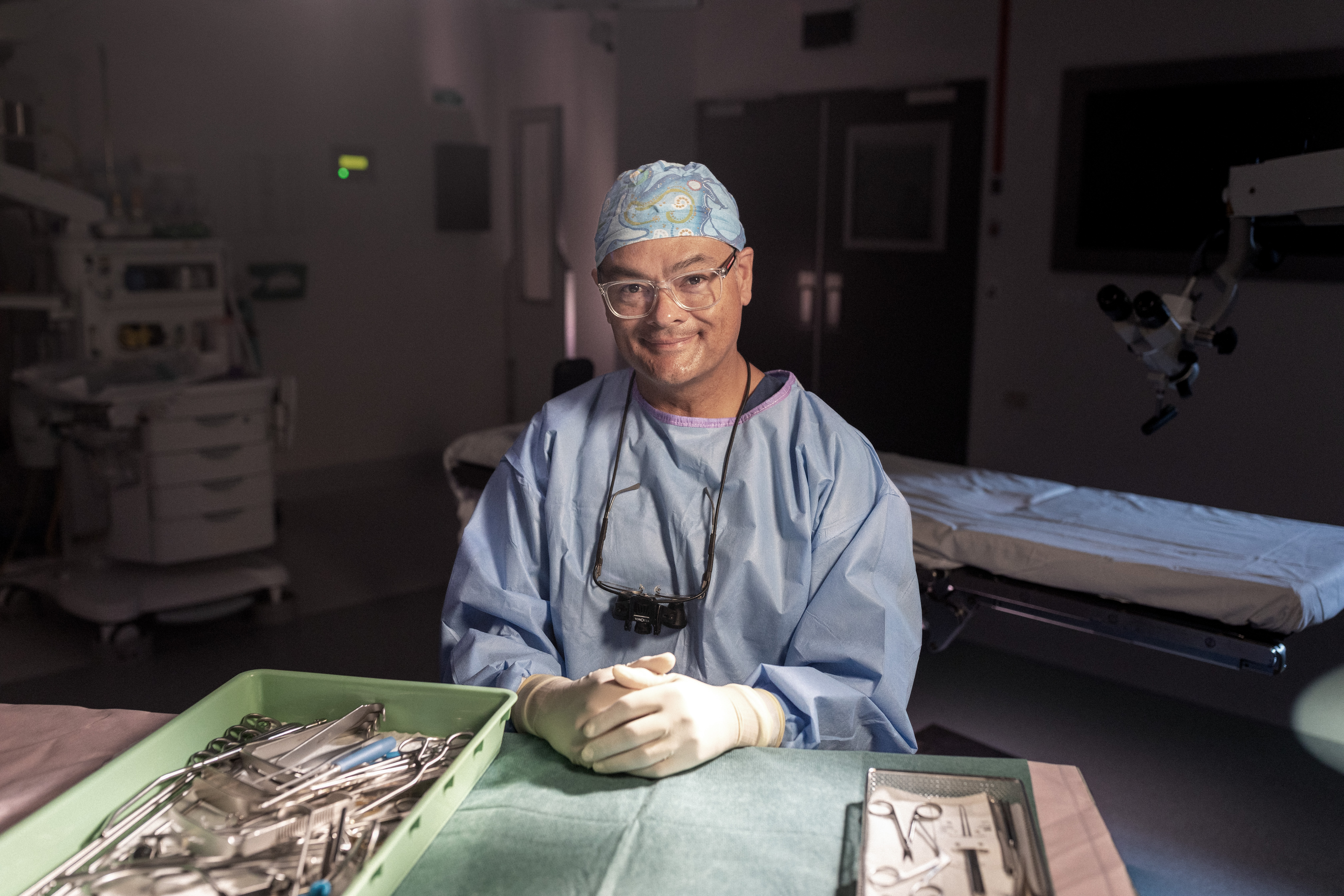
Lead investigator, University of Newcastle Professor Kelvin Kong, of HMRI’s Immune Health Research program, said the national collaboration of researchers, from more than 12 institutions, would drive efforts to reduce the disproportionate inequity of ear health outcomes among Aboriginal and Torres Strait Islander children.
A proud Worimi man and Australia’s first Indigenous ear, nose and throat specialist, Professor Kong is deeply passionate about addressing this health crisis.
“Hearing loss is a developmental emergency,” Professor Kong said.
“For children who face barriers in accessing timely ear health care, including many Aboriginal and Torres Strait Islander children and those living in rural and remote communities, delayed ear treatment doesn't just affect hearing. It impacts learning, confidence and connection,” he said.
“If you can't hear that well, then you can't learn. And so, if you're not hearing well over those first four years of your life, your neuroplasticity and brain development is affected, and therefore, by the time you go to kindergarten or start school, you're already behind.”
Professor Kong said the resulting hearing loss had broad and lifelong health and social implications. Children with otitis media are less likely to reach tertiary education and more likely to have contact with the criminal justice system.
Among Aboriginal and Torres Strait Islander children, ear infection is a dangerous and insidious disease with severe consequences. It often presents earlier in life, is diagnosed later, persists for longer, is more likely to be resistant to current treatment, and is more likely to cause life-threatening complications.
Indigenous children are also twice as likely to be hospitalised for ear infection than non-Indigenous children, yet less likely to receive access to otitis media surgical treatment.
"If ENT access is a struggle for the general public, for our mob, that struggle is multiplied tenfold—then twentyfold. What were mere hurdles become crushing barriers: crippling costs, geographic isolation, systemic racial bias, a severe shortage of specialists, non-existent theatre slots, and awareness programs that fail to reach the people who need them most,” Professor Kong said.
Centre of Research Excellence for Healthy Muku for Kids
Muku is ‘ear’ in Gathang, the language of the Birrbay, Guringay and Worimi people.
The Centre of Research Excellence for Healthy Muku for Kids (CRE-HM4K) will unite a nationwide team of leading clinicians, researchers and experts who have worked together for decades, to drive lasting improvements in ear health for Indigenous children.
Professor Kong said the national collaboration would be steered by Indigenous researchers and delivered in genuine partnership with communities across Australia.
“Working to improve outcomes for Aboriginal and Torres Strait Islander children will drive innovations that enhance ear health for all Australian children,” he said.
The Centre will establish a national framework for detecting and understanding the pathogens of ear disease; co-design community strategies for increased engagement in treatment and prevention; and evaluate and redesign effective ear health services.
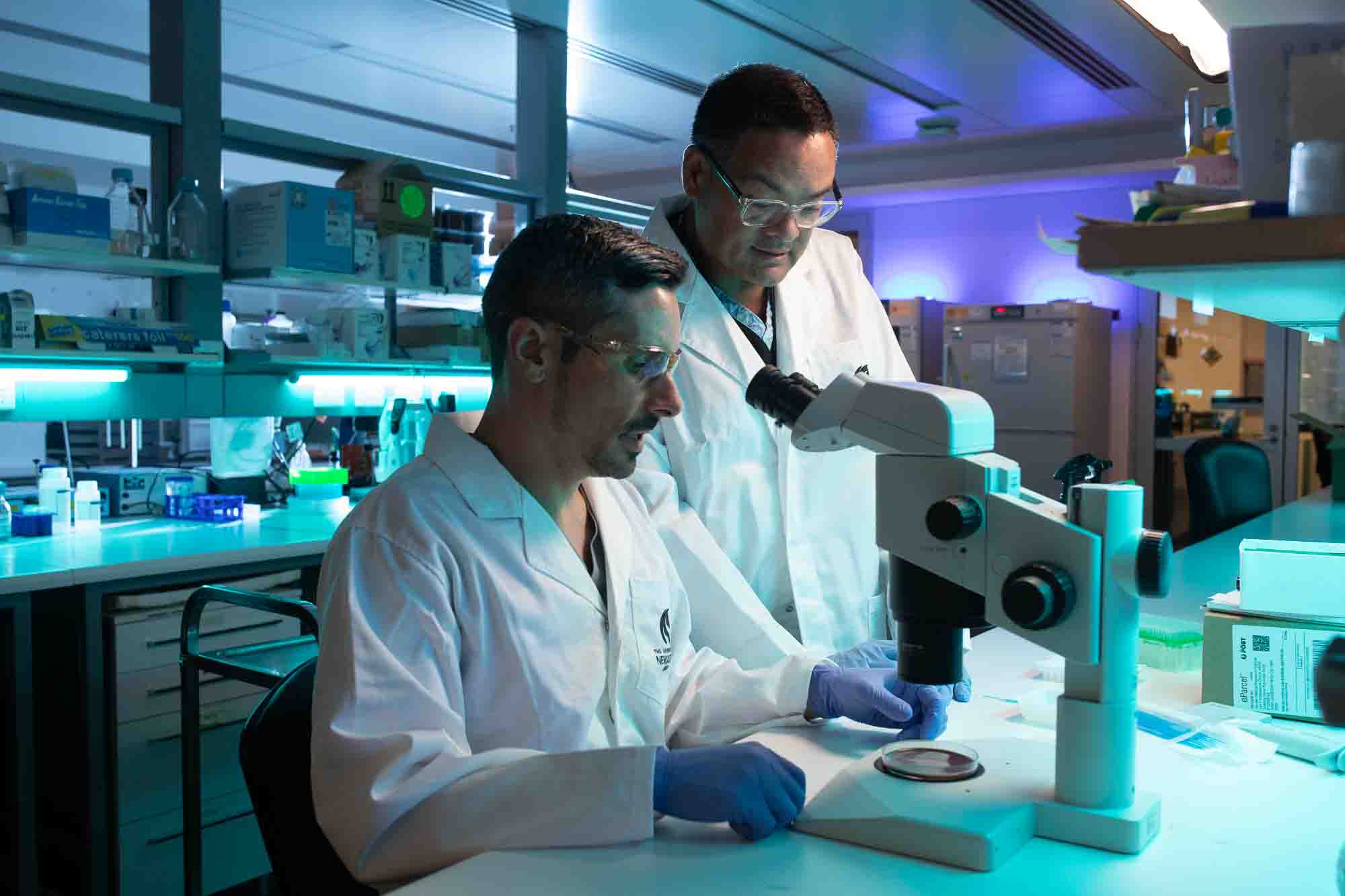
Co-researcher and proud Wailwan man, University of Newcastle Dr Guy Cameron, of HMRI’s Immune Health program, said the Centre’s approach would prioritise capacity building, while improving patient journeys for families and communities.
“My passion lies in ensuring that all kids, particularly Aboriginal and Torres Strait Islander children, have access to improved healthcare and treatments for otitis media, helping them access the care and treatment they need to thrive.
“By bridging the gap between discovery and impact, we aim to deliver sustainable and life-changing outcomes, and advance ear health equity through our strong partnerships and shared decision-making.”
The Aboriginal-led CRE comprises three integrated themes:
- Establish a national framework for detecting and understanding otitis media pathology, including standardised sample and data collection aligned with Indigenous Cultural and Intellectual Property protocols.
- Co-design community-driven strategies to improve engagement with prevention and treatment, including clinical trials, vaccine strategies, and culturally responsive care guidelines.
- Evaluate and redesign ear and hearing health service delivery and workforce models for scalability and real-world suitability, including training pipelines and policy implementation.
Professor Kong said otitis media remained one of the most preventable, and most persistently unequal, health conditions facing Aboriginal and Torres Strait Islander children today.
“This gap is not inevitable, it is the product of underfunded services, fragmented systems, and a health system too often built without Aboriginal and Torres Strait Islander leadership at its centre.
“This work will significantly advance ear health equity among Aboriginal and Torres Strait Islander children and improve otitis media outcomes for all Australian children through more robust scientific systems, community engagement led from within, and evidence-based service delivery.
“Our job is trying to make sure that every child born in Australia, no matter who you are, can get the hearing resources they need to hear and learn appropriately, and that shouldn't be predicated on their postcode or whether they're black,” Professor Kong said.
* Chronic and recurrent middle ear infections lead to the condition called otitis media that causes pus to build up behind the eardrum, causing pain and often deafness in kids.
Contact
- Media and Communications Specialist Carmen Swadling
- Phone: 0407 935 735
- Email: carmen.swadling@newcastle.edu.au
Related news
- Showing our support for the Koori Knockout
- University of Newcastle engineering leader awarded prestigious Engineers Australia Fellowship
- Opinion: HSC students be ambitious, but also kind to yourself
- Vice-Chancellor Professor Alex Zelinsky to retire in February 2027
- Local sport gets a boost with new multisport facility honouring Mark and Kirralee Hughes
Aligned with the United Nations Sustainable Development Goals

The University of Newcastle acknowledges the traditional custodians of the lands within our footprint areas: Awabakal, Darkinjung, Biripai, Worimi, Wonnarua, and Eora Nations. We also pay respect to the wisdom of our Elders past and present.