Wukul Yabang Recognised as Finalist in the Indigenous Governance Awards
Wukul Yabang Aboriginal Health Research Community Panel has been named as a finalist in the 2026 Indigenous Governance Awards for embedding a Community Governance model that empowers local Aboriginal communities to shape the Aboriginal Torres Strait Islander research agenda.
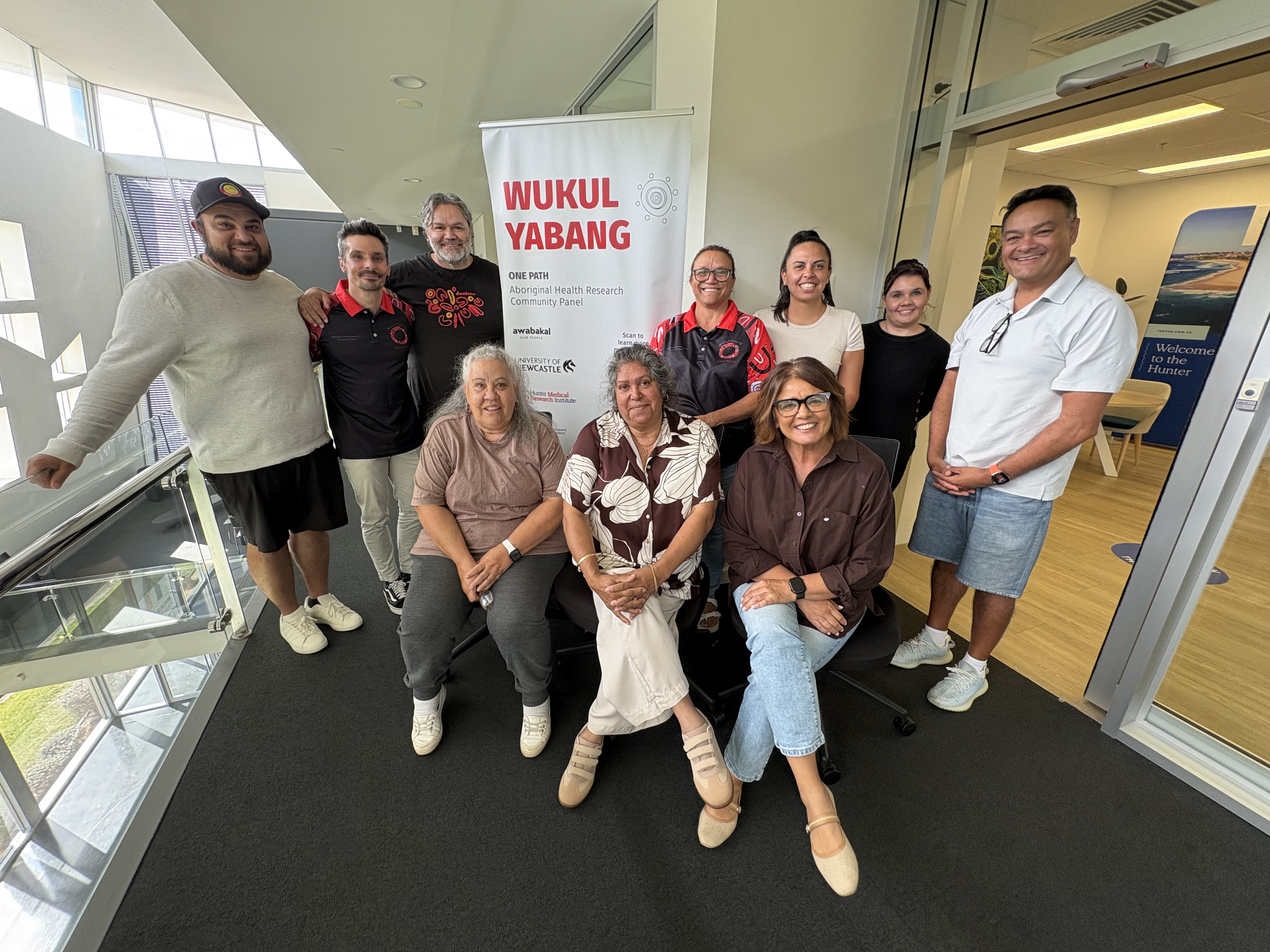
Wukul Yabang – meaning ‘One Path’ in the Awabakal language - forms part of Research Our Way – a collaborative strategy between the University of Newcastle, Awabakal Limited, the Hunter Medical Research Institute (HMRI) and the Hunter New England Local Health District.
Recognised for its revolutionary approach placing Aboriginal cultural authority, sovereignty, community values and collective decision-making at the heart of governance, Wukul Yabang was announced as a finalist for the Indigenous Governance Awards.
Gamilaraay women, Yeena Thompson, Aboriginal Health Research Partner at the University of Newcastle, reflected on the announcement.
“We’re really proud of the work we’ve been doing in the Hunter New England Aboriginal communities, this has been a major collaboration and a grassroot initiative, this recognition confirms that our efforts are making a real difference,” Ms Thompson said.
“The Research Our Way framework is being shared more broadly, enabling more Aboriginal and Torres Strait Islander communities to have a voice in shaping research”.
The Indigenous Governance Awards recognise the success of community-led Indigenous governance practices as part of Australia's National Reconciliation journey. The awards are held every two years; this year’s winners will be announced at the Indigenous Governance Awards 2026 Gala Dinner on Thursday 5 November in Tarntanya/Adelaide.
Early discussions in 2021 between Aboriginal leaders and medical bodies across the Hunter and New England region highlighted the need to transform Aboriginal health research. This led to the establishment of Wukul Yabang in 2023, providing a more holistic approach to Aboriginal and Torres Strait Islander health and research.
Now in its fourth year, Wukul Yabang, has provided oversight for more than 130 research projects, offering cultural, ethical, and methodological guidance to ensure research is conducted respectfully, safely, and in ways that deliver meaningful benefits for researchers and Aboriginal people and communities across the Hunter New England region.
Dr Elissa Elvidge, Research Fellow at the University of Newcastle, credits Wukul Yabang for its direct contribution towards her funding success. After incorporating the group’s feedback into two Medical Research Future Fund applications, Dr Elvidge secured more than $10 million to develop a culturally safe clinical model of care and consumer-led engagement processes for Aboriginal and Torres Strait Islander women with asthma during pregnancy.
“Wukul Yabang has been transformational in shaping the direction, integrity, quality and impact of our research program. The Panel’s expert guidance has been central to every stage of development — from early concept design through to drafting protocols and securing competitive funding. The breadth of professional expertise, deep cultural knowledge and lived experience have ensured that each project is grounded in the priorities, values and expectations of Aboriginal communities,” Dr Elvidge said.
Research Our Way is reshaping the way health research is being conducted with and for Aboriginal and Torres Strait Islander people. By creating meaningful connection between community and the researchers, it enables more effective health outcomes and strengthens research translation through strong partnerships and shared knowledge.
Wiradjuri man and University of Newcastle Deputy Vice Chancellor (Engagement and Equity), Nathan Towney, said Aboriginal and Torres Strait Islander communities had historically been more likely to be research subjects than centred in the co-design process.
“This new structure brings Aboriginal and Torres Strait Islander people into the research process in a meaningful way – ensuring our communities are actively included. It creates opportunities for our people to lead in research and to shape how that leadership looks. When we lead, we bring a deeper understanding of the cultural nuance within our community, which ultimately drives more meaningful outcomes,” Mr Towney said.
While ‘Research Our Way’ has been designed to suit the needs of the Hunter and New England regions, the founding organisations aspire for the approach to be adopted and rolled out suitably across the country.
HMRI is a partnership between the University of Newcastle, Hunter New England Health and the community.
Contact
- Rickelle Peris
- Phone: 40553432
- Email: Rickelle.Peris@newcastle.edu.au
Related news
- Vice-Chancellor Professor Alex Zelinsky to retire in February 2027
- Local sport gets a boost with new multisport facility honouring Mark and Kirralee Hughes
- Opinion: AI is our way back and investment's our future
- Tiny ocean microbe unlocks new clue to Earth's carbon cycle
- Every hour counts: Global study links assessment delays to higher risk of burst appendix
Aligned with the United Nations Sustainable Development Goals
The University of Newcastle acknowledges the traditional custodians of the lands within our footprint areas: Awabakal, Darkinjung, Biripai, Worimi, Wonnarua, and Eora Nations. We also pay respect to the wisdom of our Elders past and present.