Studying science in a region shaped for fieldwork
From pristine estuaries to urban developments, major waterways and coastal zones, studying science at the University of Newcastle means learning directly from the world around us. This proximity to such varied environments shapes how science is taught and learned from the very beginning of a degree.
Learning across diverse environments
Fieldwork is embedded in Science programs from day one, with students exploring the rich environmental diversity the Hunter region and beyond has to offer alongside their classroom and laboratory learning. Exposure to such varied landscapes allows students to engage with environmental systems in context, building understanding through hands‑on experiences across different settings
“From coasts to catchments, rivers to ranges, our students learn science by doing it”, said Associate Professors Hannah Power and Danielle Verdon-Kidd from Earth Sciences. “They observe real systems, identify critical challenges, ask real questions, and apply their knowledge in the very environments they will one day help to manage and protect.”
What fieldwork looks like in practice
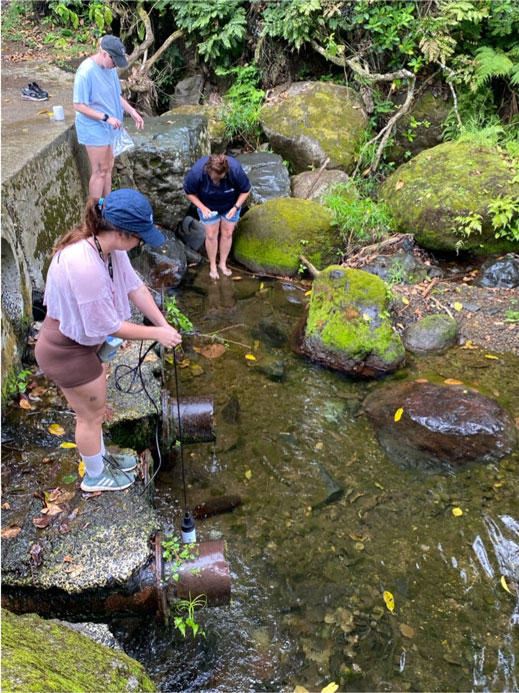 Rather than observing from a distance, students actively investigate natural systems as they change and interact. They collect and analyse data, work collaboratively in teams, and develop the skills needed to observe, interpret, and respond to real‑world complexity.
The experiences span disciplines and may include mapping geological features to understand landscape formation, observing animal behaviour in natural habitats, or analysing waterways - sometimes from within the environment itself.
Working with real data also introduces students to the unpredictability of scientific practice. Changing weather, equipment limitations, or unexpected results often disrupt initial plans, making adaptability an essential part of the learning process.
Students are also introduced to industry‑standard techniques and technologies used by practising scientists, gaining insight into how scientific knowledge is generated and applied beyond the university. As they progress through their degree, fieldwork becomes increasingly immersive, with extended field trips allowing up to a week on site.
Beyond local environments, some students also take part in international field experiences, such as catchment-to-coast projects in the Cook Islands, where they work alongside government agencies and community organisations.
Learning in action: Coral reef fieldwork
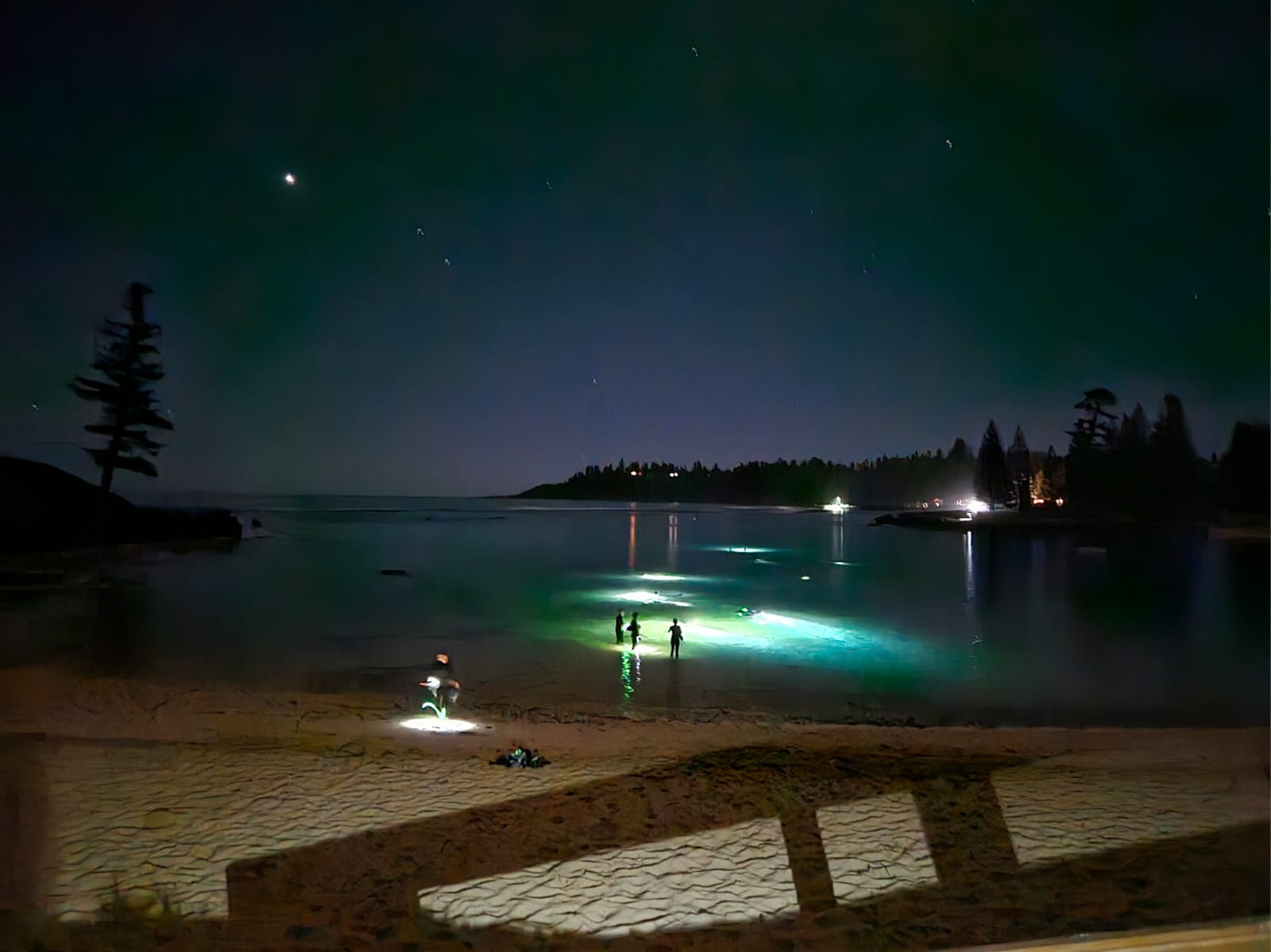 One example of this immersive approach is the coral reef fieldwork course in the Bachelor of Coastal and Marine Science, where students design and conduct their own research projects in a living reef environment.
After preparing through lectures and research planning, students travel in small groups to remote field locations such as Norfolk Island, where they collect and analyse data on site. The experience provides first‑hand insight into the ecological complexity of coral reef systems, while also exposing students to the practical and professional considerations of conducting scientific research outside a controlled laboratory setting.
Students consistently describe this fieldwork as a defining part of the degree. One student reflected, “The best part of the course was the hands-on fieldwork at Norfolk Island. It was a great opportunity to apply theory to real reef research and gain practical experience in data collection, analysis and teamwork”.
Drawn to learning in the field
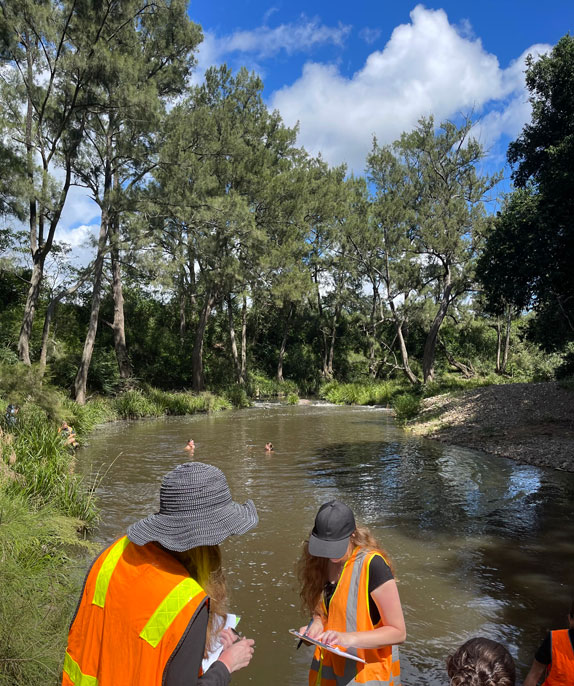 For many students, the opportunity to learn in real environments is a key reason for choosing the University of Newcastle. Bachelor of Science (Earth Science) student Madeleine Hatfield sought a degree that offered hands‑on learning beyond the classroom.
“When I left high school, I wasn’t sure exactly what I wanted to study, but I knew that I wanted to spend most of my time outside of the classroom, gaining hands-on experience in the field. Field trips provide students with the opportunity to deepen their understanding of theoretical content, with the addition of real-world perspective.”
Studying in Newcastle and across the Hunter region has shaped her academic journey. “The chance to explore this beautiful part of the world and help protect it as a part of my degree has reinforced my decision to study Earth Science and Biodiversity and Conservation.”
Preparing students for professional practice
 Fieldwork provides students with a realistic insight into what it means to work as a scientist. Working across a single site often requires students to draw on geology, ecology, chemistry, and data analysis simultaneously, fostering the interdisciplinary thinking essential in professional practice.
Through these experiences, students develop the ability to work collaboratively, adapt to changing conditions, and solve problems in real time - building professional judgement and confidence well before graduation. In later-year courses like MARI3300 - Integrated Coastal Ecosystems, they increasingly take the lead in designing and managing their own field projects – capabilities not easily replicated in a lecture theatre.
For Bachelor of Science (Earth Science) student Sarafina Laird, fieldwork has been central to building industry-relevant skills and securing employment.
“Fieldwork has given me confidence”, she said. “Being able to include these experiences and practical skills on my resume, and then apply them in real work environments, has made a huge difference. I now know how to sketch, map, survey, and collect and analyse samples. Those skills have helped me gain employment in the field before I even graduated.”
Together, these experiences show how studying science in real environments can build both confidence and capability, preparing graduates for meaningful scientific careers long before graduation.
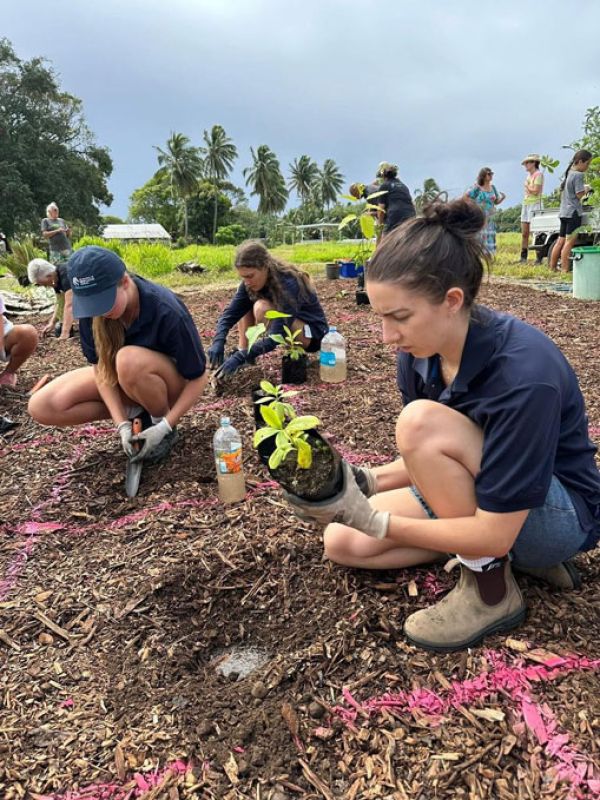
Students planting the first “tiny forest” in the pacific (Rarotonga, Cook Islands) as part of a New Columbo Plan-funded trip “catchment to coast”. Credit: Associate Professor Megan Huggett
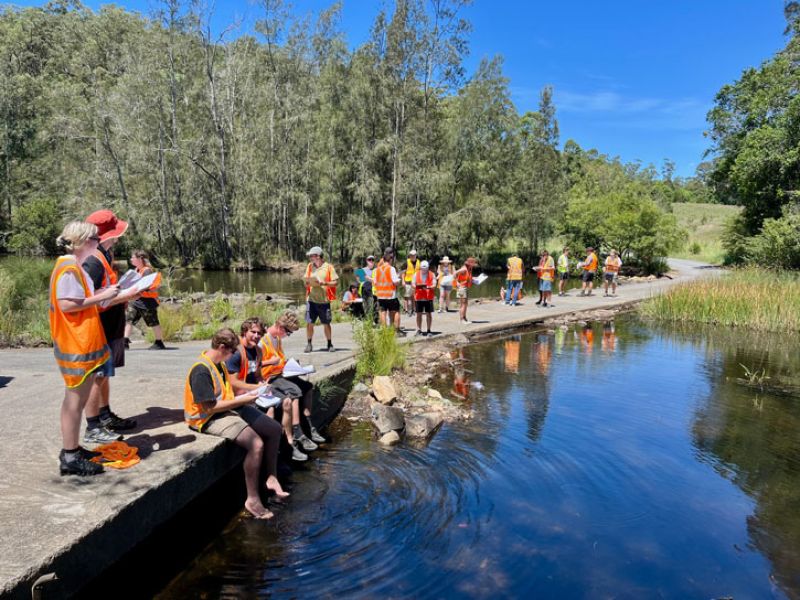
Students measure stream geomorphology and follow the journey of sediment down the Coolongolook River
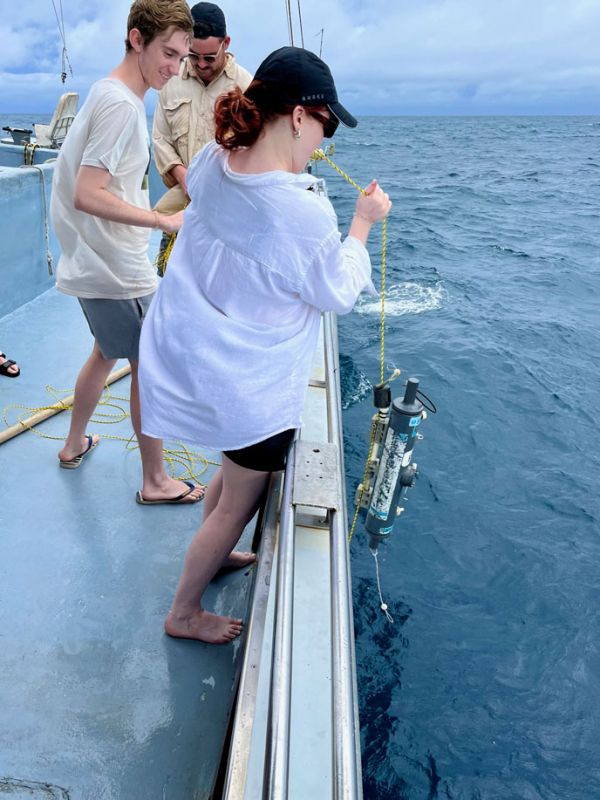
Measuring ocean temperature and salinity using a Niskin bottle in the coastal waters of Upolu, Samoa
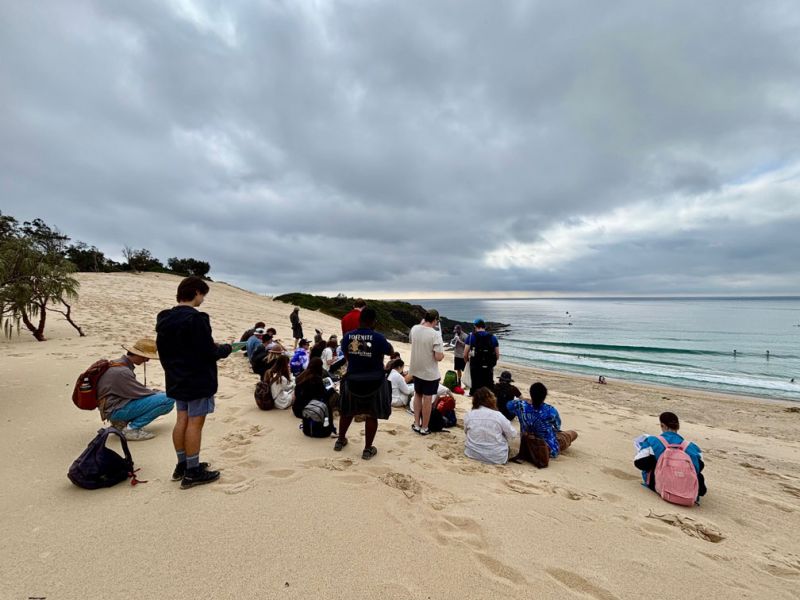
Observing sediment transport and connectivity between beaches and dunes at One Mile Beach, Foster
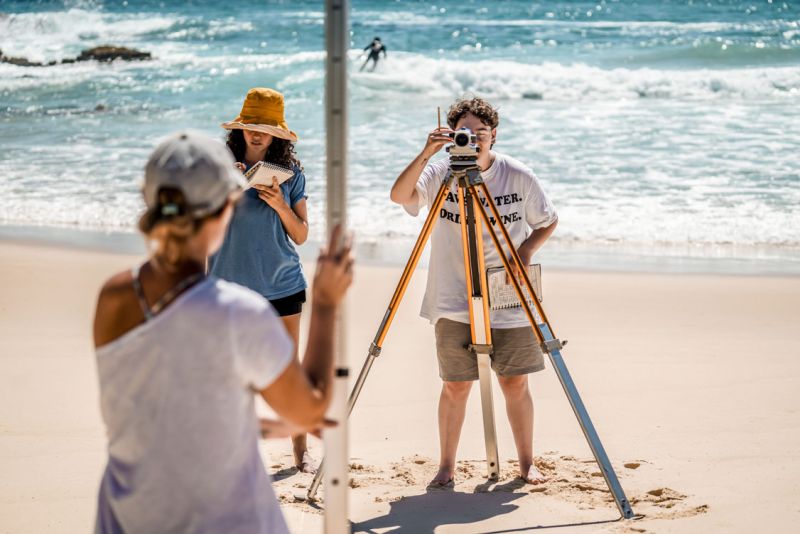
GEOS3220 students learn with surveying equipment on the beach. Credit: Alicia Watt
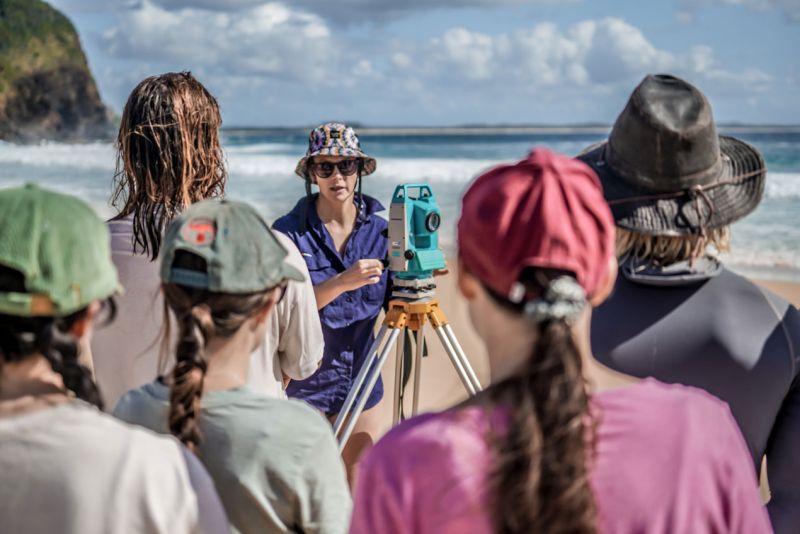
GEOS3220 students learn on the beach. Credit: Alicia Watt
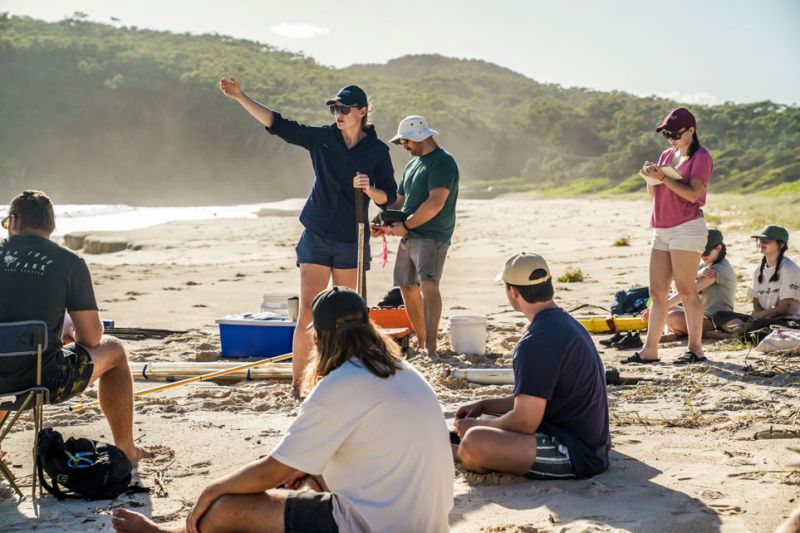
GEOS3220 students learn on the beach. Credit: Alicia Watt
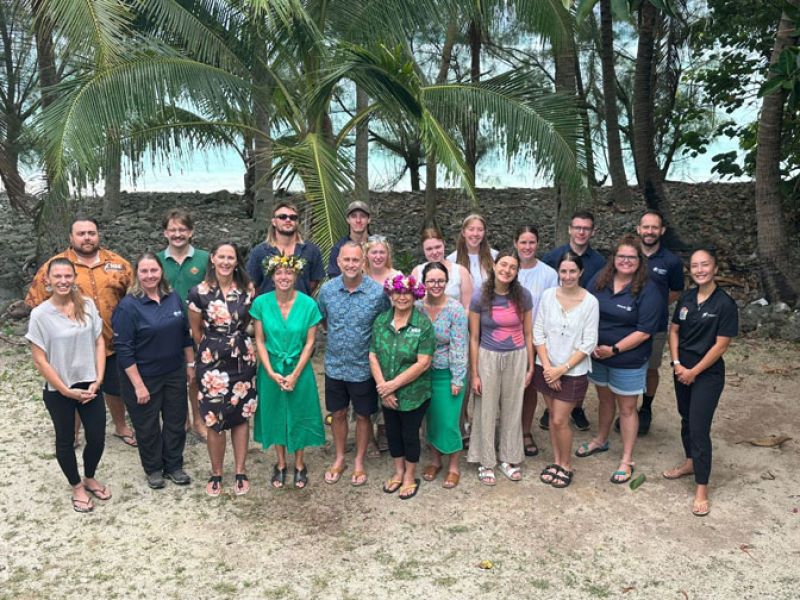
Staff and students meeting with the Australian Royal High Commissioner to the Cook Islands, Ms Susannah Hodson, and staff from the National Environment Service (NES), as part of a New Colombo Plan-funded trip “catchment to coast” to Rarotonga. Credit: Professor Troy Gaston
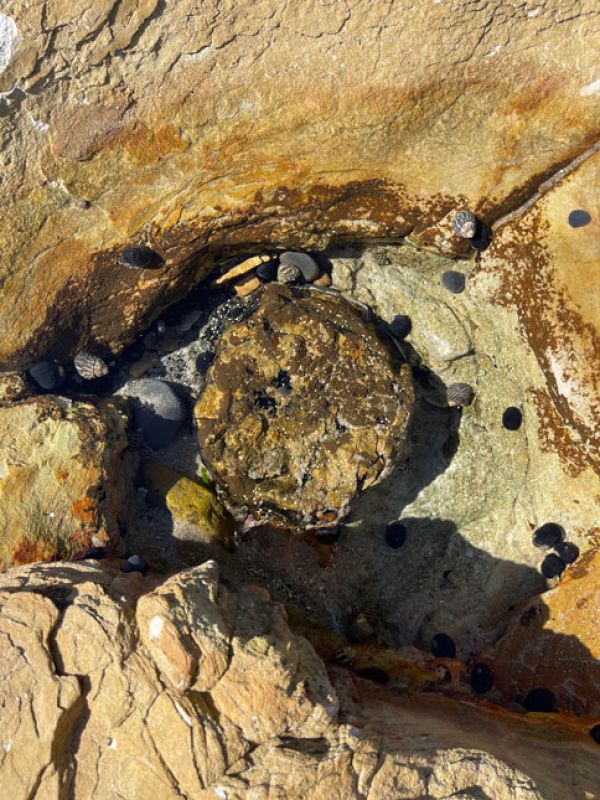
A rock pool with small creatures
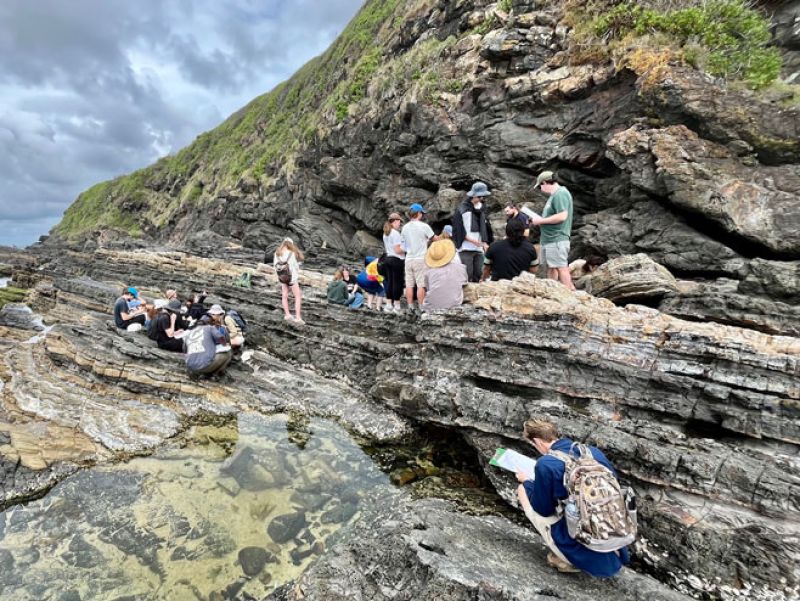
Observing ancient marine seabed environments preserved in the coastal geology at Blueys Beach, Pacific Palms
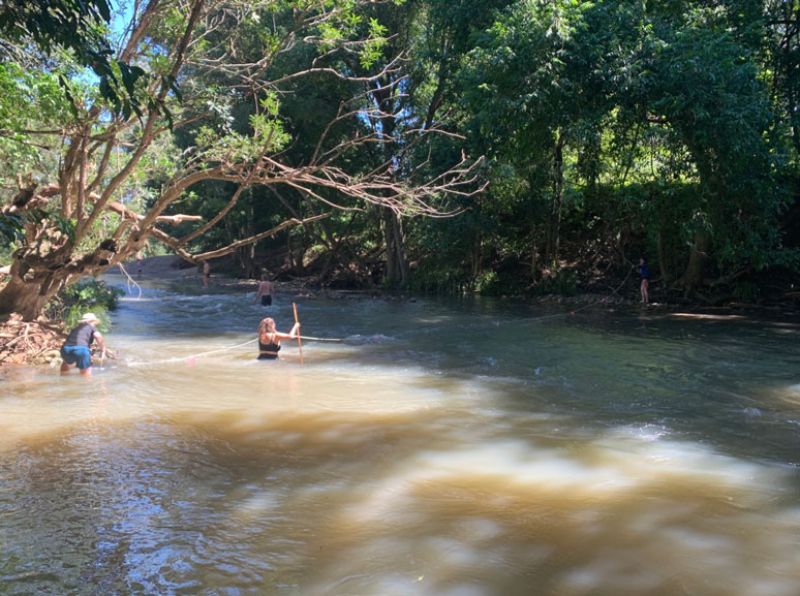
Students collect data in a waterway. Credit: Sarafina Laird
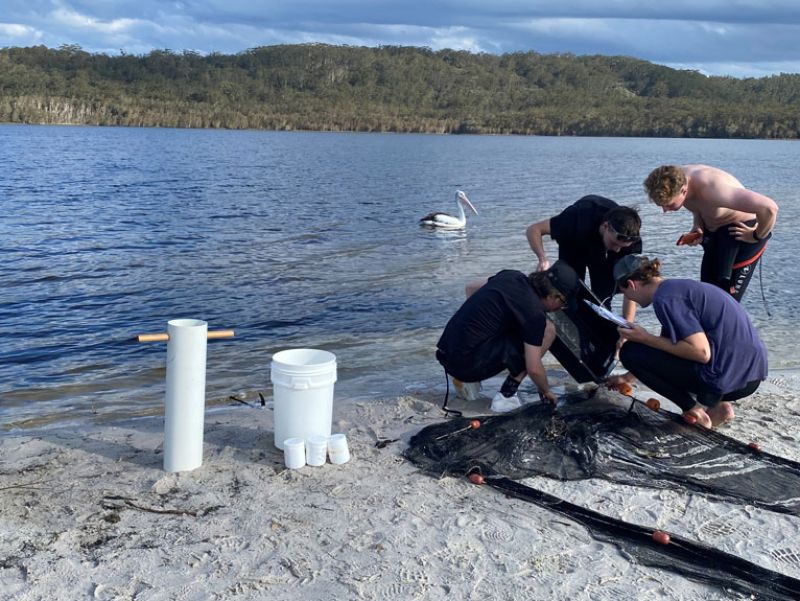
Students undertaking fieldwork at Smiths Lake, NSW, as part of the undergraduate course MARI330 Integrated Coastal Ecosystems. Students get the opportunity to design, implement, and report on an environmentally relevant project. Credit: Professor Troy Gaston
Related news
- Global evidence reveals the scale of humanity’s imprint in Earth’s geology
- Where Culture meets STEM: Empowering future leaders in Wadeye
- Showing our support for the Koori Knockout
- University of Newcastle engineering leader awarded prestigious Engineers Australia Fellowship
- Opinion: HSC students be ambitious, but also kind to yourself
Aligned with the United Nations Sustainable Development Goals
The University of Newcastle acknowledges the traditional custodians of the lands within our footprint areas: Awabakal, Darkinjung, Biripai, Worimi, Wonnarua, and Eora Nations. We also pay respect to the wisdom of our Elders past and present.