University PhD Candidate Amplifies Youth Voice in Regional Transition Talks
University of Newcastle emerging academic Myles Egan helped bring youth perspectives to the forefront of regional decision-making last week, joining former Prime Minister Malcolm Turnbull and senior industry leaders at the Committee for the Hunter’s inaugural Hunter Agenda 2026 forum.

PhD candidate and casual academic Myles Egan participated in the panel through his role on the Committee for the Hunter’s youth committee. A graduate of the University of Newcastle with a Bachelor of Development Studies (Honours) and Bachelor of Business, Myles brought a strong foundation in development, regional studies and sustainability, enabling him to contribute research‑informed insights to discussions shaping the Hunter’s economic and social future.
How geography shapes youth opportunity
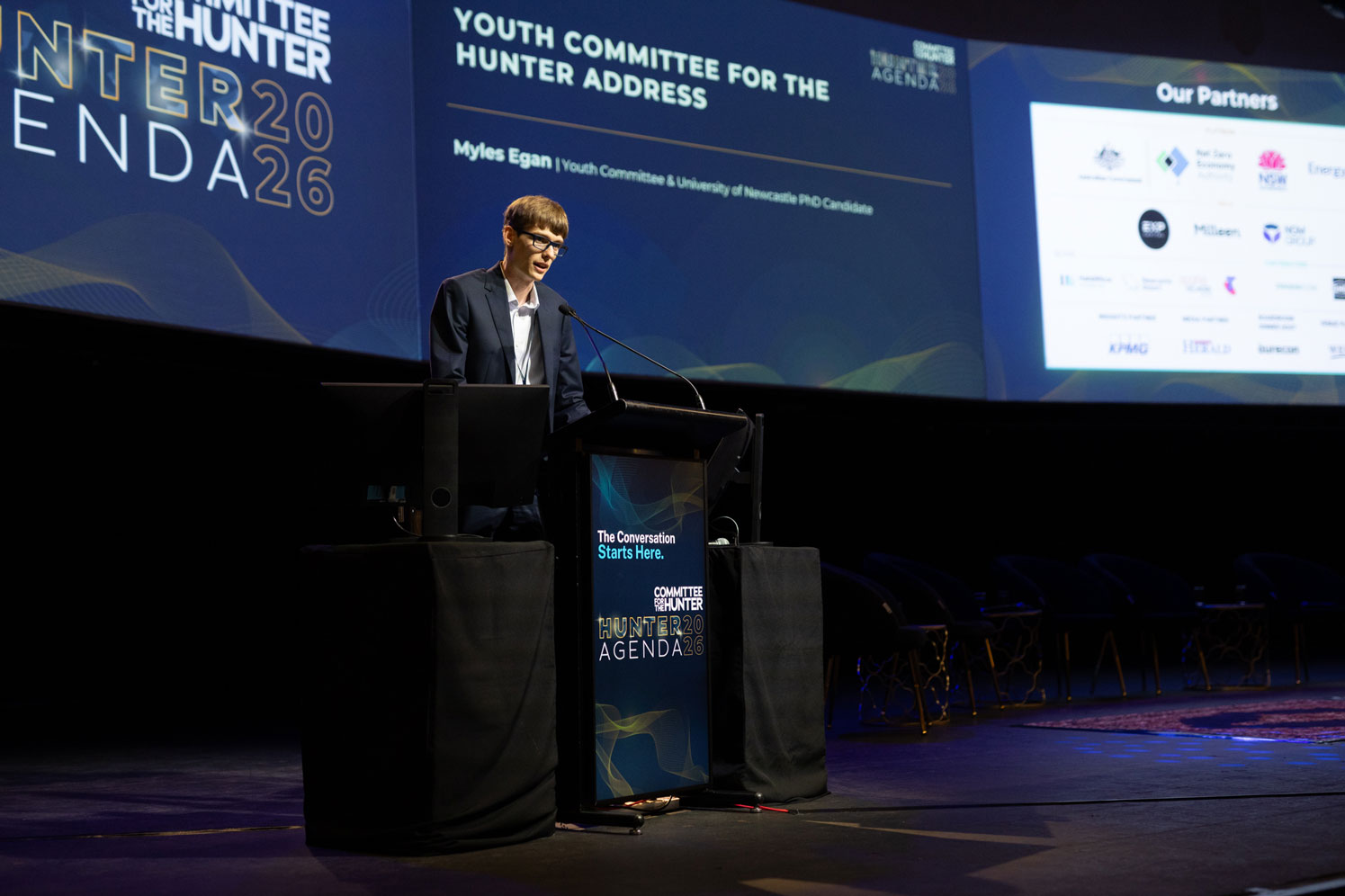
Drawing on his research and his experience living in the Upper Hunter, Myles spoke about how young people in the Upper Hunter are experiencing the region's economic shift away from traditional industries.
“Many young people who leave the Upper Hunter for study or work can see a place for themselves in emerging industries and higher education,” Myles said.
“But many who remain in the region struggle to see where they fit in this new economic landscape. Their sense of identity is strongly shaped by the Hunter's industrial heritage, and that must be recognised as we plan for the future.”
This divide is reflected in recent findings from the Committee for the Hunter’s Youth Voice 2025 report, which shows that only 14 per cent of young people in the Upper Hunter believe the region will be a better place to live and work in 20 years, compared with far higher levels of optimism among young people in Newcastle and Lake Macquarie.
Supporting the region through research and advocacy
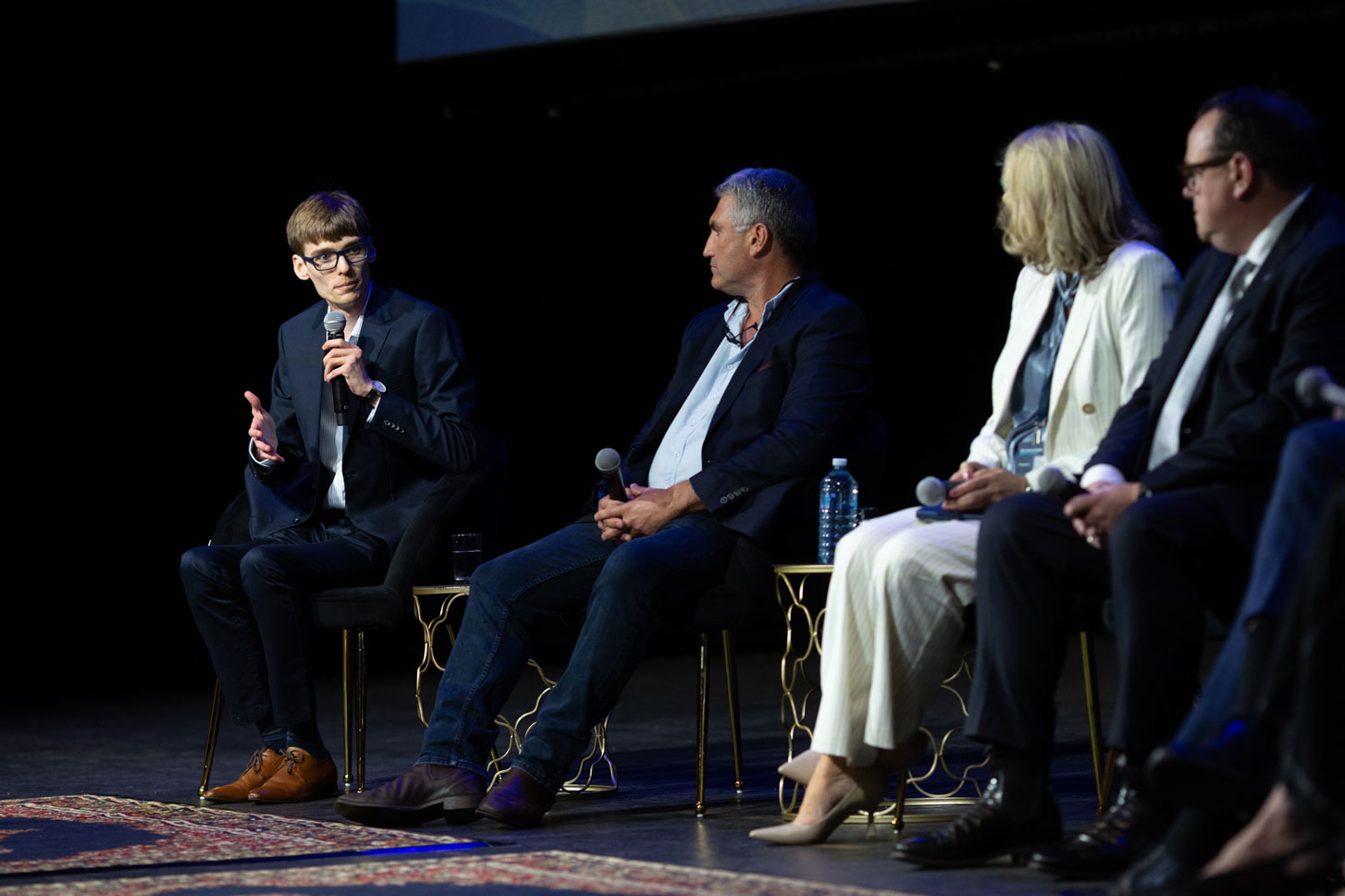
As both a researcher and a representative on the youth advisory group, Myles ensured the perspectives of young people were heard in a forum that will influence decisions shaping the region’s economic and social landscape. His contribution reinforces the important role that University of Newcastle academics play in supporting evidence-based conversations about the future of the Hunter.
“This transition is not just about technology and innovation. It is about people,” he said. “As the Hunter shifts from an economy built on hard physical work to one driven by new industries, we must ensure no young person feels forgotten or left behind.”
The Youth Voice 2025 report highlights the significance of this work. Three quarters of young people across the Hunter say they are not aware of career opportunities in clean energy and Net Zero, even though these industries will play a central role in the region’s transition. This lack of awareness limits young people’s ability to participate in emerging industries and contributes to the uneven optimism seen across the region.
Through programs such as Development Studies, Geography and Environmental Studies and other region‑focused disciplines, the University is helping young people build the knowledge and skills needed to navigate the region’s transition. Academic contributions like Myles’ ensure these programs are complemented by strong youth voice and genuine participation in regional planning, supporting a more equitable transition and fostering the next generation of leaders who will guide the Hunter’s future.
Related news
Aligned with the United Nations Sustainable Development Goals
The University of Newcastle acknowledges the traditional custodians of the lands within our footprint areas: Awabakal, Darkinjung, Biripai, Worimi, Wonnarua, and Eora Nations. We also pay respect to the wisdom of our Elders past and present.