World-leading MRI upgrade boosts research capability at HMRI Imaging Centre
Hunter Medical Research Institute (HMRI) has unveiled a major upgrade to imaging capabilities with the installation of a new Siemens Healthineers MAGNETOM Cima.X Fit MRI scanner at the Hunter Medical Research Institute Imaging Centre, strengthening the region's capacity for world-class medical research.
HMRI Chief Executive Officer and Institute Director, Professor Frances Kay, said the upgrade would transform what researchers could achieve in the region, and what the community can expect from HMRI-affiliated research.
"This upgrade at the HMRI Imaging Centre will make a real difference for the people in our community who generously take part in research, and for the teams working every day to take healthy further," Professor Kay said.
"Faster scans, clearer images and advanced AI analysis mean we can learn more in less time and ask better questions, all while keeping people's experience at the heart of what we do, right here in the Hunter New England region."
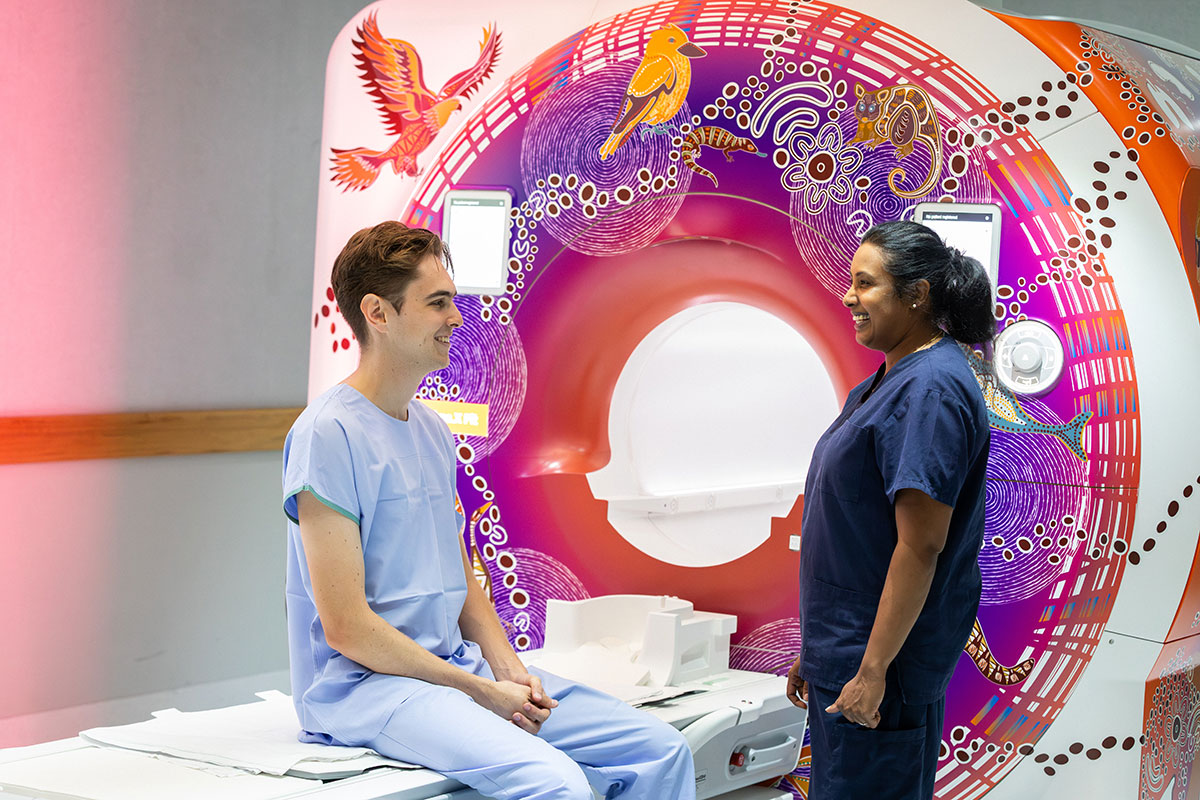 The new scanner is one of the most advanced 3T whole-body MRI systems available globally, delivering faster, higher resolution scans. This reduces the time participants spend in the scanner while producing sharper, more detailed images, helping researchers and clinicians see deeper into the human body, including at the microstructural level.
The upgrade will strengthen research across a wide range of health priorities, including brain cancer, dementia, neurological disease and chronic conditions, with a focus on Indigenous health and Indigenous-led research. It will support earlier detection and more precise characterisation of disease, helping accelerate translation from research to real-world care.
Its capabilities include advanced imaging contrasts, AI-powered image reconstruction and processing, and an innovation platform that supports secure collaboration with imaging centres across Australia, enabling research beyond standard MRI techniques, and accelerating discovery and clinical translation.
The MRI asset is owned by the University of Newcastle and operated by HMRI. The upgrade has been jointly funded by HMRI, the Mark Hughes Foundation, the University of Newcastle, and the National Imaging Facility (NIF) via the Australian Government Department of Education (NCRIS), with HMRI providing ongoing operational support for the facility.
Chief Executive Officer of the National Imaging Facility, Professor Wojtek Goscinski, said the scanner joined NIF’s national network of instruments and expertise, strengthening Australia's imaging infrastructure, which is critical to medical research.
"The Siemens Healthineers MAGNETOM Cima.X Fit is one of the most advanced MRI systems available and significantly enhances Australia's imaging capability," Professor Goscinski said.
"By supporting upgrades like this at the HMRI Imaging Centre, the National Imaging Facility is helping researchers across the country access world-class technology and translate their innovative ideas into practice that benefits Australians’ health."
Siemens Healthineers Managing Director, Michael Shaw, said the milestone marked a major step forward for healthcare innovation in regional Australia.
"Placing advanced medical technology in regional Australia is critical to shaping the future of healthcare. At Siemens Healthineers, we are immensely proud to see our most powerful MRI system, the MAGNETOM Cima.X Fit, installed at the HMRI Imaging Centre, where it will support world-class, community-driven research and enable discoveries that will help deliver meaningful benefits for patients locally, nationally, and beyond."
University of Newcastle Vice-Chancellor, Professor Alex Zelinsky AO, said the HMRI Imaging Centre reflected the strength of long-standing partnerships.
"The HMRI Imaging Centre demonstrates the power of collaboration between the University of Newcastle, HMRI and our funding partners," Professor Zelinsky said.
"This upgrade ensures researchers and students have access to cutting-edge imaging technology that supports discovery, innovation and real-world impact."
Mark Hughes OAM, Founder of the Mark Hughes Foundation, said advanced imaging was critical to accelerating progress in brain cancer research.
"High-quality imaging is essential for understanding how diseases like brain cancer develop and respond to treatment, " Mr Hughes said. "It allows researchers and clinicians to see more clearly, diagnose earlier and track how treatments are working in real time.
"We’re incredibly proud that the Vietnam to Cambodia trek in 2024 raised over $400,000 for MHF. Those funds have directly contributed to this MRI upgrade, helping ensure the HMRI Imaging Centre is equipped with world-class technology that will drive better outcomes for patients and families facing brain cancer. "
Completion of the upgrade was marked with The Story of Nakiliko Malang: Seeing Together, an event centred on First Nations culture, knowledge and connection. The gathering included a Welcome to Country and Smoking Ceremony, and the unveiling of a permanent artwork by local Aboriginal artist Saretta Fielding, now embedded within the HMRI Imaging Centre as a symbol of shared understanding, community and seeing health and research together.
Related news
- Opinion: HSC students be ambitious, but also kind to yourself
- Vice-Chancellor Professor Alex Zelinsky to retire in February 2027
- Local sport gets a boost with new multisport facility honouring Mark and Kirralee Hughes
- Opinion: AI is our way back and investment's our future
- Tiny ocean microbe unlocks new clue to Earth's carbon cycle
Aligned with the United Nations Sustainable Development Goals


The University of Newcastle acknowledges the traditional custodians of the lands within our footprint areas: Awabakal, Darkinjung, Biripai, Worimi, Wonnarua, and Eora Nations. We also pay respect to the wisdom of our Elders past and present.