HMRI celebrates excellence in research and innovation at 2025 awards
Hunter Medical Research Institute (HMRI) recognised the outstanding achievements of its research community at the 2025 HMRI Awards, held at Newcastle City Hall on Friday evening.
The annual event brought together researchers, clinicians, partners and supporters to acknowledge exceptional contributions to transforming the health and wellbeing of the Hunter and New England community.

HMRI Institute Director and CEO, Professor Frances Kay, congratulated the finalists and award recipients for their leadership and commitment to advancing medical research.
“Our researchers and clinicians continue to push the boundaries of knowledge to address some of the most significant health challenges of our time,” Professor Kay said. “These awards give us an opportunity to recognise that work and to acknowledge the dedication that drives every study, every innovation and every breakthrough.”
Professor Kay also highlighted the value of collaboration across the region.
“HMRI’s strong partnerships with the University of Newcastle, Hunter New England Local Health District, and our community are central to everything we do,” she said. “We are also deeply grateful to our supporters, whose contributions make it possible for our researchers to turn ideas into impact.”
2025 HMRI Research Excellence Awards Winners
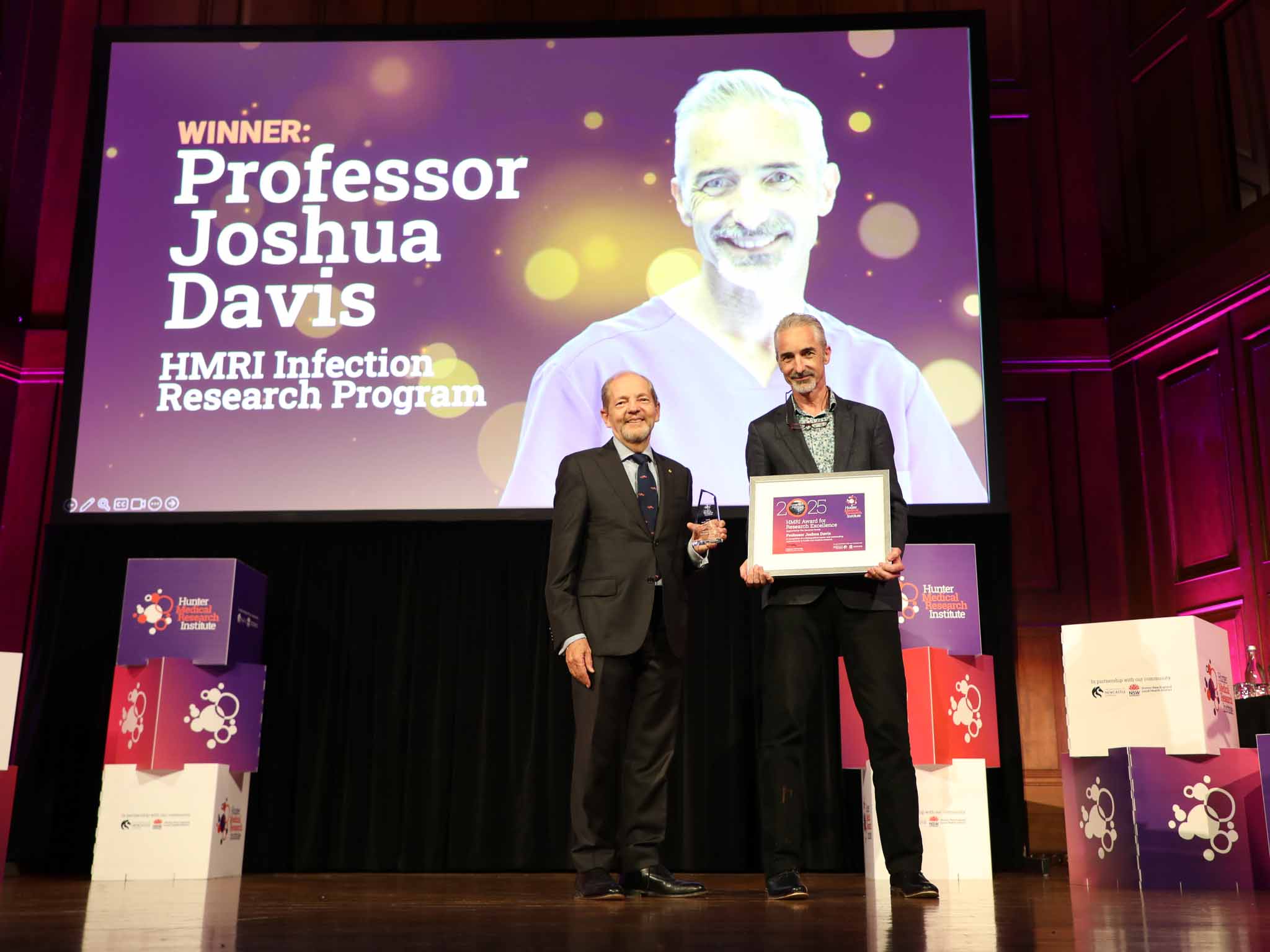
HMRI Award for Research Excellence Supported by the Cameron family
Professor Joshua Davis, Hunter New England Local Health District and University of Newcastle, from HMRI’s Infection Research Program
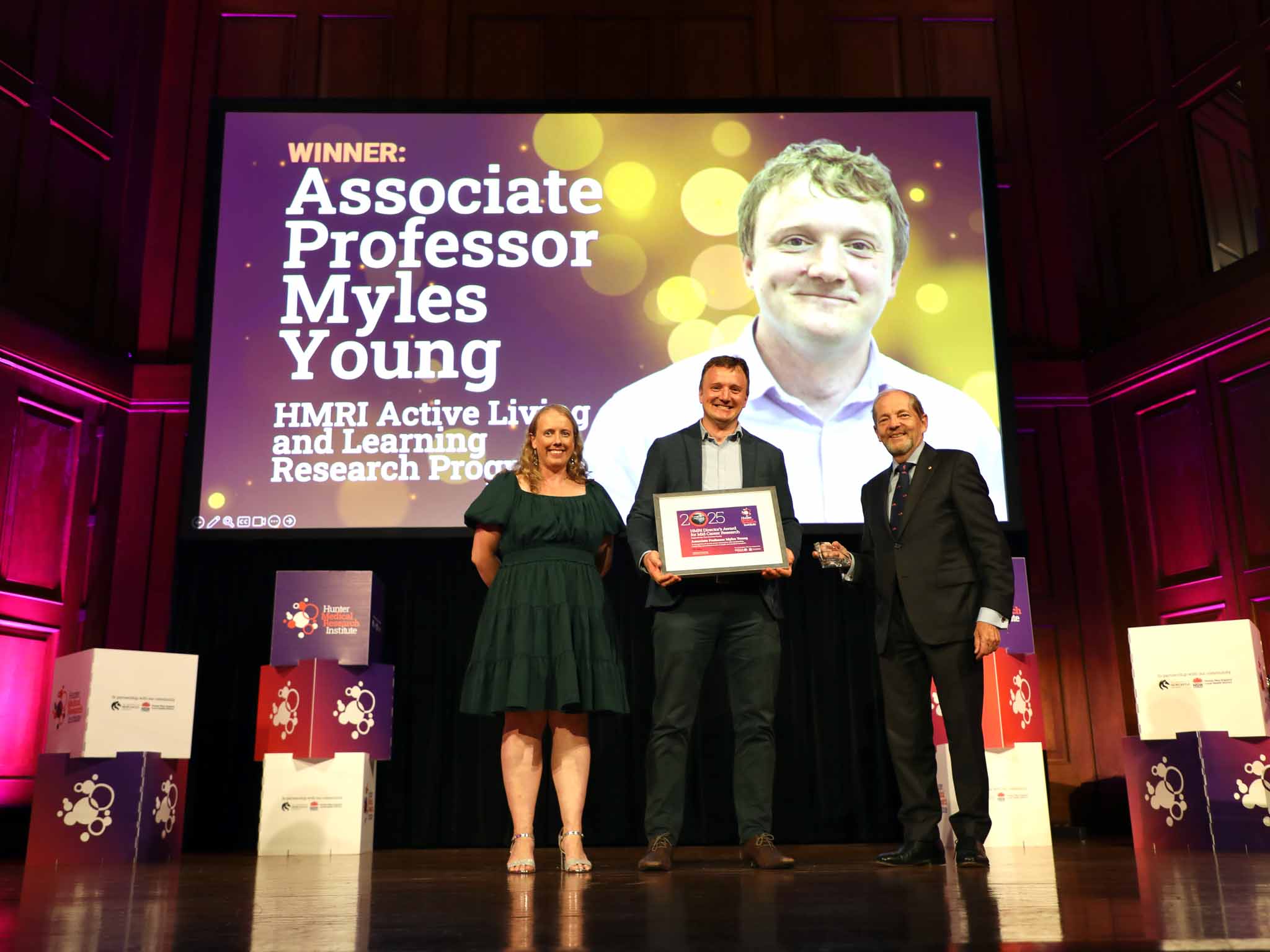
HMRI Director’s Award for Mid-Career Research Supported by the Cameron family
Associate Professor Myles Young, University of Newcastle, from HMRI’s Active Living and Learning Research Program
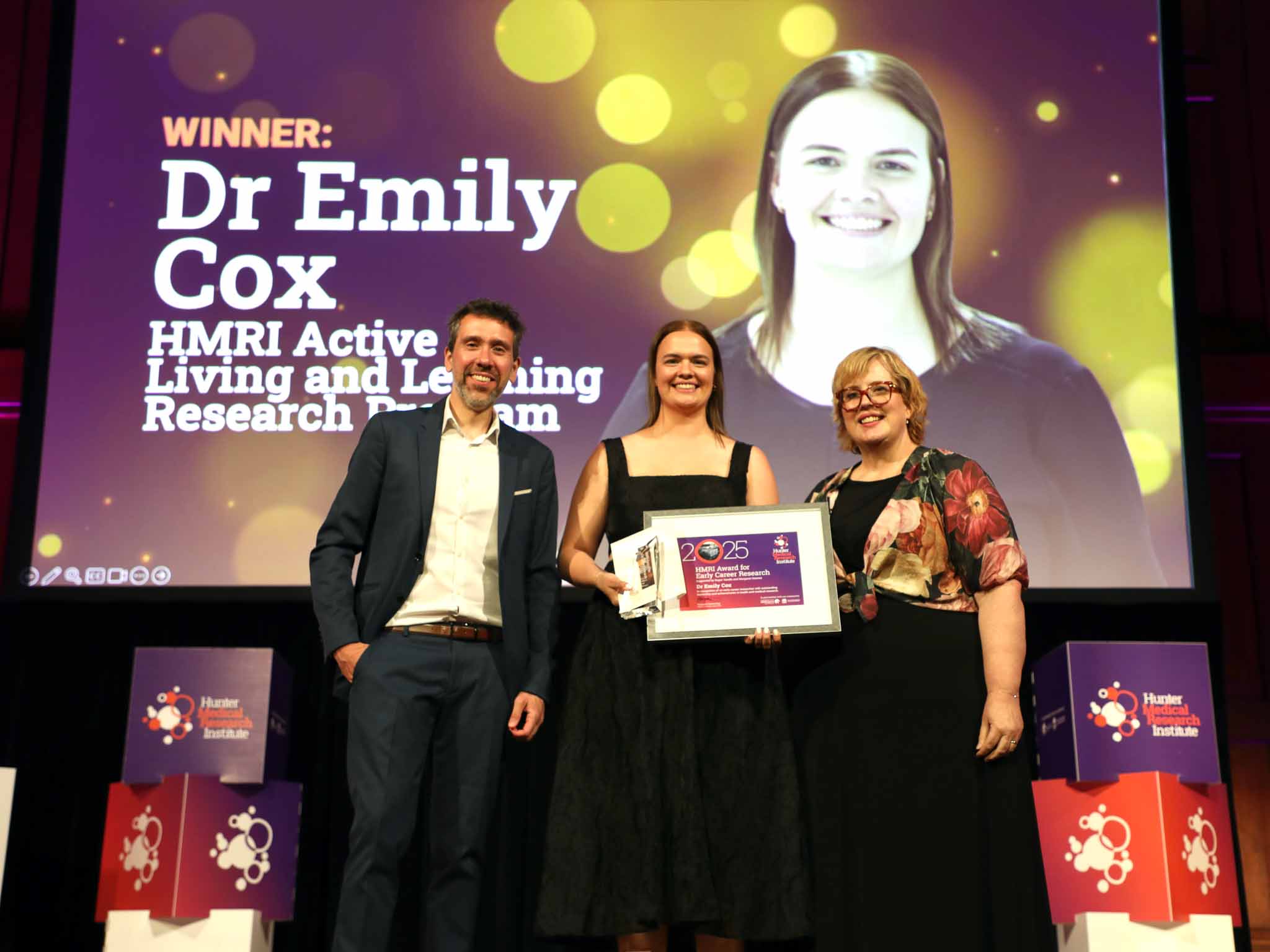
HMRI Early Career Researcher Award Supported by Margaret Heanes and Roger Yandle
Dr Emily Cox, Lecturer in Clinical Exercise Physiology at the University of Newcastle, from HMRI’s Active Living and Learning Research Program
Newcastle Permanent Emerging Innovator Award Supported by the Newcastle Permanent
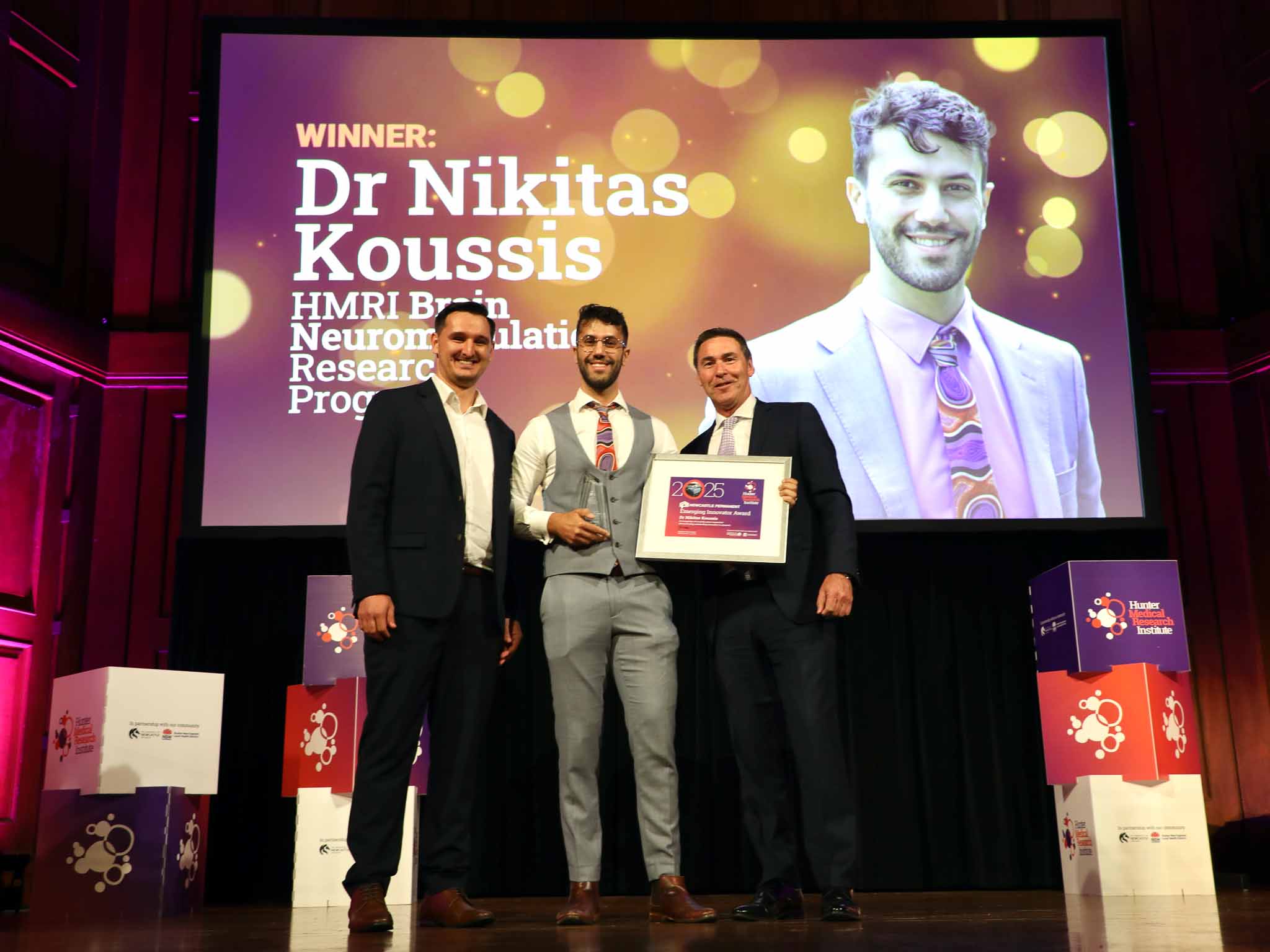
Dr Nikitas Koussis, Postdoctoral Researcher at the University of Newcastle, from HMRI’s Brain Neuromodulation Research Program
HMRI Research Team Excellence Award Supported by the HMRI Newcastle and HMRI Sydney Foundations
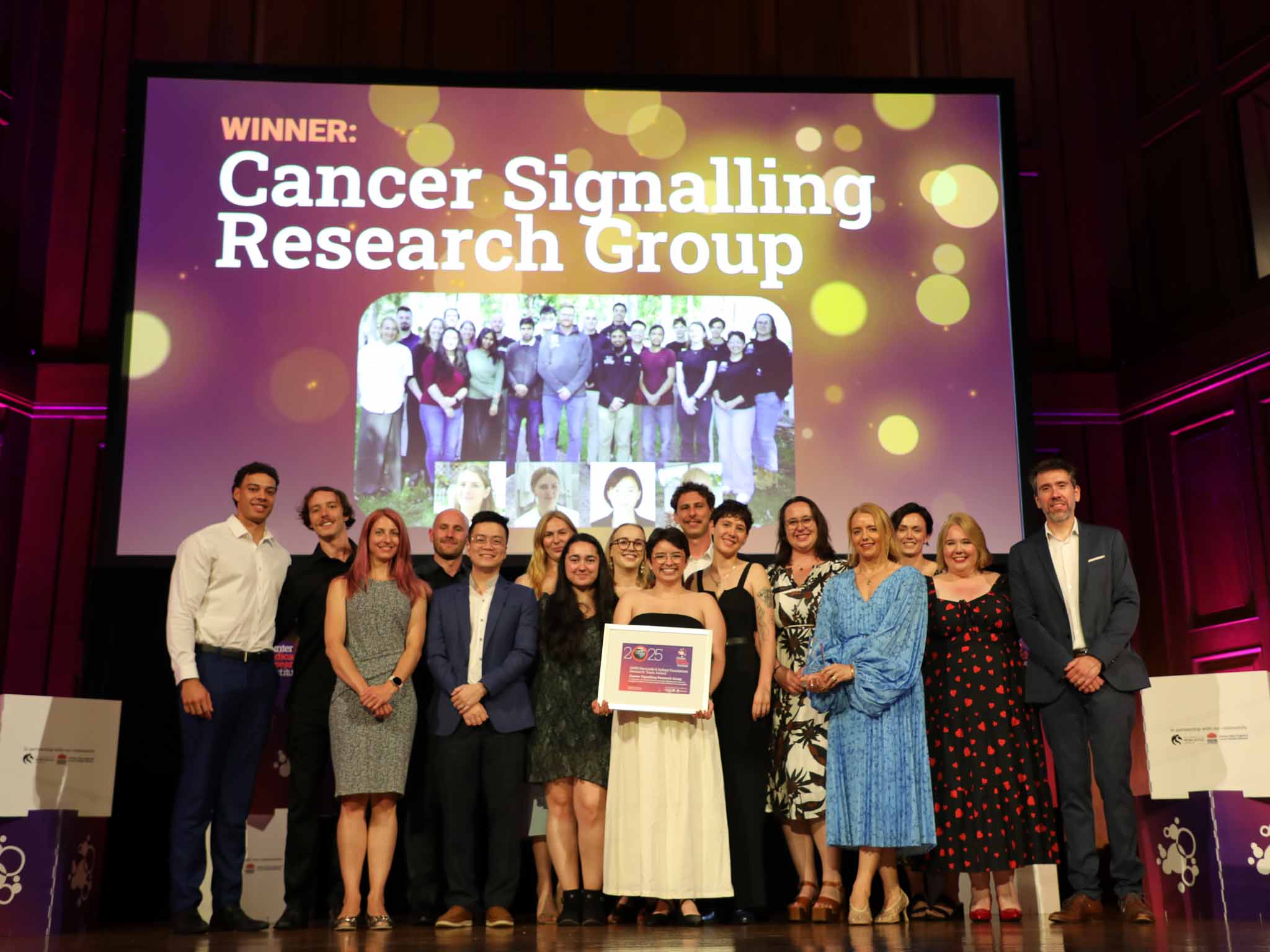
Cancer Signalling Research Group, from the University of Newcastle and HMRI’s Precision Medicine Research Program
About the award winners
HMRI Award for Research Excellence
Professor Joshua Davis from the University of Newcastle, Hunter New England Local Health District and HMRI’s Infection Research Program, is a globally recognised infectious diseases clinician–researcher whose work has transformed the evidence base for severe infections through the design and leadership of high-impact clinical trials.
Having led over 15 randomised trials, 240+ publications, 14,800 citations, and been awarded over $51 million in competitive funding, he has fundamentally changed the management of Staphylococcus aureus bloodstream infections through the landmark CAMERA trials and the world-first SNAP adaptive platform trial, which is now the largest ever RCT in this disease, recruiting across 11 countries. His findings have reshaped international guidelines, and improved outcomes for millions of patients worldwide.
Professor Davis also co-led Australia’s major COVID-19 treatment trials (ASCOT), advanced prosthetic joint infection management through the PIANO study, and founded the HMRI Infection Research Program, now with ~40 affiliates. A dedicated mentor and clinical leader, he has supervised 10 PhD completions, guided numerous early-career researchers, led national and international infectious diseases organisations, and strengthened HMRI through new programs, major grants, and institute-wide research initiatives.
HMRI Director’s Award for Mid-Career Research
Dr Myles Young from the University of Newcastle and HMRI’s Active Living and Learning Research Program is recognised for his world-leading work improving men’s mental health. Dr Young’s research tackles Australia’s silent crisis in men’s wellbeing, where suicide remains the leading cause of death for men aged 18–44. Through innovative, gender-tailored programs, he is creating new ways to help men engage with mental health support. Dr Young has led national clinical trials, including a major MRFF-funded study on outdoor therapy for men, which have already delivered more than 1,000 free therapy sessions across the Hunter. As head of the Men’s Mental Health Research Group, he mentors emerging psychologists and has published widely, with over 65 papers and 3,200 citations. Backed by over $8 million in funding and recognised nationally his work is redefining how mental health care is delivered to men, making it more engaging, effective, and life-saving.
HMRI Early Career Researcher Award
Dr Emily Cox from the University of Newcastle and HMRI’s Active Living and Learning Research Program has emerged as a national leader in exercise and metabolic health, transforming how exercise is prescribed for people with metabolic disease. She has produced high-quality, internationally cited evidence now embedded in major clinical guidelines, secured over $327k in competitive funding, published widely, and received multiple national awards. Her work is strongly consumer-led, using co-design and lived experience to develop scalable, evidence-based interventions that improve metabolic health outcomes. As a mentor and research leader, Dr Cox supervises students, builds clinical and academic capacity, and holds influential national and international leadership roles.
Newcastle Permanent Emerging Innovator Award
Dr Nikitas Koussis from the University of Newcastle and HMRI’s Brain Neuromodulation Research program, is the creator of OncoMind, a cutting-edge digital platform revolutionising how brain cancer is monitored and managed. OncoMind integrates real-time patient data from wearables and diaries with advanced imaging and AI analytics to detect subtle changes in health between clinical visits, enabling earlier intervention and personalised care. By bridging data science, oncology, and patient experience, the platform addresses a major gap in brain cancer care where complications often go unnoticed until it’s too late. Backed by strong industry interest and early prototype success, OncoMind has the potential to transform brain cancer treatment pathways, reduce hospital readmissions, and enhance quality of life.
HMRI Research Team Excellence Award
The Cancer Signalling Research Group, led by University of Newcastle Professor Matt Dun from HMRI’s Precision Medicine Research Program, is recognised for transforming outcomes for children with leukaemia and diffuse midline glioma (DMG), which is the leading cause of cancer death in young Australians. In just eight years, their work has led to two FDA Rare Paediatric Disease Designations, an FDA approval, and an Australian Expanded Access Program providing families with life-extending therapies. Through collaboration, innovation, and strong community partnerships, attracting over $35 million in funding, and with over 50 high-impact publications in world-leading journals, the team’s translational breakthroughs have redefined clinical options for paediatric brain cancer globally.
Related news
- Opinion: HSC students be ambitious, but also kind to yourself
- Vice-Chancellor Professor Alex Zelinsky to retire in February 2027
- Local sport gets a boost with new multisport facility honouring Mark and Kirralee Hughes
- Opinion: AI is our way back and investment's our future
- Tiny ocean microbe unlocks new clue to Earth's carbon cycle
Aligned with the United Nations Sustainable Development Goals

The University of Newcastle acknowledges the traditional custodians of the lands within our footprint areas: Awabakal, Darkinjung, Biripai, Worimi, Wonnarua, and Eora Nations. We also pay respect to the wisdom of our Elders past and present.