
Research on engineering behaviour of compacted soil recognised
Research Associate Dr Glen Burton from the University of Newcastle (UON) has received the prestigious D. H. Trollope award for his research paper investigating compacted soils.
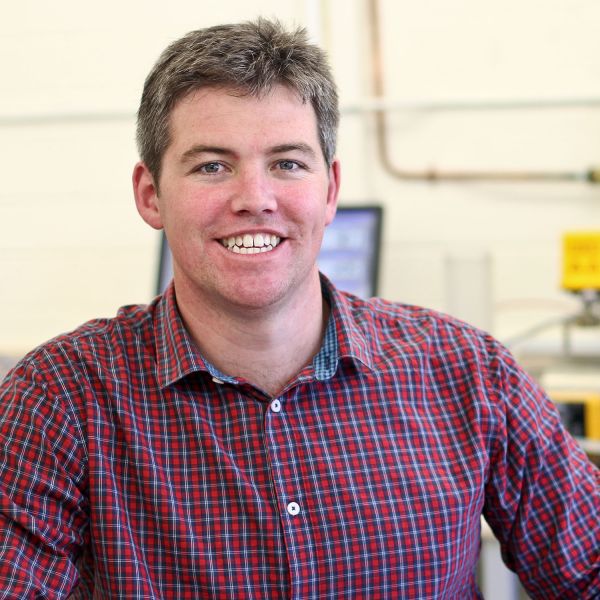
Awarded bi-annually by the Australian Geomechanics Society to recognise outstanding research papers, the Trollope Medal is the most prestigious award available for a young Australian researcher in geomechanics.
After completing a Bachelor of Civil Engineering at UON, Dr Burton worked in industry for several years before undertaking a PhD exploring unsaturated soil mechanics, which has implications for the design of built infrastructure that can range from residential buildings to roads and rail.
The full paper, Microstructural changes of an undisturbed, reconstituted and compacted high plasticity clay subjected to wetting and drying, was published in Engineering Geology.
UON caught up with Dr Burton to ask a few questions.
What does receiving this award mean to you?
To receive such an award is very humbling – to be acknowledged by a body of industry peers is, I hope, recognition that we are on the right track with our research focus.
What was the focus of your paper?
Earthworks, and the compacted soils produced, can form a significant portion of large transportation infrastructure projects, for example, on the Pacific Highway upgrade and the upcoming Inland Rail project.
In this paper, we studied the evolving nature of pore size distributions on a compacted soil when subjected to a range of hydraulic and mechanical paths.
These results provide some insight in how compacted soils may respond due to environmental effects, such as a change in climatic conditions, and what effect this may have on current and future infrastructure.
What led you to undertake a PhD?
My motivation for further study primarily came about through my involvement in the Hunter Expressway Alliance. In this project, due to strict environmental conditions material which would have otherwise been spoiled (or not used in construction) had to be utilised. This created some particularly interesting challenges for the design.
What are your plans for the future?
Currently I am a Research Associate with the Centre for Geotechnical Science and Engineering here at UON. My interest is in seeking out further innovative ways in which research can be applied to engineering practice.
Related news
- University of Newcastle’s Gosford Central Building achieves highest sustainability rating – first on Central Coast
- ATEC compact confirms University of Newcastle as leader in educational opportunity
- Invisible no more: national study reveals stark barriers facing university students living with hidden disability
- Rotary Peace Pole unveiled at University of Newcastle
- Sugarloaf koalas show no evidence of chlamydia as population exceeds expectations
The University of Newcastle acknowledges the traditional custodians of the lands within our footprint areas: Awabakal, Darkinjung, Biripai, Worimi, Wonnarua, and Eora Nations. We also pay respect to the wisdom of our Elders past and present.