Securing the Pipeline: Turning the tide on Australia’s STEM decline
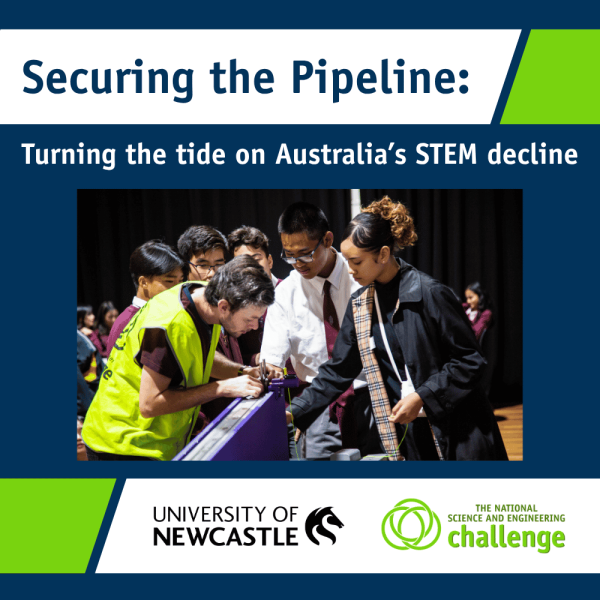 Securing the Pipeline
Analysis of data from the Tertiary Collection of Student Information (TCSI) shows a worrying decline in domestic enrolments in university STEM studies. The number of students studying Advanced Mathematics, Physics and Chemistry in year 12 has steadily decreased. STEM skills are essential for Australia’s future industrial and economic security. Action is required to turn the tide on Australia’s STEM decline.
The panel will discuss the programs and systems working to create positive changes to combat these challenges with the goal of forming a coalition to explore new avenues to increase STEM participation. The discussion will be chaired by the Chief Scientist for South Australia, Professor Craig Simmons. Panellists will bring unique perspectives from government, university, industry and community to examine the challenges in STEM education and the effect of STEM outreach to encourage students to enter STEM career pathways. This will be a vital insight into this significant issue affecting Australia’s future.
On the same day, you are also welcome to attend the National Science and Engineering Challenge Final where the best 8 schools from around Australia are competing in hands-on STEM challenges. More information here.
Event Information
- Date: This in person event will be held on Wednesday 28 October 2026 from 11:15am - 1:30pm
- Location: Dame Dorothy Tangney Alcove, Australian Parliament House
Members of the Panel:
Panel Chair:
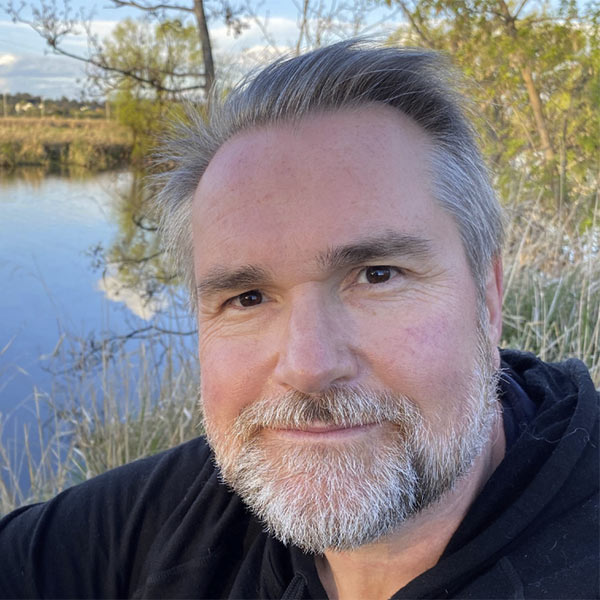
Professor Craig Simmons FAA FTSE
Chief Scientist for South Australia
Craig is a leading groundwater scientist, recognised for contributions to groundwater science, science leadership, education, and policy reform, working across the public and private sectors. He is Deputy Vice Chancellor (Research & Innovation) at the University of Newcastle. Craig was Foundation Director of the ARC National Centre for Groundwater Research and Training, Pro Vice-Chancellor Research at Flinders University, and Executive Director for Mathematics, Physics, Chemistry and Earth Sciences at ARC.
Craig is a Fellow of the Australian Academy of Science, Australian Academy of Technology and Engineering and American Geophysical Union. He has received awards including the Australian Academy of Science Anton Hales Medal for distinguished contributions to research in the Earth Sciences, South Australian Scientist of the Year, Australian Water Professional of the Year, and International Association of Hydrogeologists Presidents’ Award.
He is a lead author of the United Nations World Water Development Report “Groundwater: Making the Invisible Visible” and coauthor of the United Nations Intergovernmental Panel on Climate Change (IPCC) Sixth Assessment Report.
Panellists:
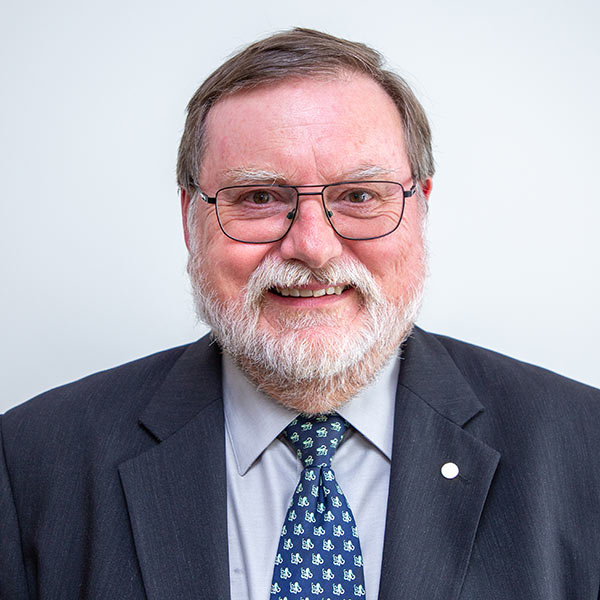
Professor Tony Haymet
Australia's Chief Scientist
Professor Haymet is an emeritus distinguished professor of oceanography with an internationally recognised career spanning Australia and the United States. He has held academic appointments including Established Chair of Theoretical Chemistry at the University of Sydney, with research interests spanning hydrophobicity, crystal-liquid interfaces, Antarctic fish antifreeze proteins, the spherical carbon molecule C60, and oceanography. He holds an honours degree in Chemistry from the University of Sydney and a PhD in chemical physics from the University of Chicago.
From 2002 to 2006, Professor Haymet served as Chief of CSIRO Marine Research, later CSIRO Marine and Atmospheric Research, leading five laboratories across Australia and managing two research vessels. He then became Vice-Chancellor, Director and Distinguished Professor of Oceanography at the Scripps Institution of Oceanography, University of California, San Diego, from 2006 to 2012. During this time, he co-founded MRV Systems LLC, a company developing autonomous underwater vehicles that collect and share oceanographic data through the Scripps Institution.
Professor Haymet has held numerous leadership roles in science, climate and ocean research, including Chair of the Antarctic Science Foundation, board member of WorldFish, Chair of the Australian Academy of Technological Sciences and Engineering Climate Change Working Group, and Chair of the World Economic Forum's Oceans Council. He also established a philanthropic ocean research program with the Minderoo Foundation. A Fellow of the Australian Academy of Technological Sciences and Engineering and the Royal Australian Chemical Institute, he now serves as Australia's Chief Scientist and is a member of the Climate Change Authority Board and the National Data Advisory Council.

Bernadette Foley FIEAust CPEng EngExec NER
Group Executive, Professional Standards and Engineering Practice, Engineers Australia
Bernadette Foley FIEAust CPEng EngExec NER was appointed Group Executive Professional Standards and Engineering Practice in December 2024. She has held several roles at Engineers Australia since joining in 2019, including: Head of Accreditation, General Manager of Professional Standards and over a year as Acting Chief Engineer
Bernadette is a civil engineer with more than 30 years’ experience across industry and education in Australia and the UK. Her technical expertise is in urban concept planning, water resource management and sustainability. Prior to joining Engineers Australia, Bernadette was the Associate Dean (Curriculum and Accreditation) in the Faculty of Engineering, Computer and Mathematical Sciences at the University of Adelaide.
Bernadette has a background in engineering education including curriculum reform, improving educational outcomes and graduate employability, improving professional standards and strengthening connections between academia and industry. She was an International Engineering Alliance working group member for the 2021 review of the international Graduate Attributes and Professional Competencies for the engineering profession.
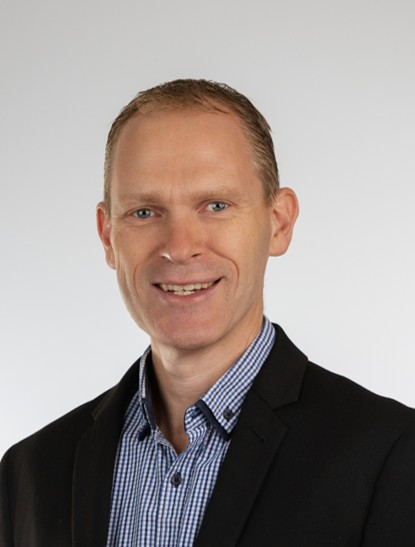
Peter Fechner
Director, Engineering & Technology Lockheed Martin Australia and New Zealand
Peter Fechner is responsible for the end to end capabilities of Lockheed Martin Australia’s Engineering & Technology function.
He directs the Software, Cyber, Systems, Hardware, Engineering Operations and Strategy functions and the LMA Chief Engineer group for the four LM business areas. He oversees a portfolio of 13 direct reports and 620 E&T staff (March 2026). His breadth of experience enables him to align focussed engineering delivery with organisational strategy through regular engagement with Lockheed Martin (LM) and LMA directors, and through participation in LMA’s executive business rhythm. These interactions allow him to cascade information and guidance to staff via the E&T Lead Team, one on ones, and All Hands gatherings.
With 27 years in the defence industry – 19 of those with LMA – Mr Fechner has progressed from Technical Leadership to Director, acquiring multi disciplinary expertise across every phase of the Engineering Lifecycle. His career is marked by a blend of technical design review, engineering capability development, project leadership, customer interface, and financial programme management.
Holding a Master of Engineering, IT & Telecommunications, Mr Fechner brings a deep, operational level understanding of defence engineering and a proven record of delivering complex technology programmes. His strategic vision and hands on leadership continue to elevate Lockheed Martin Australia’s engineering excellence and innovation.
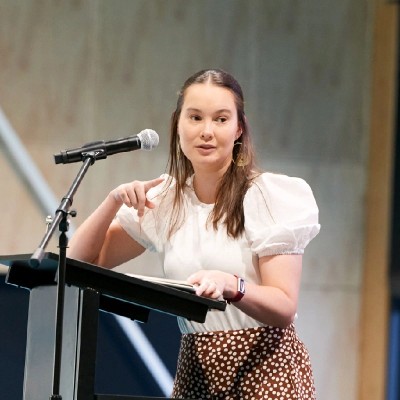
Brooke McLeod
Regional Chair Great South Coast Science and Engineering Challenge event, Rotary Australia
Brooke McLeod is a secondary science teacher and STEM educator based in regional south-west Victoria. With almost 20 years of experience in science and STEM outreach and engagement, she is passionate about creating opportunities for young people to engage with science and overcome barriers to education. Brooke has degrees in science and STEM education and is currently completing a Master of Teaching. She also works with Deakin University’s Diversity, Equity and Access Program and is an active Rotarian, supporting initiatives including the National Science and Engineering Challenge and National Youth Science Forum.
Registrations:
Registrations are now open.
All guests must be registered to obtain security clearance for Australian Parliament House. We require:
- Full name as shown on your photo ID
- Time of arrival
- Dietary requirements
- Contact information
- Organisation name
The University of Newcastle acknowledges the traditional custodians of the lands within our footprint areas: Awabakal, Darkinjung, Biripai, Worimi, Wonnarua, and Eora Nations. We also pay respect to the wisdom of our Elders past and present.