
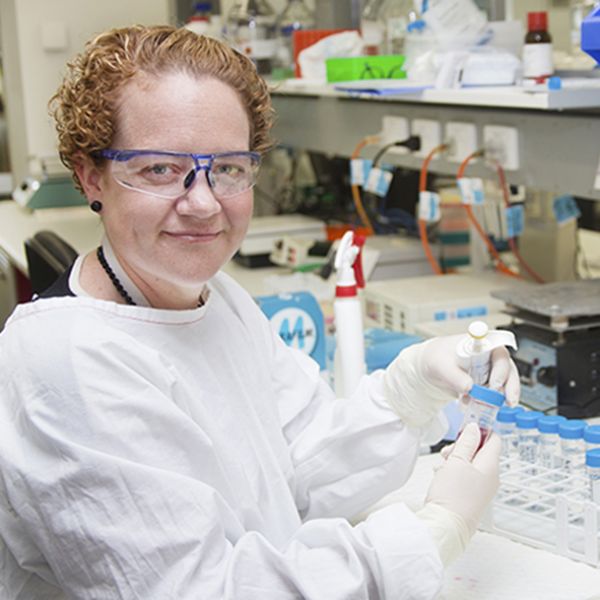
Professor Nikola Bowden
-
Research Fellow
School of Medicine and Public Health
College of Health, Medicine and Wellbeing - Focus area: Medical Genetics
News
News • 9 May 2017
Cancer fellowship for UON researcher
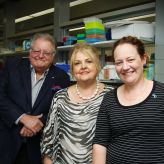
Honouring the profoundly tragic loss of their cherished daughter Vanessa, winemaking legends Brian and Fay McGuigan – together with the University of Newcastle – have jointly funded an unprecedented 10-year Hunter Medical Research Institute Fellowship dedicated to ovarian cancer research.

News • 9 Mar 2017
A voice for gender equity
In an exciting step forward toward gender equity, Dr Nikola Bowden has been appointed to the NHMRC Women in Health Science working committee.
News • 8 May 2020
Repurposing existing drugs to tackle ovarian cancer
To mark World Ovarian Cancer Day, the Australian Government has announced a $16.2 million investment in eight research projects to beat the disease.

News • 25 Feb 2015
DNA protein targeted in ovarian cancer chemo test
University of Newcastle researcher Dr Nikola Bowden is investigating a DNA repair protein that is implicated in ovarian cancer tumours becoming resistant to chemotherapy, with hopes of eventually developing a prognostic test and more tailored treatments.

News • 24 Sep 2026
Research quest to drive more equitable cancer outcomes for regional Australians
A $5 million Cancer Institute NSW grant is powering the next generation of researchers to help drive more equitable cancer outcomes for regional NSW communities.

News • 21 Oct 2015
UON researcher Dr Nikola Bowden wins Young Tall Poppy Science Award
Outstanding University of Newcastle (UON) researcher Dr Nikola Bowden has been named one of Australia's 'Tall Poppies' in science at the prestigious NSW Young Tall Poppy Science Awards at the Sydney Powerhouse Museum.

News • 12 Sep 2022
Researchers discover potential new melanoma treatment, giving hope to patients
HMRI and University of Newcastle researchers have discovered that treating patients who have late-stage treatment resistant melanoma with a combination of two existing drugs significantly increases their survival times.
The University of Newcastle acknowledges the traditional custodians of the lands within our footprint areas: Awabakal, Darkinjung, Biripai, Worimi, Wonnarua, and Eora Nations. We also pay respect to the wisdom of our Elders past and present.