
Circular Economy Grand Challenge winners turn waste into opportunity
Giving old solar panels a second life, recovering value from waste timber and helping Australians improve existing homes earned three teams the top prizes in the University of Newcastle’s 2026 Circular Economy Grand Challenge.
The winning teams received $10,000 each to help advance their ideas through prototype development, partnership building and early-stage testing. Three additional awards recognised standout projects selected by the judges and public votes.
The Grand Challenge is delivered through the University's Integrated Innovation Network (I2N) and encourages people from different backgrounds to combine their skills and experience to solve practical sustainability challenges facing households, communities, industries and the environment.
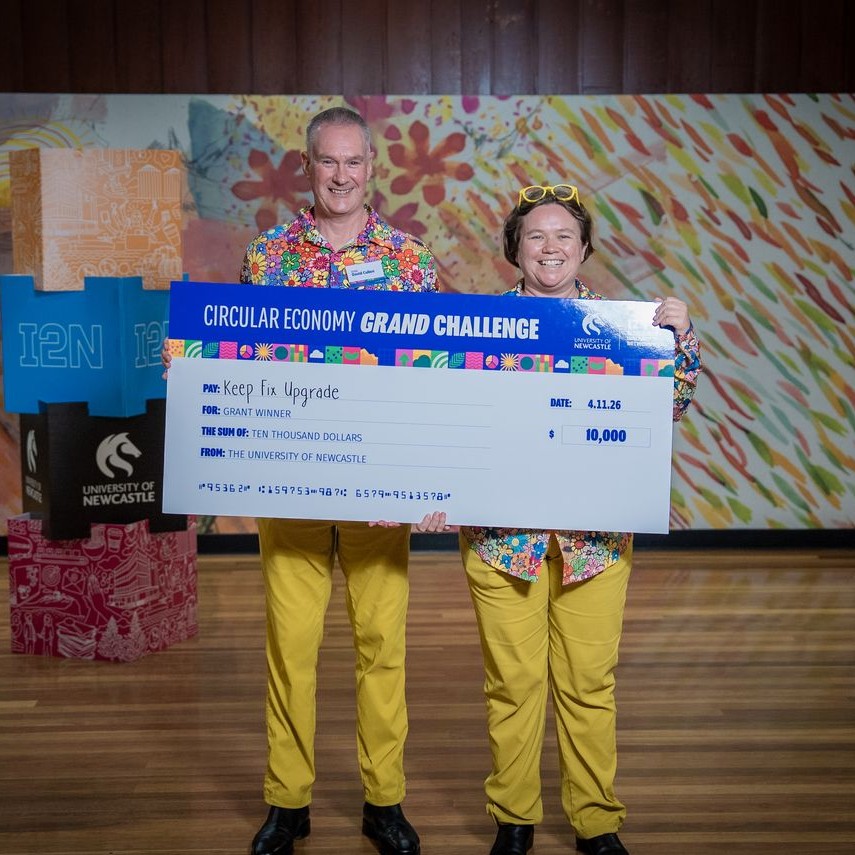
Keep Fix Upgrade
$10,000 grant
Keep Fix Upgrade is a digital planning tool that helps homeowners navigate choices when tackling home improvements.
The service helps homeowners decide what to keep, fix or upgrade first by providing practical recommendations and indicative costs, while prioritising replacement products containing reused and recycled materials.
The team hopes the tool will help households reduce waste, improve comfort and make more informed sustainability decisions.
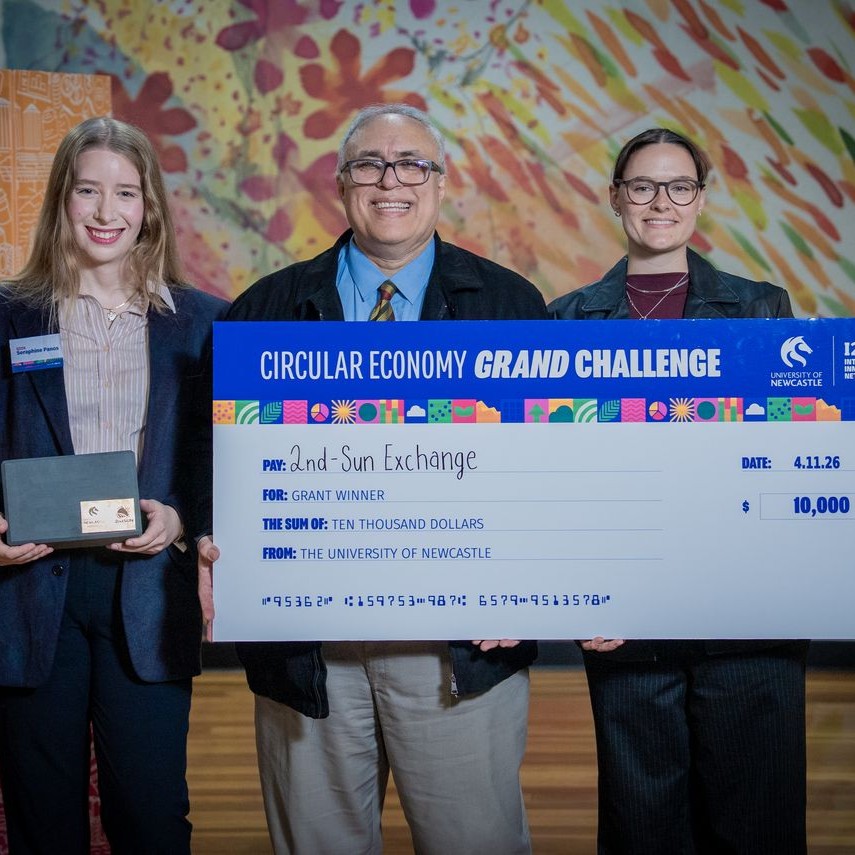
2nd-Sun Exchange
$10,000 grant
2nd-Sun Exchange tackles the growing problem of solar panel waste by creating new pathways for reuse, repair and material recovery.
The team is developing a digital matchmaking platform that connects solar panel owners and installers with people who can reuse, repair or recover retired panels.
To demonstrate the concept, the team is also exploring ways to transform recovered panel glass into lightweight building products.
Team members not pictured: Associate Professor David Shao (researcher), Dr Josephine Vaughan (researcher)
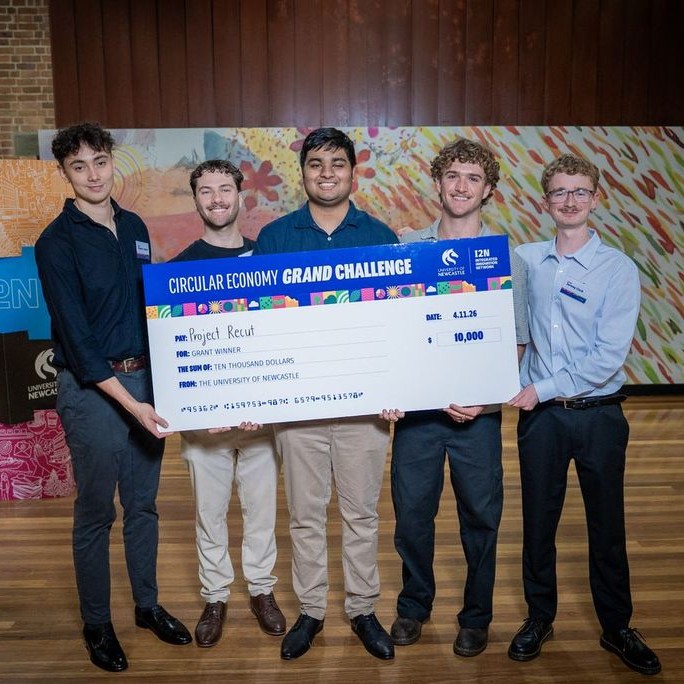
Project Recut
$10,000 grant
Project Recut challenges the idea that timber offcuts are waste.
The digital marketplace links builders with local makers, helping redirect usable timber away from landfill and into new projects.
Builders reduce disposal costs while makers gain access to affordable materials, addressing rising timber costs and the large volumes of usable timber currently discarded through the construction industry.
Other award winners
People's Choice Award ($2,000) – Phage Hunters UoN
More than 2,000 votes were cast in this year's People's Choice competition, with Phage Hunters UoN emerging as the public's favourite.
The project investigates how naturally occurring viruses found in wastewater can be used to target harmful bacteria. The team hopes bacteriophages could eventually provide new weapons against antibiotic-resistant infections, one of the most significant emerging challenges facing healthcare systems worldwide.
Team members: Henry Scott (HDR candidate, team lead), Isha Prasad (HDR candidate), Tali Robinson (HDR student), Thomas Macleod (undergraduate student) and Associate Professor Ian Grainge (researcher)
Best Student Team ($2,000) – Pura Beeda
Pura Beeda collects unwanted surfboards and transforms them into products such as bee watering stations and garden beds, which can extend the life of materials that might otherwise end up in landfill while also supporting pollinator habitats.
The project has already attracted interest from local surfing organisations, including Newcastle Surfest, as it explores ways to give unwanted surfboards a second life.
The core team comprises international students from the United States and the Netherlands studying at the University.
Team members: Zachary Leighton (undergraduate student, team lead), Selin Yalcinanahtar, Azuro Leijdsman, Sterling Smith and Alex Whittaker (undergraduate students)
Rising Star ($2,000) – The Clothes Line
The Clothes Line is a community-focused initiative designed to keep clothing in use for longer.
Through clothing swaps, repair workshops and local recycling pathways, the project aims to reduce textile waste while bringing people together and promoting more sustainable consumption habits.
Team members: Mardi Lee (community member, team lead) and Lindy Williams (University alumna)
Related news
- Circular Economy Grand Challenge winners turn waste into opportunity
- Earth Science Week Inspires Discussion on Critical Minerals and Sustainable Futures
- Exporting excellence: what does the future hold for Hunter Valley wine?
- New ARC training centres draw on Newcastle expertise
- Indigenous-led research to reach more communities
Aligned with the United Nations Sustainable Development Goals
The University of Newcastle acknowledges the traditional custodians of the lands within our footprint areas: Awabakal, Darkinjung, Biripai, Worimi, Wonnarua, and Eora Nations. We also pay respect to the wisdom of our Elders past and present.